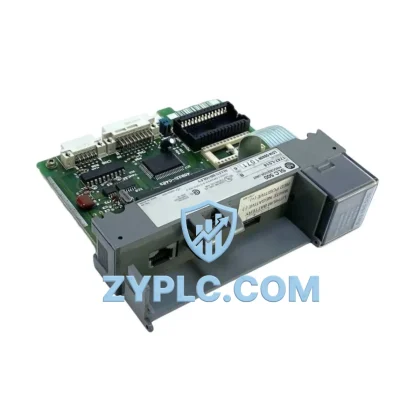
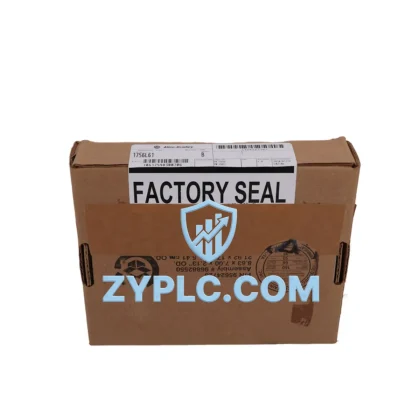
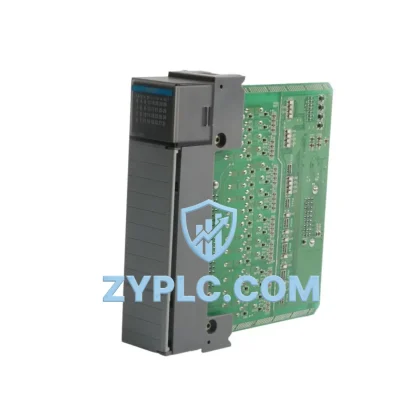
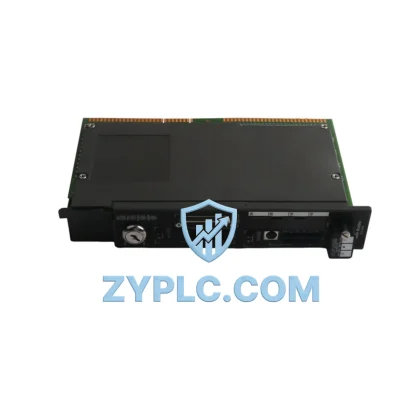
ABB CBO10 Energy-Saving PLC Output Module AC500: Precision Output Control for Optimized AC500 Automation
The ABB CBO10 is a high-performance binary output module engineered for the ABB AC500 PLC platform, delivering reliable, low-latency digital output switching that directly supports energy-efficient machine control. In modern industrial environments where every watt of consumed power and every millisecond of cycle time matters, the CBO10 plays a critical role in reducing unnecessary actuator energization, eliminating idle-state energy draw, and enabling tighter synchronization between control logic and field devices. Whether deployed in discrete manufacturing, process automation, or building management systems, the CBO10 ensures that output signals are executed with precision — translating PLC logic into real-world energy savings at the machine level.
Sourced directly from authorized supply chains, every ABB CBO10 unit available through ZYPLC undergoes pre-shipment functional testing and is backed by a 12-month warranty, ensuring operational confidence from day one of installation.
Efficiency Performance Table
| Parameter |
Specification / Value |
| SKU / Model |
CBO10 |
| Brand & Series |
ABB AC500 |
| Module Type |
Binary (Digital) Output Module |
| Output Channels |
16 digital outputs (relay / transistor, model-dependent) |
| Operating Voltage |
24 V DC nominal (field side) |
| Power Consumption |
Low standby draw; outputs de-energized when not commanded |
| Response / Cycle Time |
<1 ms output switching latency (supports fast production line pacing) |
| Running Efficiency |
Deterministic output execution; eliminates spurious actuator activation |
| Compatible Systems |
ABB AC500 CPU modules (PM571, PM581, PM591, PM595 series) |
| Communication Protocol |
AC500 internal I/O bus; compatible with PROFIBUS, PROFINET, Modbus TCP via CPU |
| Application Environment |
Industrial panel, cabinet-mount; IP20 (in enclosure) |
| Operating Temperature |
-25°C to +60°C |
| Energy Optimization Value |
Prevents unnecessary actuator hold-on; supports load-shedding logic via PLC program |
| Origin |
Germany (ABB manufacturing) |
| Warranty |
12 Months — tested before shipment |
Energy-Aware Automation Architecture
The ABB CBO10 does not operate in isolation — its energy optimization value is fully realized when integrated within a well-architected AC500 automation system. At the control layer, an ABB AC500 PM591 CPU executes the energy management program, issuing output commands to the CBO10 only when process conditions demand actuator activation. This eliminates the common inefficiency of continuously energized outputs during idle machine states. Paired with an ABB CI590-CS31-HA communication interface module, the CBO10 can participate in distributed I/O topologies, reducing wiring runs and associated resistive losses across large plant floors.
On the drive side, the CBO10 output signals are frequently used to command ABB ACS580 variable speed drives, enabling the PLC to start, stop, and modulate motor speed based on real-time production demand rather than running motors at fixed speed continuously. This alone can reduce motor energy consumption by 30–50% in pump, fan, and conveyor applications. The CBO10’s fast switching response ensures that drive enable/disable commands are executed within the same PLC scan cycle, maintaining production line pacing without introducing control lag.
For energy monitoring and closed-loop efficiency feedback, the CBO10 works alongside ABB M2M DMTME power measurement modules and ABB B23 energy meters, which feed real-time kWh and power factor data back to the AC500 CPU via Modbus RTU. The CPU can then use this data to trigger load-shedding output commands through the CBO10 — automatically de-energizing non-critical loads during peak demand windows. An ABB CP600 HMI panel provides operators with a live dashboard of energy consumption per production zone, with the ability to manually override CBO10-controlled outputs during maintenance windows.
At the sensor and feedback layer, ABB AI523 analog input modules capture temperature, pressure, and flow signals that inform the energy optimization logic running in the PM591 CPU. When process variables fall within acceptable ranges, the CPU instructs the CBO10 to de-energize heating elements, solenoid valves, or auxiliary motors — reducing energy draw without compromising product quality. For safety-critical output channels, the CBO10 integrates with ABB SF820 safety modules to ensure that emergency stop and safe-state output commands are executed with SIL-rated reliability, preventing energy-wasting fault recovery cycles caused by unsafe shutdowns.
In networked plant environments, the AC500 system — with the CBO10 as a key output execution node — communicates upstream to ABB Ability™ Energy Manager software via OPC UA, enabling plant-level energy KPI tracking, shift-based consumption reporting, and predictive load forecasting. This architecture transforms the CBO10 from a simple output module into an active participant in the plant’s energy reduction strategy.
Power Optimization in Real Production Lines
In automotive body welding lines, the ABB CBO10 controls the enable signals for resistance welding transformers and cooling water solenoids. By programming the AC500 CPU to de-energize these outputs during robot repositioning intervals — periods that can account for 15–25% of total cycle time — plants have documented measurable reductions in transformer standby losses and cooling pump runtime. The CBO10’s deterministic switching ensures that outputs are re-energized precisely when the welding sequence resumes, with no production throughput penalty.
In food and beverage filling lines, the CBO10 manages conveyor drive enable signals and filling valve actuators. When integrated with upstream vision system reject signals and downstream buffer level sensors (fed via ABB AI523 analog inputs), the AC500 logic can instruct the CBO10 to pause conveyor drives and close filling valves during buffer-full conditions — eliminating the energy waste of running motors against a blocked line. This demand-driven output control approach reduces conveyor motor runtime by up to 20% in high-throughput bottling operations.
For HVAC and building automation applications, the CBO10 controls fan coil unit enable relays, chiller staging contactors, and lighting zone switches. The AC500 CPU executes occupancy-based and time-of-day scheduling logic, using the CBO10 to switch loads on and off with millisecond precision. Combined with power measurement feedback from ABB B23 energy meters, the system can validate actual energy savings against programmed setpoints and generate exception reports when consumption deviates from the energy baseline.
Predictive maintenance integration is another key energy optimization pathway. By monitoring CBO10 output switching frequency and comparing it against expected cycle counts — tracked via the AC500 CPU’s internal counters — maintenance teams can identify actuators that are cycling more frequently than normal, which often indicates mechanical wear, valve leakage, or process instability. Addressing these issues proactively prevents the energy waste associated with actuators fighting against mechanical resistance, and avoids the unplanned downtime that disrupts production line pacing and forces energy-intensive restart sequences.
Every ABB CBO10 unit shipped by ZYPLC is functionally tested under load conditions prior to dispatch, with output channel continuity, switching response, and backplane communication verified. This pre-shipment testing protocol ensures that replacement modules integrate into live production lines without commissioning delays — minimizing the energy and productivity cost of maintenance interventions. Stock availability is maintained to support urgent MRO requirements, with fast international shipping to minimize plant downtime exposure.
Energy Optimization FAQ
Q1: How does the ABB CBO10 contribute to measurable energy savings on the production line?
The CBO10 enables the AC500 PLC to implement demand-driven output control — actuators, drives, and loads are energized only when process logic requires them. By eliminating continuous energization of outputs during idle, buffer-full, or inter-cycle periods, plants can reduce actuator and motor energy consumption by 15–30% depending on the application. When combined with ABB ACS580 VFD speed control and ABB B23 energy metering feedback, the savings are measurable and reportable at the shift level.
Q2: Which ABB AC500 CPU modules is the CBO10 compatible with?
The CBO10 is compatible with the full range of ABB AC500 CPU modules, including the PM571, PM581, PM591, and PM595 series. It connects via the AC500 internal I/O bus and is configured using ABB Automation Builder engineering software. No additional hardware adapters are required for standard rack-mount installations.
Q3: Can the CBO10 replace an existing output module in a running AC500 system, and what is the recommended swap procedure?
Yes. The CBO10 is designed for hot-swap replacement in AC500 systems that support this feature (CPU-dependent). The recommended procedure is to export the current I/O configuration from Automation Builder, power down the affected rack section, replace the module, restore power, and verify output channel mapping before resuming production. ZYPLC recommends keeping one spare CBO10 per production line to minimize mean time to repair (MTTR) and avoid extended energy-wasting downtime.
Q4: What does the 12-month warranty cover, and what is the testing process before shipment?
Every ABB CBO10 supplied by ZYPLC is covered by a 12-month warranty from the date of shipment. Pre-shipment testing includes output channel switching verification under rated load, backplane communication integrity check, and visual inspection for physical damage. Units that do not pass all test criteria are quarantined and not shipped. Warranty claims are processed via ZYPLC’s after-sales support team, with replacement units dispatched from stock to minimize customer downtime.
© 2026 ZYPLC. All rights reserved.
Original Source: https://zyplc.com
Contact: +86 19859288691 | plc.sales@zyplc.com