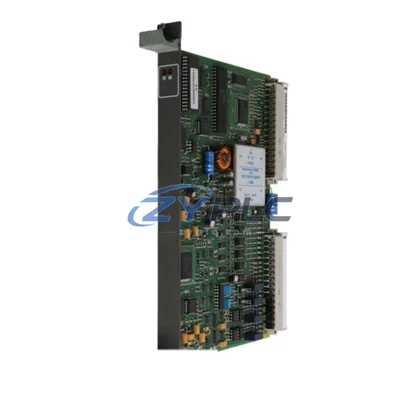
ABB D-63754 703866 63611-2110 Safety Barrier for Freelance Automation
The ABB D-63754 703866 63611-2110 is a high-performance intrinsic safety barrier engineered for industrial process control environments where energy efficiency, signal integrity, and operational safety must coexist without compromise. Designed to integrate seamlessly within ABB’s Freelance distributed control system (DCS) architecture, this multi-channel safety barrier plays a critical role in reducing unnecessary energy dissipation across field instrumentation loops while maintaining the galvanic isolation and intrinsic safety certifications required in hazardous area installations.
In modern manufacturing and process plants, unplanned downtime is rarely caused by a single component — it accumulates across hundreds of field devices, signal conditioners, and control loops operating at suboptimal parameters. The ABB D-63754 703866 63611-2110 addresses this at the signal conditioning layer, ensuring that only the precise amount of energy required for safe field communication is delivered, eliminating excess current draw that contributes to thermal losses and increased power supply loading.
Product Specification Table
| Parameter |
Specification |
| Product SKU |
D-63754 703866 63611-2110 |
| Brand |
ABB |
| Series |
Freelance DCS |
| Product Type |
Intrinsic Safety Barrier |
| Origin |
Germany (DE) |
| Operating Voltage |
24 V DC (nominal) |
| Signal Type |
Analog / Digital field signals (HART compatible) |
| Energy Efficiency Value |
Minimizes excess loop current; reduces field-side power dissipation |
| Compatible Systems |
ABB Freelance DCS, AC500 PLC, Symphony Plus |
| Application Environment |
Zone 0/1/2 hazardous areas, process automation, chemical, oil & gas |
| Isolation Type |
Galvanic isolation (intrinsically safe) |
| Certifications |
ATEX / IECEx (intrinsic safety) |
| Warranty |
warranty terms confirmed during quotation |
| Availability |
RFQ Available — Ships within 1–3 business days |
| Testing |
Full outgoing inspection and functional test before shipment |
System Compatibility and Application
The ABB D-63754 703866 63611-2110 does not operate in isolation — its maintenance planning value is fully realized when deployed as part of a coordinated automation architecture. Within an ABB Freelance DCS environment, this safety barrier interfaces directly with the ABB AC500 PLC series, which handles high-speed logic execution and process sequencing. The AC500’s modular I/O expansion — including the ABB TU515 terminal unit and DC532 digital I/O modules — allows the safety barrier’s field signals to be routed efficiently into the control layer without signal degradation or unnecessary power amplification stages.
For condition monitoring at the field level, the D-63754 703866 63611-2110 is commonly paired with ABB EQ meters (such as the EQ-DIN series) or integrated with the ABB B23 energy meter to provide real-time loop power consumption data. This combination enables plant engineers to identify high-consumption field loops and recalibrate barrier parameters to reduce idle-state current draw — a key lever in reducing overall panel energy budgets.
On the drive side, process lines controlled through this barrier often include ABB ACS580 variable speed drives or ACS880 industrial drives, which regulate motor speed based on process demand signals conditioned through the safety barrier. When the barrier accurately transmits 4–20 mA analog signals from flow transmitters or pressure sensors, the drive receives precise setpoints — eliminating the over-speed operation that wastes energy and accelerates motor wear.
Communication integrity is maintained through the ABB CI854 PROFIBUS DP communication interface, which connects the Freelance DCS controller to field devices and remote I/O stations. The D-63754 703866 63611-2110 ensures that signals entering the PROFIBUS network from hazardous zones are properly conditioned and isolated, preventing ground loops and EMI-induced noise that can cause false process readings and unnecessary control corrections — each of which carries an energy cost.
For HMI visualization and operator energy dashboards, the system integrates with ABB CP600 operator panels or the ABB Ability™ System 800xA platform, where energy KPIs derived from field measurements — including those passing through this safety barrier — are displayed in real time. Operators can monitor loop efficiency trends, set energy consumption alerts, and initiate demand-response actions directly from the control room.
Power supply stability for the barrier and associated field instruments is typically provided by ABB CP-E 24/5.0 SMPS units, which deliver regulated 24 V DC with high conversion efficiency. Stable supply voltage is essential for the D-63754 703866 63611-2110 to maintain its intrinsic safety parameters — voltage fluctuations can cause the barrier to draw excess current as a protective response, negating operational stability achieved elsewhere in the loop.
Maintenance and Replacement Notes
In chemical processing plants and oil & gas facilities, the ABB D-63754 703866 63611-2110 contributes to measurable operational stability by ensuring that field instruments in hazardous zones operate at their designed current levels — no more, no less. Overdriven field loops are a common but overlooked source of unplanned downtime: a transmitter drawing 22 mA instead of its calibrated 18 mA setpoint wastes energy continuously across every operating hour of the year. The D-63754 703866 63611-2110’s precision current limiting prevents this drift.
From a production line rhythm (takt time) perspective, accurate signal transmission through the safety barrier reduces the frequency of false process alarms. Each false alarm triggers an operator investigation cycle, temporarily disrupting line throughput and causing downstream equipment — including motors controlled by ABB ACS580 drives — to operate in hold or reduced-speed modes that consume energy without producing output. By maintaining signal fidelity, the barrier indirectly supports consistent production cadence and reduces energy-per-unit-output ratios.
Predictive maintenance programs benefit significantly from the signal quality delivered by the D-63754 703866 63611-2110. When vibration transmitters, temperature sensors, and pressure transducers in hazardous zones transmit clean, unattenuated signals through the barrier to the ABB AC500 PLC or Freelance DCS, condition monitoring algorithms receive accurate data. This enables early detection of bearing wear, pump cavitation, or heat exchanger fouling — all of which, if left undetected, cause equipment to draw progressively more energy as efficiency degrades.
Downtime reduction is another direct energy benefit. Unplanned shutdowns require energy-intensive restart sequences: motors must be brought up to speed, process temperatures must be re-established, and pressurized systems must be re-pressurized. Each restart cycle consumes a disproportionate amount of energy compared to steady-state operation. The reliability of the D-63754 703866 63611-2110 — backed by a warranty terms confirmed during quotation and full pre-shipment functional testing — reduces the risk of barrier-related failures that could trigger such shutdowns.
All units are sourced from verified supply channels, undergo outgoing inspection, and are shipped with documentation confirming functional test results. Inventory is maintained RFQ Available for fast dispatch, supporting just-in-time maintenance strategies that minimize equipment downtime and the associated energy penalties of extended outages.
Product Sourcing FAQ
Q1: How does the ABB D-63754 703866 63611-2110 contribute to operational stability in a process plant?
The barrier limits the energy delivered to field instruments in hazardous zones to the minimum required for safe and accurate signal transmission. This prevents loop overcurrent conditions that waste energy as heat, and ensures that control signals to downstream drives and actuators are accurate — enabling those devices to operate at their most efficient setpoints rather than compensating for signal errors with excess output.
Q2: Is the D-63754 703866 63611-2110 compatible with HART-enabled field instruments and ABB Freelance DCS?
Yes. The barrier is designed for integration within ABB Freelance DCS architectures and supports HART protocol communication overlaid on standard 4–20 mA analog loops. This allows asset management tools within the Freelance environment to communicate with HART-enabled transmitters through the barrier without requiring additional signal conditioning hardware.
Q3: What is the recommended replacement or upgrade path if this barrier is being substituted in an existing installation?
When replacing an existing safety barrier in a Freelance DCS panel, verify the channel count, input/output signal type (analog vs. digital), and hazardous area certification zone of the original unit. The D-63754 703866 63611-2110 is a multi-barrier module; confirm that the terminal assignment and DIN rail mounting pitch match the existing installation. Contact our technical team for a compatibility confirmation before installation if the original documentation is unavailable.
Q4: What does the warranty terms confirmed during quotation cover, and what testing is performed before shipment?
The warranty terms confirmed during quotation covers manufacturing defects and functional failures under normal operating conditions. Prior to shipment, each unit undergoes a full outgoing functional test verifying signal pass-through, isolation resistance, and current limiting performance. Test records are available upon request. Units are shipped in anti-static protective packaging to prevent ESD damage during transit.