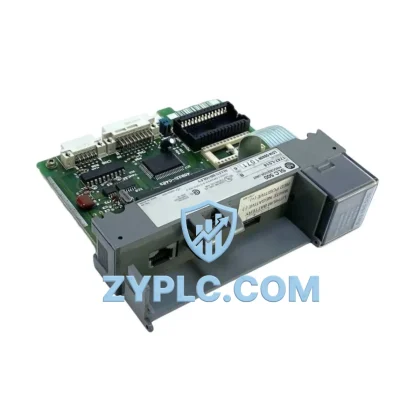
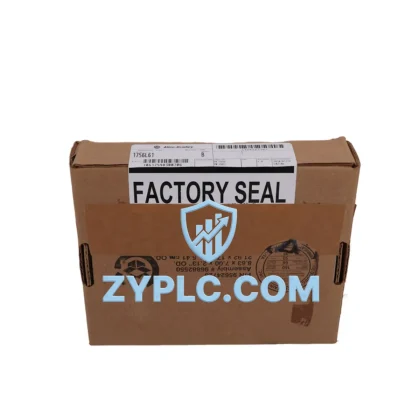
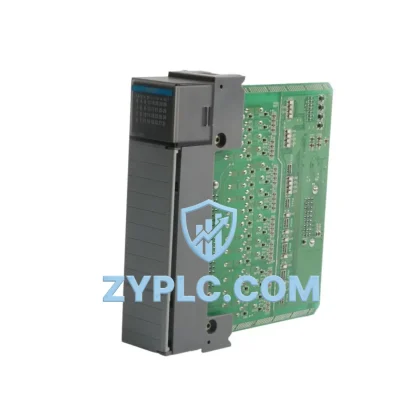
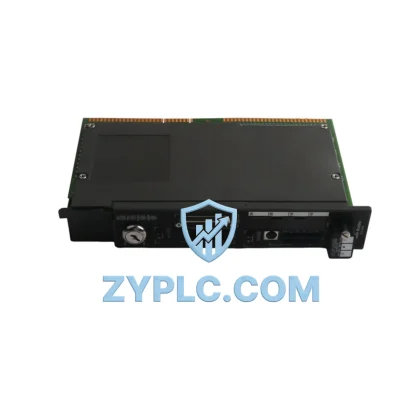
ABB DCP10 Energy-Saving CPU Module for MasterPiece 200/1: Precision Energy Control and Production Line Optimization
The ABB DCP10 is a high-performance CPU module engineered for the MasterPiece 200/1 Distributed Control System (DCS), a platform widely deployed across energy-intensive industries including power generation, pulp and paper, chemical processing, and heavy manufacturing. As the central processing unit of the MasterPiece 200/1 architecture, the DCP10 governs real-time scan cycles, I/O coordination, and closed-loop control execution — directly influencing how efficiently a plant consumes energy, utilizes equipment, and maintains production rhythm.
In modern industrial environments where energy costs represent a significant share of operational expenditure, the intelligence embedded in a CPU module like the DCP10 is not merely a control asset — it is an energy optimization instrument. By executing deterministic control logic with minimal cycle jitter, the DCP10 ensures that actuators, drives, and motors receive precisely timed commands, eliminating the energy waste associated with over-actuation, hunting, and unnecessary motor starts.
Efficiency Performance Table
| Parameter |
Specification / Value |
| SKU / Part Number |
DCP10 |
| Compatible Platform |
ABB MasterPiece 200/1 DCS |
| Module Type |
Central Processing Unit (CPU) |
| Typical Power Consumption |
Low-power embedded processor architecture |
| Control Execution |
Deterministic real-time scan cycle |
| Operating Efficiency |
Optimized for continuous 24/7 industrial operation |
| Compatible I/O Systems |
MasterPiece 200/1 I/O bus, SATT series I/O modules |
| Communication Support |
MasterBus 300, MODBUS, proprietary ABB fieldbus |
| Application Environment |
Power plants, chemical plants, paper mills, water treatment |
| Energy Optimization Value |
Reduces motor over-cycling, optimizes drive command timing, minimizes idle energy draw |
| Inventory Status |
In Stock — Ready to Ship |
| Warranty |
12-Month Warranty |
| Pre-shipment Testing |
Full functional test performed before dispatch |
Energy-Aware Automation Architecture
The DCP10 does not operate in isolation. Its energy optimization impact is realized through tight integration with the broader MasterPiece 200/1 control architecture. At the field level, analog and digital signals from process sensors are collected through SATT series I/O modules, which feed real-time process data — including flow rates, temperatures, pressures, and motor load signals — directly into the DCP10’s control loop. This continuous data stream allows the CPU to make sub-second adjustments to output commands, preventing energy-wasting oscillations in regulated processes.
On the drive side, the DCP10 interfaces with ABB ACS series variable frequency drives (VFDs) — such as the ACS800 and ACS880 — to regulate motor speed in response to actual process demand rather than fixed setpoints. This demand-responsive drive control is one of the most impactful energy-saving strategies available in industrial automation: reducing motor speed by just 20% can cut energy consumption by nearly 50% due to the cubic relationship between speed and power in centrifugal loads. The DCP10’s deterministic output timing ensures that VFD speed references are updated at the correct scan interval, avoiding the lag-induced energy spikes that occur with slower or non-deterministic controllers.
For servo-driven axes — common in packaging, printing, and precision manufacturing lines integrated with MasterPiece 200/1 — the DCP10 coordinates motion profiles through ABB servo drive modules, ensuring that acceleration and deceleration ramps are optimized for both throughput and energy recovery. Regenerative braking energy from servo axes can be fed back into the DC bus, reducing net energy consumption across the production line.
Power quality and energy consumption visibility are provided through ABB M2M energy meters and power monitoring modules connected via the MasterBus 300 communication network. These devices report real-time kWh consumption, power factor, and harmonic distortion data to the DCP10’s supervisory layer, enabling the control system to identify energy anomalies — such as a motor drawing excessive current due to mechanical wear — before they escalate into unplanned downtime events. This predictive awareness is central to the DCP10’s role in reducing maintenance costs and extending equipment service life.
At the human-machine interface level, operators interact with DCP10-controlled processes through ABB Operate IT or compatible HMI panels, where energy dashboards display real-time consumption trends, efficiency KPIs, and alarm states. This visibility empowers shift operators to make informed decisions about load scheduling, equipment sequencing, and energy peak management — translating CPU-level control precision into plant-wide energy savings.
Communication between the DCP10 and higher-level systems — including SCADA platforms, MES, and energy management systems — is handled via MODBUS RTU/TCP gateways and the native MasterBus 300 protocol, ensuring that energy data collected at the field level is available for enterprise-wide analysis and reporting.
Power Optimization in Real Production Lines
In a typical continuous process plant — such as a pulp mill or chemical reactor — the DCP10 manages dozens of PID control loops simultaneously, each governing a pump, fan, compressor, or heat exchanger. Without a high-performance CPU maintaining tight loop execution, these control loops drift, causing process variables to oscillate around setpoints. Each oscillation represents wasted energy: a pump running faster than necessary, a heater cycling on and off, a compressor unloading and reloading unnecessarily. The DCP10’s fast scan cycle and stable execution environment keep these loops tightly controlled, directly reducing the energy wasted in process variability.
Production line rhythm — or takt time — is another area where the DCP10 delivers measurable value. By coordinating the sequencing of motors, conveyors, and process equipment with precise timing, the DCP10 minimizes the idle running time of equipment between production cycles. Motors that run at full speed while waiting for upstream processes to complete are a significant source of avoidable energy consumption. The DCP10’s programmable sequence logic allows engineers to implement energy-aware startup and shutdown routines that match equipment operation to actual production demand.
Unplanned downtime is one of the most energy-intensive events in industrial production. When a line stops unexpectedly, energy continues to be consumed by auxiliary systems — cooling, ventilation, lighting, and standby drives — while the root cause is diagnosed and corrected. The DCP10 supports predictive maintenance strategies by monitoring process signatures — motor current trends, valve position feedback, temperature drift — that indicate developing faults. Early detection allows maintenance teams to schedule interventions during planned shutdowns, avoiding the energy and productivity losses associated with emergency stops.
For facilities operating under energy management standards such as ISO 50001, the DCP10’s data logging and communication capabilities provide the metering and monitoring infrastructure required for energy baseline establishment, target setting, and performance verification — all without requiring additional hardware investment beyond the existing MasterPiece 200/1 system.
Energy Optimization FAQ
Q1: How does the ABB DCP10 contribute to measurable energy savings in a production facility?
The DCP10 reduces energy consumption by maintaining tight PID loop control, minimizing process variability, and enabling demand-responsive drive control through its integration with ABB ACS series VFDs. Facilities that have replaced degraded or failed CPU modules with a functional DCP10 typically report immediate improvements in process stability, which translates directly into reduced motor energy consumption and lower compressed air demand.
Q2: Is the DCP10 compatible with current ABB DCS infrastructure and communication protocols?
Yes. The DCP10 is designed specifically for the MasterPiece 200/1 platform and is compatible with the full range of SATT I/O modules, MasterBus 300 communication, and MODBUS-based integration. It can be installed as a direct replacement for a failed or end-of-life DCP10 unit without requiring changes to the existing I/O wiring, control program, or network configuration.
Q3: What is the recommended replacement and testing process for the DCP10?
Each DCP10 unit supplied by ZYPLC undergoes a full functional test prior to shipment, verifying processor operation, memory integrity, communication port functionality, and I/O bus interface performance. Upon receipt, the module should be installed in the target rack, powered up, and verified against the existing control program. ZYPLC’s technical support team is available to assist with commissioning and configuration verification.
Q4: What warranty and after-sales support is provided with the DCP10?
All DCP10 modules supplied by ZYPLC are covered by a 12-month warranty from the date of shipment. This warranty covers manufacturing defects and functional failures under normal operating conditions. ZYPLC maintains inventory of tested DCP10 units to support rapid replacement requirements, minimizing the risk of extended downtime for facilities dependent on the MasterPiece 200/1 platform.
© 2026 ZYPLC. All rights reserved.
Original Source: https://zyplc.com
Contact: +86 19859288691 | plc.sales@zyplc.com