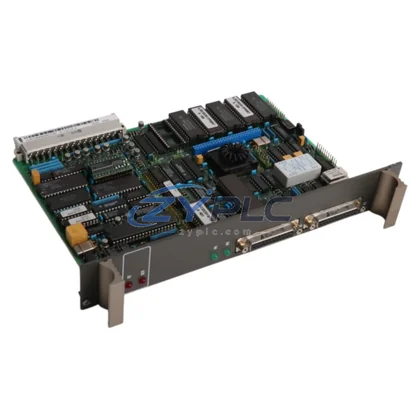
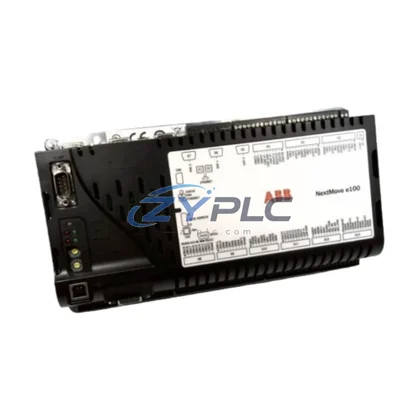
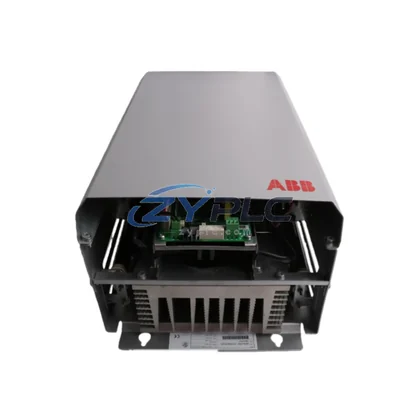
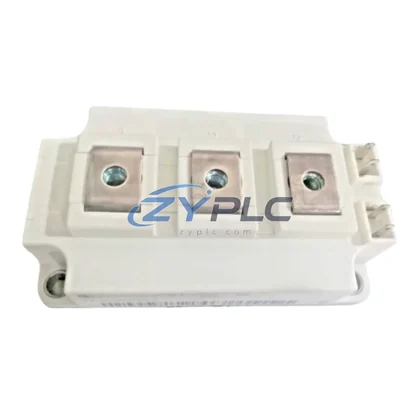
ABB DCS550-S01-0270-05-00-00 DC Drive for DCS550 Automation
The ABB DCS550-S01-0270-05-00-00 is a high-performance DC drive module from ABB’s renowned DCS550 series, engineered to deliver precise motor speed and torque control while significantly reducing energy consumption across demanding industrial production environments. Rated at 270 A continuous output current, this drive is purpose-built for applications where legacy DC motor infrastructure must be retained without sacrificing modern efficiency standards. Whether deployed in paper mills, metal processing lines, extruders, or heavy-duty conveyor systems, the DCS550-S01-0270-05-00-00 enables plant engineers to achieve measurable reductions in kWh consumption per production cycle, directly lowering operating costs and carbon footprint.
Product Specification Table
| Parameter |
Specification |
| SKU |
DCS550-S01-0270-05-00-00 |
| Brand / Series |
ABB / DCS550 |
| Rated Output Current |
270 A |
| Supply Voltage |
3-phase 400–500 VAC (±10%) |
| Drive Type |
4-Quadrant DC Drive (regenerative capable) |
| Typical Drive Efficiency |
≥97% at full load |
| Compatible Motor Types |
Separately excited DC motors, permanent magnet DC motors |
| Control Method |
Field-oriented armature current control, speed/torque loop |
| Communication Interfaces |
PROFIBUS-DP, Modbus RTU, DeviceNet (via optional fieldbus adapter) |
| Compatible Control Systems |
ABB AC500 PLC, ABB Freelance DCS, third-party SCADA/DCS via fieldbus |
| Application Environments |
Paper & pulp, metal rolling, winding/unwinding, extruders, conveyors |
| Energy Saving Value |
Regenerative braking energy recovery; optimized flux control reduces iron losses |
| Protection Class |
IP20 (cabinet installation) |
| Origin |
Finland |
| Warranty |
warranty terms confirmed during quotation — tested before shipment |
System Compatibility and Application
In a fully industrial Automation architecture, the DCS550-S01-0270-05-00-00 does not operate in isolation — it functions as the central drive node within a coordinated maintenance planning ecosystem. At the control layer, an ABB AC500 PM573 PLC issues speed and torque reference signals to the DCS550 via PROFIBUS-DP, enabling closed-loop regulation that eliminates the unplanned downtime associated with fixed-speed motor operation. The AC500’s high-speed digital I/O modules, such as the ABB DC532 digital I/O module, handle real-time feedback from encoder and tachometer signals, ensuring the drive responds within milliseconds to load changes on the production line.
For condition monitoring at the point of consumption, the ABB B23 energy meter or ABB M2M condition monitoring module can be integrated upstream of the drive cabinet to log active power (kW), reactive power (kVAR), and cumulative energy (kWh) per shift. This data feeds into the plant’s SCADA system, allowing energy managers to correlate drive loading profiles with production output and identify periods of unnecessary motor excitation. When paired with the ABB SREA-01 Ethernet adapter, the DCS550-S01-0270-05-00-00 can transmit real-time drive diagnostics — including armature current, field current, motor speed, and drive temperature — directly to an ABB Panel Builder 800 HMI or equivalent operator interface, giving line supervisors immediate visibility into drive health and energy consumption trends.
On the power supply side, the DCS550 series requires a stable, regulated DC field supply. The ABB SDCS-FEX-2 field excitation unit provides precisely controlled field current to the DC motor, working in tandem with the DCS550-S01-0270-05-00-00’s armature control loop to optimize the flux-speed characteristic curve. Proper field weakening control — managed automatically by the DCS550’s internal adaptive algorithms — allows the motor to operate at higher speeds with reduced field current, cutting excitation losses by up to 15% compared to fixed-field operation. For applications requiring coordinated multi-drive control, the ABB SDCS-COM-8 PROFIBUS adapter enables master-slave torque sharing between multiple DCS550 units on a common DC bus, a configuration widely used in tandem rolling mills and multi-section winding lines to balance mechanical load and minimize reactive energy circulation between drives.
At the system integration level, the ABB Mint WorkBench motion controller or a distributed ABB Freelance 800F DCS can serve as the supervisory control layer, orchestrating start/stop sequences, ramp profiles, and energy recovery cycles across the entire drive system. The DCS550-S01-0270-05-00-00 supports programmable acceleration and deceleration ramps, which — when tuned to match the mechanical inertia of the connected load — reduce peak current demand during motor starting, directly lowering the plant’s maximum demand charge on the utility bill.
Maintenance and Replacement Notes
In a typical paper winding application, an uncontrolled DC motor running at fixed speed wastes energy during every deceleration phase, dissipating kinetic energy as heat in braking resistors. The DCS550-S01-0270-05-00-00, operating in 4-quadrant regenerative mode, captures this braking energy and feeds it back into the AC supply network, achieving energy recovery rates of 20–35% depending on the duty cycle and inertia of the winding reel. Over a three-shift, 24-hour production day, this regenerative capability can translate to hundreds of kilowatt-hours of recovered energy — directly reducing the facility’s electricity bill without any change to production throughput.
In metal rolling and extrusion lines, where the motor load varies dramatically between the bite phase and the steady-state rolling phase, the DCS550’s adaptive current control continuously adjusts armature voltage to match the instantaneous torque demand. This eliminates the sustained overcurrent conditions that cause unnecessary I²R losses in the motor windings and drive power semiconductors. The result is a measurable reduction in motor operating temperature, which extends winding insulation life and reduces the frequency of unplanned motor replacements — a significant contributor to maintenance cost reduction in high-utilization facilities.
For conveyor and hoist applications, the DCS550-S01-0270-05-00-00’s programmable S-curve ramp profiles smooth out mechanical shock loads during start and stop cycles, reducing wear on gearboxes, couplings, and motor bearings. Fewer mechanical failures mean fewer unplanned production stoppages, improving overall equipment effectiveness (OEE) and reducing the energy cost per unit of output. When integrated with a predictive maintenance platform via the drive’s PROFIBUS or Modbus interface, vibration trends, current signature anomalies, and thermal data can be trended over time to schedule maintenance during planned downtime windows rather than reacting to catastrophic failures.
Every unit of the DCS550-S01-0270-05-00-00 supplied by ZYPLC undergoes full functional testing prior to shipment, including armature current loop calibration, field excitation verification, communication interface validation, and thermal cycling under load. This pre-shipment test protocol ensures that the drive performs to ABB factory specifications from the moment it is installed, eliminating the commissioning delays and energy inefficiencies associated with out-of-specification drives. All units are covered by a warranty terms confirmed during quotation from the date of shipment, with availability subject to RFQ confirmation for shipment arranged after confirmation to minimize production downtime.
Product Sourcing FAQ
Q1: How much energy can the DCS550-S01-0270-05-00-00 save compared to a non-regenerative DC drive?
In applications with frequent deceleration cycles — such as winding, hoisting, or reversing rolling mills — the 4-quadrant regenerative capability of the DCS550-S01-0270-05-00-00 typically recovers 20–35% of the braking energy that would otherwise be wasted as heat. The exact saving depends on the duty cycle, load inertia, and deceleration frequency of your specific application.
Q2: Is the DCS550-S01-0270-05-00-00 compatible with my existing ABB AC500 PLC and PROFIBUS network?
Yes. The DCS550 series natively supports PROFIBUS-DP communication. With the appropriate SDCS-COM-8 adapter fitted, the DCS550-S01-0270-05-00-00 integrates directly into an ABB AC500-based control architecture, allowing the PLC to issue speed/torque references and read drive status without any additional gateway hardware.
Q3: What is the recommended replacement or upgrade path if my existing DC drive is obsolete?
The DCS550-S01-0270-05-00-00 is a direct form-fit-function replacement for earlier ABB DCS400 and DCS500 series drives of equivalent current rating. For applications where a full AC drive conversion is planned in the future, the DCS550 can serve as an interim solution that maintains production continuity while the AC motor and drive upgrade is engineered and budgeted.
Q4: What does the warranty terms confirmed during quotation cover, and what testing is performed before shipment?
Every DCS550-S01-0270-05-00-00 unit is tested for full functional operation including armature current control loop, field excitation output, digital and analog I/O, and communication interface integrity before dispatch. The warranty terms confirmed during quotation covers defects in materials and workmanship under normal operating conditions. Units showing damage from incorrect installation, overvoltage events, or environmental contamination beyond the rated IP20 protection class are excluded from warranty coverage.