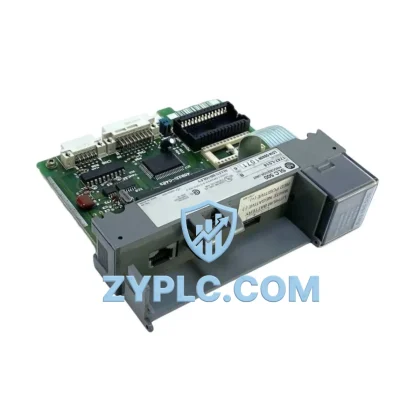
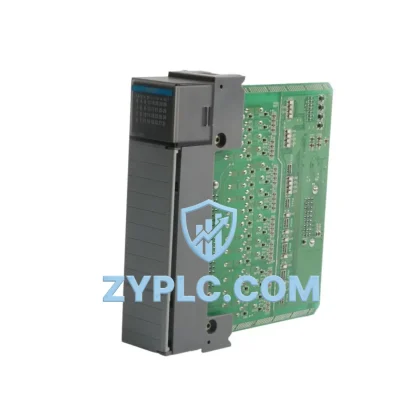
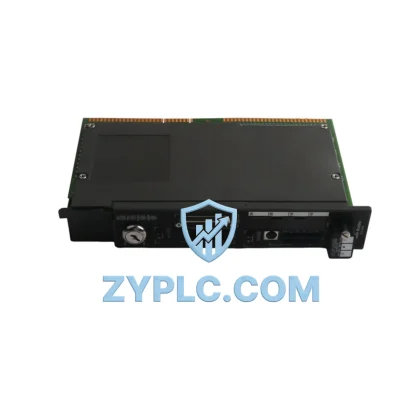
ABB DSQC 639 3HAC025097-001 System-Ready Main Computer for IRC5 Architecture
The ABB DSQC 639 (part number 3HAC025097-001) is the central processing unit of the ABB IRC5 robot controller platform, engineered to serve as the computational backbone across multi-axis robotic automation systems. Rather than functioning as a standalone component, the DSQC 639 operates at the intersection of every functional layer within a coordinated control architecture — from the motion execution layer and I/O signal distribution to the fieldbus communication network, operator interface, and safety supervision systems. Understanding its role within the full IRC5 system hierarchy is essential for engineers designing, commissioning, or maintaining high-availability robotic cells in demanding industrial environments.
In modern industrial automation, the main computer module is not merely a processor — it is the architectural anchor that determines system coherence, deterministic cycle performance, and long-term maintainability. The DSQC 639 fulfills this role within the IRC5 cabinet by managing real-time task scheduling, axis interpolation, program execution, and inter-module communication simultaneously. Its integration with the IRC5 drive system, safety controller, and fieldbus gateway modules ensures that every layer of the control hierarchy operates in synchronized coordination, reducing latency, eliminating signal ambiguity, and enabling predictable system behavior across all operating modes.
Architecture Specification Table
| Parameter |
Specification |
| Part Number |
3HAC025097-001 |
| Module Designation |
DSQC 639 |
| System Role |
Main Computer Unit — IRC5 Controller Platform |
| Compatible Platform |
ABB IRC5 Single Cabinet, Dual Cabinet, Panel Mounted Controller |
| Processor Architecture |
Embedded real-time processor with deterministic task scheduling |
| Operating System |
ABB RobotWare (compatible with RobotWare 5.x series) |
| Communication Interfaces |
Ethernet (LAN), USB, internal backplane bus to DSQC modules |
| Fieldbus Support |
DeviceNet, PROFIBUS, EtherNet/IP (via gateway modules) |
| I/O Coordination |
Interfaces with DSQC 651, DSQC 652, DSQC 328A I/O boards |
| Power Supply Compatibility |
Powered via IRC5 internal 24VDC system bus (DSQC 661 PSU) |
| Installation Environment |
IRC5 controller cabinet, DIN rail or backplane mounted |
| Operating Temperature |
0°C to +52°C (cabinet ambient) |
| Country of Origin |
Sweden |
| Warranty |
12-Month Warranty — Covered by ZYPLC quality assurance program |
| Contextual Integration |
Full Contextual Integration with IRC5 drive, safety, I/O, and HMI layers |
Coordinated Control System Design
The DSQC 639 does not operate in isolation. Its value is realized through its tight coordination with every other module within the IRC5 control cabinet and the broader automation cell. At the drive layer, the DSQC 639 communicates axis motion commands to the IRC5 drive units via the internal motion bus, ensuring synchronized multi-axis interpolation for 6-axis and 7-axis robot configurations. The drive system responds with real-time position and torque feedback, which the DSQC 639 uses to maintain closed-loop motion accuracy throughout each program cycle.
At the I/O layer, the DSQC 639 interfaces directly with digital and analog I/O boards such as the DSQC 651 (digital I/O, 24VDC), the DSQC 652 (digital I/O expansion), and the DSQC 328A analog I/O module. These boards handle signal exchange with end-of-arm tooling, conveyor encoders, vision system triggers, and safety interlocks. The DSQC 639 maps all I/O signals into the RobotWare execution environment, making them available to RAPID programs and system event routines without additional configuration overhead.
At the fieldbus and network layer, the DSQC 639 works in conjunction with communication gateway modules such as the DSQC 667 (DeviceNet master/slave) and DSQC 688 (PROFIBUS adapter) to enable the IRC5 system to participate in plant-wide automation networks. This allows the robot controller to receive production commands from upstream PLCs, report status to SCADA systems, and synchronize with peripheral equipment such as positioners, conveyors, and safety PLCs — all managed through the DSQC 639’s communication stack.
The power architecture supporting the DSQC 639 is provided by the DSQC 661 power supply unit, which distributes regulated 24VDC across the controller backplane. The DSQC 639 draws its operating power from this bus and monitors supply voltage stability as part of its system health supervision routine. In redundant or high-availability configurations, engineers may deploy dual power feed arrangements to ensure the DSQC 639 remains operational during primary supply interruptions.
At the human-machine interface layer, the DSQC 639 manages communication with the IRC5 FlexPendant (teach pendant), providing the operator interface with real-time program status, axis position data, alarm logs, and manual jogging capability. The FlexPendant connects to the DSQC 639 via a dedicated hot-plug port, allowing safe connection and disconnection during operation. For remote monitoring and programming, the DSQC 639 also supports RobotStudio connectivity over Ethernet, enabling offline simulation, program upload/download, and live system diagnostics from an engineering workstation.
Safety supervision is coordinated through the DSQC 400 safety controller board, which interfaces with the DSQC 639 to enforce SafeMove or hardwired safety zone logic. Emergency stop circuits, safety door interlocks, and speed monitoring functions are all processed through this safety layer, with the DSQC 639 receiving safety state signals that govern permissible motion modes and program execution states. This architecture ensures that safety functions remain independent of the main program execution path while remaining fully integrated into the system’s operational logic.
Application in Layered Automation Systems
The DSQC 639 is deployed across a wide range of industrial sectors where the IRC5 platform is the standard robotic control solution. In automotive manufacturing, IRC5 systems equipped with the DSQC 639 manage spot welding, arc welding, material handling, and assembly operations on high-throughput production lines. The DSQC 639’s deterministic cycle time and multi-task execution capability allow it to coordinate robot motion with conveyor tracking, weld timer control, and vision-guided part placement simultaneously.
In electronics and semiconductor manufacturing, the DSQC 639 supports precision pick-and-place, dispensing, and inspection applications where positional repeatability and cycle consistency are critical. Its integration with analog I/O modules and fieldbus networks allows it to interface with force/torque sensors, barcode readers, and upstream MES systems in a unified control architecture.
In food and beverage processing and pharmaceutical packaging, the DSQC 639 enables hygienic-design IRC5 robots to operate within GMP-compliant environments, coordinating with conveyor PLCs, checkweighers, and vision inspection systems via EtherNet/IP or PROFIBUS networks. The module’s robust operating temperature range and sealed cabinet installation make it suitable for washdown-adjacent environments when properly housed.
In metal fabrication and heavy industry, including steel processing, foundry automation, and heavy press tending, the DSQC 639 manages high-payload robot operations where thermal stability, vibration resistance, and long mean-time-between-failure (MTBF) are essential. Its compatibility with the full IRC5 drive range — including high-current drive units for large-frame robots — makes it the appropriate main computer for these demanding applications.
For system integrators and OEMs building multi-robot cells, the DSQC 639 supports MultiMove configurations in which multiple IRC5 controllers are coordinated under a single RobotWare task structure. This enables synchronized motion between two or more robots sharing a common workspace, with the DSQC 639 in each cabinet maintaining time-synchronized execution relative to the cell master controller.
Architecture Engineering FAQ
Q1: Is the DSQC 639 (3HAC025097-001) compatible with all IRC5 cabinet variants, and what RobotWare versions does it support?
The DSQC 639 is designed for use within the ABB IRC5 controller family, including the IRC5 Single Cabinet, IRC5 Dual Cabinet, and IRC5 Panel Mounted Controller (PMC). It is compatible with RobotWare 5.x software versions. Engineers should verify the specific RobotWare revision installed on their system and confirm compatibility with any optional software modules (MultiMove, SafeMove, Conveyor Tracking) before replacement. ZYPLC provides pre-sales technical consultation to assist with compatibility verification at no additional charge.
Q2: What is the recommended procedure for replacing a DSQC 639 in a live production environment, and how does the 12-Month Warranty apply?
Replacement of the DSQC 639 should be performed with the IRC5 cabinet fully de-energized and locked out per site LOTO procedures. Prior to removal, engineers should back up the system configuration, RobotWare license, and RAPID programs using RobotStudio or the FlexPendant backup function. After installation of the replacement DSQC 639, the system configuration and license must be restored before commissioning. All DSQC 639 units supplied by ZYPLC are covered by a 12-Month Warranty against manufacturing defects and functional failure under normal operating conditions, with direct technical support available throughout the warranty period.
Q3: Can the DSQC 639 be used in a redundant control architecture, and how does it interact with safety modules during fault conditions?
The IRC5 platform supports high-availability configurations through dual power feed arrangements and hot-standby drive architectures, but the DSQC 639 itself operates as a single main computer per controller cabinet. In multi-robot or redundant cell designs, system redundancy is typically achieved at the cell level through duplicate robot stations or failover PLC logic rather than dual DSQC 639 installations within a single cabinet. During fault conditions, the DSQC 639 interfaces with the DSQC 400 safety board to execute controlled stop sequences (Category 0, 1, or 2 per IEC 60204-1), log fault codes to the event log, and signal upstream systems via fieldbus status registers. ZYPLC maintains stock of DSQC 639 units to support rapid replacement in production-critical environments, minimizing unplanned downtime.
© 2026 ZYPLC. All rights reserved.
Original Source: https://zyplc.com
Contact: +86 19859288691 | plc.sales@zyplc.com