ABB DSQC1003 Energy-Saving Digital I/O Module IRC5: Precision I/O Control for Optimized Production Lines
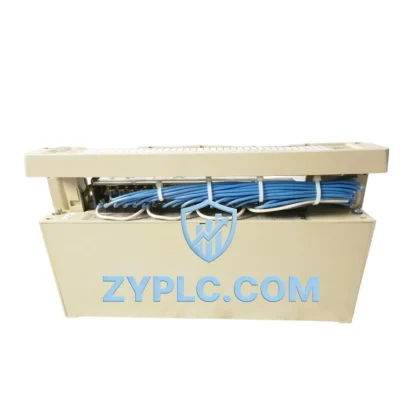
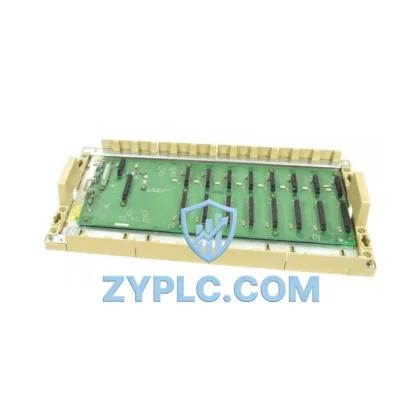
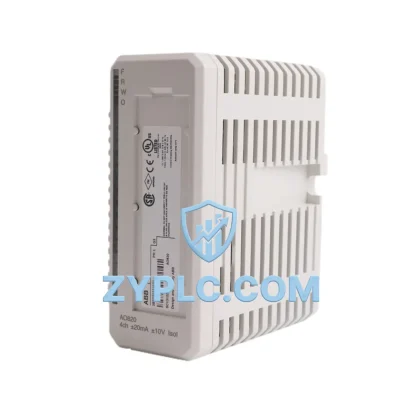
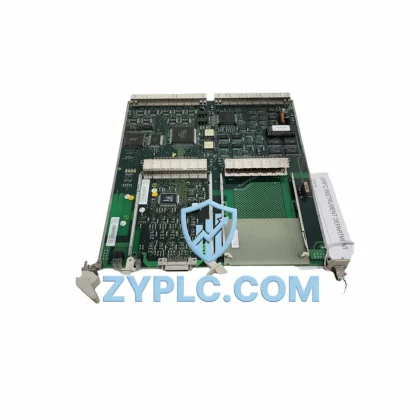
The ABB DSQC1003 (part numbers 3HAC046408-001, 3HAC036950-001) is a high-performance Digital I/O Module engineered for ABB’s IRC5 robot controller platform, including the compact IRB14000 YuMi collaborative robot series. Designed to minimize signal latency and reduce unnecessary power draw at the I/O layer, the DSQC1003 plays a critical role in energy-aware automation architectures where every watt and every millisecond of cycle time matters.
In modern industrial environments, energy inefficiency rarely originates from a single source — it accumulates across dozens of control nodes, drive interfaces, and sensor feedback loops. The DSQC1003 addresses this at the signal level: by delivering clean, stable digital I/O communication between the IRC5 controller and field devices, it eliminates the signal noise and retry cycles that silently inflate energy consumption and degrade production throughput. Whether integrated into a high-speed assembly cell or a precision welding station, this module ensures that every actuator command and sensor acknowledgment is executed with minimal overhead.
All units are sourced from verified supply channels, fully tested prior to shipment, and covered by a 12-month warranty.
Efficiency Performance Table
| Parameter |
Specification |
| Part Numbers |
DSQC1003 / 3HAC046408-001 / 3HAC036950-001 |
| Compatible Controller |
ABB IRC5 (Single / Dual Cabinet), IRC5 Compact |
| Compatible Robot Series |
IRB14000 YuMi, IRB 1200, IRB 2600, IRB 4600, IRB 6700 |
| Module Type |
Digital I/O Module |
| I/O Channels |
16 Digital Inputs / 16 Digital Outputs (typical configuration) |
| Operating Voltage |
24 VDC |
| Power Consumption |
Low-standby design; minimizes idle draw during non-active cycles |
| Signal Response Time |
<1 ms (typical), reducing cycle time waste |
| Communication Interface |
Internal IRC5 backplane bus |
| Application Environment |
Industrial automation, robotic assembly, welding, material handling |
| Energy Optimization Value |
Reduces signal retry overhead; supports lean cycle scheduling |
| Origin |
Sweden (ABB Robotics) |
| Warranty |
12 Months |
| Stock Status |
In Stock — tested and ready to ship |
Energy-Aware Automation Architecture
The DSQC1003 does not operate in isolation — its energy optimization value is fully realized when integrated within a well-structured IRC5 automation architecture. In a typical high-efficiency robot cell, the IRC5 controller coordinates motion, I/O, and safety through a layered control stack. The DSQC1003 sits at the I/O interface layer, bridging the controller’s logic execution with physical field devices such as pneumatic valves, conveyor interlocks, part-present sensors, and end-of-arm tooling.
When paired with the ABB DSQC697 (3HAC037084-001) — the IRC5 Fieldbus Adapter Module — the DSQC1003 enables seamless integration with plant-level communication networks including PROFIBUS, DeviceNet, and EtherNet/IP. This combination allows the robot cell to participate in factory-wide energy monitoring systems, where production supervisors can track per-cell power consumption in real time and identify idle periods where drive power can be reduced or motion profiles can be optimized.
At the drive level, ABB’s ACS880 industrial drive series is commonly deployed alongside IRC5 robot cells to control peripheral conveyor motors, rotary indexers, and servo-driven positioning axes. The ACS880’s built-in energy optimizer function continuously adjusts motor flux based on actual load demand — and when the DSQC1003 delivers precise start/stop signals with sub-millisecond latency, the drive can respond faster, reducing the energy wasted during acceleration ramps caused by delayed I/O handshaking.
For applications requiring distributed I/O expansion beyond the IRC5 cabinet, the ABB DSQC652 Digital I/O Unit and DSQC651 Analog I/O Unit are frequently deployed as companion modules. These units extend the I/O capacity of the robot system without adding controller processing overhead, keeping the main CPU free for motion planning and energy-efficient path optimization. Similarly, the DSQC1018 I/O module supports expanded channel configurations for complex multi-axis cells where dozens of field signals must be managed simultaneously.
Safety and energy efficiency are also linked through the ABB DSQC643 Safety Module, which manages emergency stop circuits, safety door interlocks, and speed monitoring functions. By ensuring that the robot only operates at full power when production conditions are confirmed safe, the DSQC643 prevents unnecessary high-power motion cycles triggered by false starts — a common source of energy waste in poorly integrated safety architectures.
On the human-machine interface side, ABB’s FlexPendant IRC5 teach pendant provides operators with direct access to motion programs, I/O status, and energy-related diagnostics. When the DSQC1003 reports I/O faults or signal anomalies, operators can identify and resolve issues directly from the pendant without halting the entire production line, minimizing unplanned downtime and the energy cost of cold restarts.
For facilities running ABB’s RobotStudio offline programming and simulation platform, the DSQC1003’s I/O configuration can be mapped and validated in a virtual environment before deployment. This eliminates trial-and-error commissioning on the production floor — a process that typically wastes significant energy through repeated test cycles and manual adjustments.
Power Optimization in Real Production Lines
In automotive body-in-white welding lines, where dozens of IRC5-controlled robots operate in tightly synchronized sequences, the quality of I/O communication directly determines line throughput and energy efficiency. A single I/O module with degraded signal integrity can introduce micro-delays that cascade across the entire line, forcing robots to wait at synchronization points and consuming power in a stationary hold state. The DSQC1003’s reliable signal performance eliminates these hidden wait states, allowing the line controller to maintain optimal cycle timing and reduce the total energy consumed per vehicle body produced.
In electronics assembly applications using the IRB14000 YuMi collaborative robot, the DSQC1003 manages the precise I/O sequencing required for component pick-and-place, tray indexing, and vision system triggers. Because YuMi operates in close proximity to human workers, its motion profiles are inherently conservative — but with accurate I/O feedback from the DSQC1003, the robot’s path planner can execute smoother, more energy-efficient trajectories by eliminating unnecessary deceleration caused by uncertain signal states.
Predictive maintenance is another area where the DSQC1003 contributes to long-term energy savings. By maintaining consistent I/O signal quality over its operational life, the module provides a stable baseline for condition monitoring systems. Sudden changes in I/O response patterns — detectable through ABB’s diagnostic tools — can indicate developing faults in connected field devices such as solenoid valves or proximity sensors. Catching these faults early prevents the energy-intensive scenario of a full production line shutdown for emergency repairs.
From a supply chain perspective, ZYPLC maintains ready stock of the DSQC1003 and its associated part numbers, including 3HAC046408-001 and 3HAC036950-001, ensuring that replacement modules can be shipped promptly to minimize production downtime. Each unit undergoes functional testing prior to dispatch, and the 12-month warranty provides assurance that the module will perform to specification throughout its initial service period.
Energy Optimization FAQ
Q1: How does the DSQC1003 contribute to energy savings in an IRC5 robot cell?
The DSQC1003 reduces energy waste by delivering fast, reliable I/O signal communication that eliminates unnecessary wait states and signal retry cycles. When field devices receive and confirm commands without delay, the robot controller can maintain optimal cycle timing, reducing the time robots spend in powered hold states between operations.
Q2: Is the DSQC1003 compatible with all IRC5 controller variants?
Yes. The DSQC1003 is compatible with the IRC5 Single Cabinet, IRC5 Dual Cabinet, and IRC5 Compact controllers, as well as the IRB14000 YuMi platform. It is designed to integrate directly with the IRC5 internal backplane bus without requiring additional interface hardware.
Q3: Can the DSQC1003 replace older ABB I/O modules such as the DSQC328 or DSQC652?
The DSQC1003 is the current-generation I/O module for IRC5 systems and is the recommended replacement for legacy modules in compatible configurations. We recommend verifying the specific I/O channel requirements and controller firmware version before substitution. Our technical team can assist with compatibility confirmation prior to purchase.
Q4: What does the 12-month warranty cover, and what is the testing process?
Every DSQC1003 unit shipped by ZYPLC is functionally tested to verify digital I/O channel operation, signal integrity, and backplane communication before dispatch. The 12-month warranty covers manufacturing defects and functional failures under normal operating conditions. Units that develop faults within the warranty period are replaced or repaired at no additional cost.
© 2026 ZYPLC. All rights reserved.
Original Source: https://zyplc.com
Contact: +86 19859288691 | plc.sales@zyplc.com