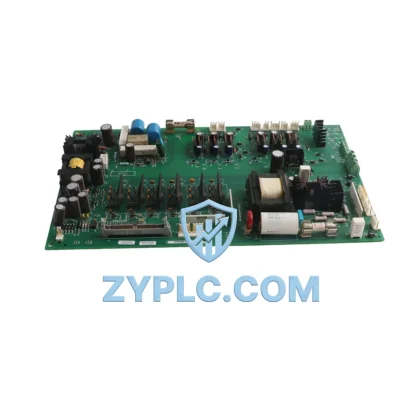
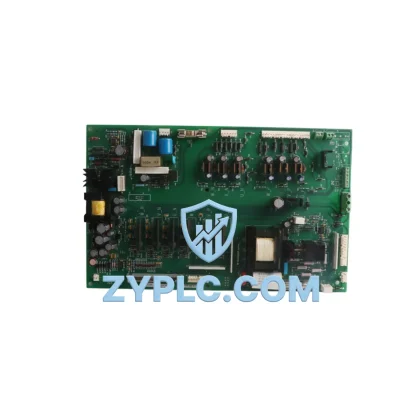
ABB DSQC236T Energy-Saving Axis Drive Board for Optimized S4C+ Automation
The ABB DSQC236T is a high-performance axis drive board engineered for ABB S4C+ series robot controllers, delivering precise multi-axis servo motion control with a strong focus on energy efficiency and production line optimization. Designed for demanding industrial environments, the DSQC236T reduces unnecessary power draw during idle and low-load cycles, directly contributing to lower energy consumption per production unit. Whether deployed in automotive body welding, material handling, or precision assembly, this drive board enables factories to achieve tighter motion control, shorter cycle times, and measurable reductions in operational energy costs.
At ZYPLC, every ABB DSQC236T unit is sourced from verified supply channels, subjected to full functional testing prior to shipment, and backed by a 12-month warranty. In-stock availability ensures minimal lead time, supporting urgent maintenance and unplanned downtime recovery scenarios.
Efficiency Performance Table
| Parameter |
Specification / Value |
| Part Number / SKU |
DSQC236T |
| Brand |
ABB |
| Series |
S4C+ Robot Controller |
| Product Type |
Axis Drive Board |
| Controlled Axes |
Multi-axis servo drive (up to 6 axes) |
| Operating Voltage |
24 VDC logic / AC servo bus |
| Power Consumption |
Optimized low-idle draw; active power management per axis |
| Drive Efficiency |
High-efficiency PWM servo switching; minimizes reactive power loss |
| Compatible Systems |
ABB S4C+ controller platform; IRB series robots |
| Application Environment |
Automotive, electronics assembly, material handling, welding |
| Energy Saving Value |
Reduces per-cycle energy waste via precise torque and speed regulation |
| Communication Interface |
Internal S4C+ backplane bus |
| Origin |
Sweden (ABB) |
| Warranty |
12-Month Warranty (ZYPLC) |
| Stock Status |
In Stock — Ships after outgoing test |
Energy-Aware Automation Architecture
The DSQC236T does not operate in isolation — its energy efficiency contribution is best understood within the broader ABB S4C+ automation architecture. The ABB DSQC236A computer board serves as the central processing unit of the S4C+ controller, coordinating motion planning and task scheduling. The DSQC236T receives axis commands from this board and translates them into precise PWM drive signals, ensuring that servo motors only draw the current required for the actual load at each moment in the motion profile.
On the power supply side, the ABB DSQC374 power distribution board regulates and distributes DC bus voltage to the drive boards, including the DSQC236T. Stable, clean power delivery is essential for efficient servo operation — voltage ripple or transient spikes force the drive to compensate, increasing heat dissipation and energy waste. Working in tandem with the ABB DSQC662 fieldbus adapter, the system can receive real-time production scheduling data via DeviceNet or Profibus, allowing the controller to pre-position axes and reduce unnecessary acceleration-deceleration cycles that consume peak power.
For I/O coordination, the ABB DSQC652 digital I/O board manages sensor feedback and actuator signals that inform the DSQC236T when to hold position, when to release torque, and when to enter a low-power standby state between production cycles. This closed-loop feedback architecture is critical for reducing the energy consumed during robot dwell time — a frequently overlooked source of energy waste on high-volume production lines.
In multi-robot cells, the ABB DSQC679 teach pendant interface and the ABB DSQC693 safety board work together to enforce safe speed and torque limits, which indirectly supports energy efficiency by preventing over-torque events that would otherwise trigger protective current limiting and energy dissipation through braking resistors. The ABB DSQC609 power unit further supports the drive system by providing regulated power to the control electronics, ensuring the DSQC236T operates within its optimal thermal and electrical envelope.
For energy monitoring at the system level, integrating an external power meter or energy analyzer at the robot controller cabinet input — alongside the DSQC236T’s internal axis-level current feedback — provides a complete picture of per-robot energy consumption. This data can be fed into a SCADA or MES platform via the ABB DSQC658 Ethernet board, enabling plant-wide energy dashboards and shift-level consumption reporting.
Power Optimization in Real Production Lines
In high-throughput manufacturing environments, the energy profile of a robot arm is rarely flat. Acceleration peaks, sustained high-speed traversal, deceleration, and idle dwell each carry different power demands. The ABB DSQC236T addresses this variability through its axis-level drive architecture: each axis is driven independently, meaning that a robot holding position on axes 1–3 while only axes 4–6 are in motion will not draw unnecessary current on the stationary axes. This granular control directly reduces reactive power consumption and lowers the thermal load on the drive board itself, extending component service life.
On automotive body-in-white lines where cycle times are measured in seconds, the DSQC236T’s fast torque response allows the robot to complete its motion path in the minimum time possible, reducing the proportion of each cycle spent at peak power draw. Shorter peak-power windows translate directly into lower average energy consumption per part produced. Over a three-shift operation running 250 days per year, even a 5–8% reduction in per-cycle energy draw represents significant cost savings at the facility level.
Predictive maintenance is another dimension where the DSQC236T contributes to operational efficiency. Abnormal current draw patterns on a specific axis — detectable through the S4C+ controller’s diagnostic logs — are often early indicators of mechanical wear in the robot’s gearbox or bearing assembly. Identifying these patterns before a failure occurs allows maintenance teams to schedule interventions during planned downtime rather than responding to unplanned stoppages, which carry far higher costs in lost production and emergency labor. ZYPLC’s 12-month warranty on the DSQC236T provides additional assurance that the replacement unit itself will not introduce new failure modes during the critical post-maintenance period.
For factories operating mixed fleets of ABB robots across multiple generations, the DSQC236T’s compatibility within the S4C+ platform ensures that energy optimization efforts can be standardized across the relevant robot population without requiring controller-level upgrades. This compatibility reduces spare parts inventory complexity and allows maintenance engineers to apply consistent diagnostic and replacement procedures across the fleet.
Energy Optimization FAQ
Q1: How does the ABB DSQC236T contribute to reducing energy consumption on the production line?
The DSQC236T controls each robot axis independently, ensuring that servo motors only draw current proportional to the actual load and motion demand at any given moment. This eliminates the constant high-current draw that occurs when a single shared drive powers all axes regardless of activity, reducing average power consumption during partial-motion and dwell phases of the production cycle.
Q2: Is the DSQC236T compatible with all ABB S4C+ robot models?
The DSQC236T is designed for the ABB S4C+ controller platform and is compatible with the IRB series robots that use this controller generation. Compatibility with specific robot models should be verified against the robot’s controller configuration and axis count. ZYPLC’s technical team can assist with compatibility confirmation prior to purchase.
Q3: What testing process does ZYPLC perform before shipping the DSQC236T?
Every DSQC236T unit undergoes a full outgoing functional test at ZYPLC before shipment. This includes power-on verification, axis drive signal output testing, and communication interface checks. Units that do not pass testing are not shipped. Test records are available upon request for quality-critical applications.
Q4: What does the 12-month warranty cover, and how is a warranty claim handled?
ZYPLC’s 12-month warranty covers manufacturing defects and functional failures under normal operating conditions. If a unit fails within the warranty period, ZYPLC will provide a replacement or repair at no additional cost. Warranty claims are handled directly through ZYPLC’s sales and technical support team. Contact details are provided below.
© 2026 ZYPLC. All rights reserved.
Original Source: https://zyplc.com
Contact: +86 19859288691 | [email protected]