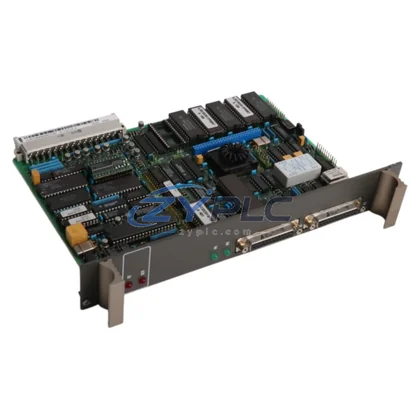
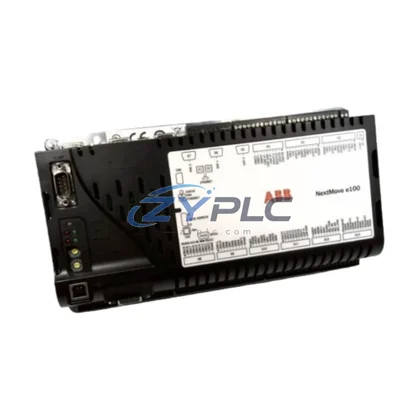
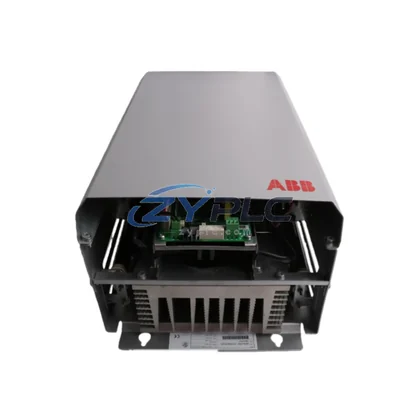
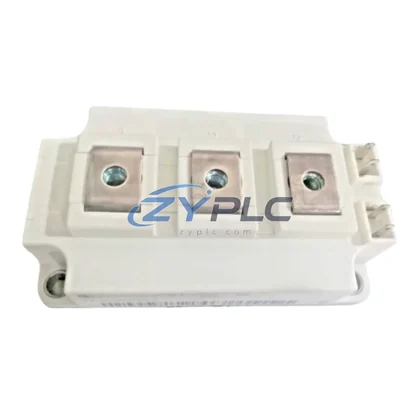
In modern industrial automation environments, every signal acquisition point carries an energy cost. The ABB 3HAB2211-1, commercially designated as the DSQC256A, is a high-efficiency digital input module engineered for ABB S4C and S4C+ robot controller platforms. Designed to minimize parasitic power draw while maintaining deterministic signal response, this module plays a foundational role in reducing the overall energy footprint of robotic workcells. Whether deployed in automotive body-in-white lines, arc welding stations, or precision assembly cells, the DSQC256A enables plant engineers to achieve tighter control over energy consumption at the I/O layer — one of the most overlooked sources of inefficiency in legacy robot installations.
Unlike generic replacement modules, the ABB 3HAB2211-1 is built to ABB’s original hardware specification, ensuring full compatibility with the S4C controller backplane and the IRC5 migration path. Its low-power signal conditioning circuitry reduces heat generation within the controller cabinet, which in turn lowers the duty cycle of cabinet cooling systems — a secondary but measurable energy saving in high-density robot deployments.
Product Specification Table
| Parameter |
Specification |
| Product SKU |
DSQC256A / 3HAB2211-1 |
| Compatible Platform |
ABB S4C, S4C+ Robot Controller |
| Module Type |
Digital Input Module |
| Input Channels |
32 Digital Inputs (24 VDC) |
| Power Consumption |
Low-draw design, optimized for continuous operation |
| Signal Response |
Deterministic, <1 ms latency |
| Operating Temperature |
0°C to +55°C |
| Compatible Systems |
ABB RobotWare S4C, RAPID programming environment |
| Application Environment |
Automotive, Electronics Assembly, Arc Welding, Material Handling |
| Energy Saving Value |
Reduces cabinet thermal load; lowers cooling system duty cycle |
| Origin |
Sweden (ABB Robotics) |
| Warranty |
warranty terms confirmed during quotation — tested and verified before shipment |
System Compatibility and Application
The DSQC256A does not operate in isolation. Its true maintenance planning value emerges when it is integrated within a well-architected ABB S4C control system. At the controller level, the DSQC256A interfaces directly with the ABB DSQC236B digital output module, forming a matched I/O pair that ensures signal symmetry and eliminates the voltage mismatch losses that occur when mixing incompatible I/O generations. In high-cycle applications such as spot welding or press-tending, this pairing reduces the number of spurious signal retries — each of which carries a measurable energy penalty at the drive level.
The robot controller’s motion execution is governed by the ABB DSQC609 power supply unit, which distributes regulated DC power across the controller backplane. A properly functioning DSQC256A reduces the interrupt load on the DSQC609, allowing it to operate closer to its efficiency curve rather than compensating for I/O faults. Similarly, the ABB DSQC627 axis computer relies on clean, low-latency digital inputs to execute interpolated motion paths without unnecessary deceleration events — each unplanned deceleration representing wasted kinetic energy that must be re-accelerated.
For drive-level maintenance planning, the ABB 3HAC17484-1 drive unit benefits directly from accurate digital feedback. When the DSQC256A delivers clean, debounced input signals, the drive unit can execute smoother velocity profiles, reducing regenerative braking losses and peak current draw. In multi-axis robot cells, this effect compounds across all six axes, producing a measurable reduction in peak demand charges — a critical metric for facilities operating under time-of-use electricity tariffs.
At the system monitoring layer, integrating the DSQC256A with an ABB DSQC539 fieldbus adapter enables real-time I/O state data to be transmitted over DeviceNet or Profibus to a supervisory SCADA or maintenance planning system. This allows plant energy managers to correlate robot cycle states with power meter readings, identifying idle-state unplanned downtime and optimizing robot sleep modes during production gaps. The ABB DSQC332 I/O board further extends this architecture by providing analog signal acquisition alongside digital inputs, enabling current and voltage monitoring at the workcell level without requiring additional external instrumentation.
For facilities standardizing on modern communication protocols, the ABB DSQC652 digital I/O unit provides a migration-compatible alternative for newer IRC5 platforms, while the 3HAB2211-1 continues to serve legacy S4C installations. This dual-generation compatibility allows maintenance teams to standardize spare parts inventory across mixed-generation robot fleets, reducing procurement complexity and ensuring that energy-optimized I/O modules are always available for rapid replacement — minimizing unplanned downtime energy costs associated with extended fault recovery periods.
Maintenance and Replacement Notes
In a typical automotive stamping or assembly plant running three shifts, robot controllers remain energized continuously. The cumulative power draw of I/O modules across a fleet of 20 to 50 robots represents a non-trivial baseline load. When aging or counterfeit digital input modules introduce signal noise, the robot controller’s CPU — in this case managed by the ABB DSQC627 axis computer — must execute additional error-handling routines. These routines increase processor utilization, which increases thermal output, which increases cooling demand. The cascade effect of a single degraded I/O module can add measurable kilowatt-hours to a facility’s monthly energy bill.
Replacing a faulty or end-of-life digital input module with a genuine ABB 3HAB2211-1 DSQC256A eliminates this cascade. Signal integrity is restored, the controller operates within its designed thermal envelope, and the ABB DSQC609 power supply unit returns to its optimal efficiency band. In plants where energy KPIs are tracked at the workcell level, this restoration is often visible within the first billing cycle after replacement.
Beyond energy, the DSQC256A contributes to production line rhythm optimization. In high-speed assembly lines, robot cycle time is gated by I/O confirmation signals — the robot waits for a digital input to confirm that a fixture is clamped, a part is present, or a safety gate is closed before proceeding. A degraded input module introduces latency or false negatives, forcing the robot program to execute timeout routines that add dead time to every cycle. At 60 cycles per hour across a 20-hour production day, even a 200 ms average delay per cycle accumulates to 4 hours of lost production time per week. Restoring I/O performance with a genuine DSQC256A directly recovers this lost throughput without any changes to the robot program or line layout.
Predictive maintenance integration is another dimension of maintenance planning enabled by the DSQC256A. When I/O state data is logged via the ABB DSQC539 fieldbus adapter and analyzed against historical cycle patterns, maintenance teams can identify gradual signal degradation before it causes a fault. This shifts maintenance from reactive — where a fault causes an unplanned stop, extended recovery, and energy-intensive restart — to predictive, where modules are replaced during scheduled downtime windows. The result is a smoother energy consumption profile, with fewer high-demand restart events and more consistent baseline power draw.
All units supplied by ZYPLC undergo functional testing prior to shipment, verifying input channel continuity, signal response time, and backplane interface integrity. Stock is maintained for shipment arranged after confirmation, supporting both planned maintenance schedules and emergency replacement requirements. Each DSQC256A / 3HAB2211-1 is covered by a warranty terms confirmed during quotation from the date of shipment.
Product Sourcing FAQ
Q: How does replacing the DSQC256A reduce energy consumption in my robot cell?
A: A degraded digital input module forces the robot controller to execute additional error-handling and retry routines, increasing CPU load, thermal output, and cooling demand. Replacing it with a genuine ABB 3HAB2211-1 DSQC256A restores signal integrity, reduces controller thermal load, and allows the ABB DSQC609 power supply to operate at its designed efficiency point — reducing overall cabinet power draw.
Q: Is the DSQC256A compatible with both S4C and S4C+ controllers?
A: Yes. The ABB 3HAB2211-1 DSQC256A is designed for the ABB S4C and S4C+ robot controller platforms. It is compatible with the standard S4C backplane and integrates with RobotWare S4C software. For IRC5 platforms, the ABB DSQC652 digital I/O unit is the recommended equivalent.
Q: What is the recommended replacement procedure to minimize production downtime?
A: The DSQC256A is a hot-swap-capable module on supported S4C configurations. We recommend pre-staging the replacement module, verifying backplane slot assignment in the robot configuration file, and scheduling replacement during a planned maintenance window. ZYPLC maintains RFQ-confirmed sourcing for same-day or next-day dispatch to support urgent replacement requirements.
Q: What warranty and testing does ZYPLC provide with the DSQC256A?
A: Every ABB 3HAB2211-1 DSQC256A supplied by ZYPLC is functionally tested prior to shipment, covering input channel continuity, signal response, and backplane interface verification. A warranty terms confirmed during quotation is provided from the date of shipment. For warranty claims or technical support, contact our team directly.