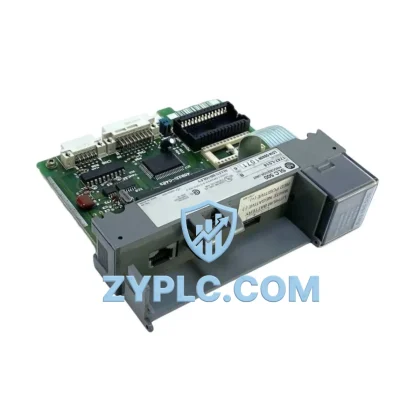
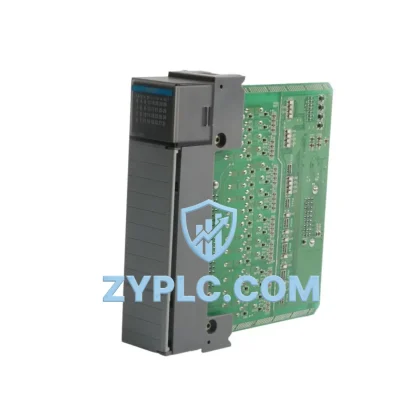
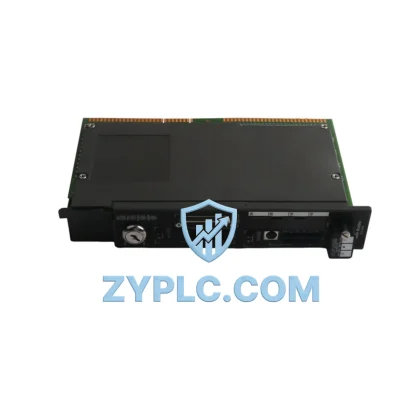
ABB DSQC3037 System-Ready Controller for IRB7600 Architecture: Control System Architecture and Upstream-Downstream Coordination
The ABB DSQC3037 is a dedicated robot controller module engineered specifically for the IRB7600 series — ABB’s flagship heavy-payload industrial robot platform rated for payloads up to 500 kg. Within a layered automation architecture, the DSQC3037 does not function as a standalone component; it operates as a critical node within the IRC5 controller cabinet, coordinating signal flow between the motion control layer, the I/O processing layer, the fieldbus communication layer, and the power distribution layer. Understanding its role within the full system hierarchy is essential for engineers designing, commissioning, or maintaining high-reliability robotic cells in demanding industrial environments.
The DSQC3037 (ABB part number 3HAC062339-004 / 3HAC062339-006) is the primary axis computer board responsible for managing servo drive commands, encoder feedback processing, and real-time motion interpolation for the IRB7600’s six-axis kinematic chain. It works in direct coordination with the DSQC3038 drive unit and the DSQC1000 main computer board, forming the computational backbone of the IRC5 single-cabinet controller. The axis computer receives trajectory data from the main computer, translates it into precise torque and velocity commands, and distributes those commands to the servo modules governing each joint axis. Any disruption in this signal chain — whether from a failed axis board, a degraded backplane connection, or a communication fault on the internal PROFIBUS segment — will result in axis errors, motion faults, or full controller shutdown.
Architecture Specification Table
| Parameter |
Specification |
| Part Number |
3HAC062339-004 / 3HAC062339-006 |
| Module Designation |
DSQC3037 |
| Compatible Platform |
ABB IRB7600 Series (IRC5 Controller) |
| System Role |
Axis Computer / Motion Control Board |
| Controller Cabinet |
IRC5 Single Cabinet / IRC5 Compact |
| Communication Interface |
Internal PROFIBUS, Ethernet (service port), DeviceNet optional |
| Axes Supported |
Up to 6 servo axes + external axes |
| Operating Voltage |
24 VDC (logic supply via DSQC609 power unit) |
| Operating Temperature |
0°C to +52°C (controller cabinet ambient) |
| Mounting |
IRC5 backplane slot, DIN-rail compatible sub-rack |
| Firmware Compatibility |
RobotWare 6.x / RobotWare 7.x |
| Related Part Numbers |
3HAC064662-001, 3HAC023195-001 |
| Origin |
Sweden (ABB Robotics) |
| Warranty |
12-Month Warranty (ZYPLC) |
| Stock Condition |
New / Refurbished, Fully Tested |
Coordinated Control System Design
The DSQC3037 axis computer is most accurately understood as the motion execution layer within the IRC5 controller’s internal architecture. At the top of the control hierarchy sits the DSQC1000 main computer, which runs the RobotWare operating system, manages RAPID program execution, handles operator interface communication via the FlexPendant (3HAC028357-001), and coordinates all high-level task scheduling. The DSQC1000 passes motion primitives down to the DSQC3037, which performs real-time interpolation and servo command generation at the axis level.
Power distribution within the IRC5 cabinet is managed by the DSQC609 power supply unit, which provides regulated 24 VDC logic power to the DSQC3037, the DSQC1000, and all I/O modules installed in the system. A failure in the DSQC609 will cascade immediately to the axis computer, making power layer integrity a prerequisite for stable motion control. Engineers commissioning IRB7600 cells should always verify DSQC609 output voltage stability before diagnosing axis computer faults.
The I/O layer in a typical IRB7600 installation relies on DSQC652 digital I/O modules and DSQC651 analog I/O modules, which interface with end-of-arm tooling, safety interlocks, conveyor synchronization signals, and process sensors. These modules communicate with the DSQC3037 and DSQC1000 via the internal DeviceNet segment within the IRC5 cabinet. For applications requiring fieldbus connectivity to external PLCs or SCADA systems — such as a Siemens S7-1500 or Allen-Bradley ControlLogix managing a production line — the DSQC688 fieldbus adapter provides PROFINET or EtherNet/IP gateway functionality, bridging the robot controller’s internal network with the plant-level control network.
In multi-robot or coordinated motion applications, the IRC5 MultiMove option allows multiple IRB7600 units to operate under a single controller, with the DSQC3037 in each drive system receiving synchronized motion commands. This architecture is common in heavy automotive assembly, large-scale material handling, and aerospace component manufacturing, where coordinated payload transfer between two or more IRB7600 robots requires microsecond-level synchronization across axis computers. The backplane interconnect within the IRC5 cabinet — specifically the DSQC508 backplane board — provides the physical communication path between the axis computer, drive modules, and I/O sub-racks, and its integrity is critical to system reliability.
For safety-rated applications, the IRC5 SafeMove2 option integrates directly with the DSQC3037’s motion monitoring functions, enabling speed supervision, position monitoring, and safe stop functions compliant with ISO 10218-1 and IEC 62061. This is particularly relevant in collaborative zones where the IRB7600 operates in proximity to human workers or where safety-rated stop categories (SS1, SS2, SOS) must be enforced at the axis level.
Application in Layered Automation Systems
Automotive Manufacturing: In body-in-white welding lines, the IRB7600 equipped with a functional DSQC3037 axis computer handles spot welding gun manipulation, part transfer between press stations, and sealer application. The axis computer’s real-time servo control ensures path accuracy within ±0.05 mm, critical for weld nugget placement consistency. Integration with line PLCs via DSQC688 PROFINET adapters allows the robot to receive part-present signals, conveyor position data, and quality gate clearance before initiating each motion sequence.
Power Generation and Heavy Industry: In turbine blade handling, large casting manipulation, and transformer core assembly, the IRB7600’s 500 kg payload capacity — managed through the DSQC3037’s axis torque control — enables precise positioning of components that would otherwise require overhead cranes. The controller module’s encoder feedback processing ensures that gravitational load compensation algorithms function correctly, preventing axis drift under heavy static loads.
Petrochemical and Process Industries: In hazardous material handling and drum filling applications, the IRB7600 operates in explosion-protected zones with the IRC5 controller located in a remote safe area. The DSQC3037 manages extended cable runs to the robot’s servo drives, maintaining signal integrity over distances that would degrade performance in less robust axis computer designs. Fieldbus integration via DeviceNet or PROFIBUS connects the robot to distributed control systems managing the broader process plant.
Mining and Metallurgy: In ore sample handling, ladle pouring assistance, and furnace charging applications, the IRB7600 operates in high-temperature, high-vibration environments. The DSQC3037’s robust design tolerates the electrical noise generated by large induction furnaces and variable-frequency drives, maintaining stable motion control in environments where lesser controller hardware would experience frequent communication faults or axis errors.
Packaging and Palletizing: In end-of-line palletizing systems, the IRB7600 with a functional DSQC3037 handles mixed-SKU layer building at rates exceeding 1,500 cycles per hour. The axis computer’s motion interpolation efficiency allows the robot to execute smooth, energy-optimized trajectories that reduce cycle time while minimizing mechanical stress on the wrist and arm structure — directly extending the service interval for bearings, gearboxes, and cable harnesses.
Architecture Engineering FAQ
Q1: Is the DSQC3037 (3HAC062339-004) directly interchangeable with the 3HAC062339-006 revision, and will it require RobotWare reconfiguration after replacement?
The -004 and -006 revision suffixes indicate minor hardware revisions that are functionally interchangeable within the same IRC5 controller generation. After physical replacement, the IRC5 system will typically perform an automatic hardware recognition sequence on the next boot cycle. Depending on the installed RobotWare version (6.x or 7.x), a system parameter backup and restore procedure is recommended to ensure axis calibration data, SafeMove2 configuration, and I/O mapping are preserved. Always perform a mastering verification (revolution counter update) after axis computer replacement to confirm encoder reference integrity across all six axes.
Q2: Can the DSQC3037 be used in an IRC5 Compact controller, and are there architectural differences compared to the standard IRC5 single-cabinet installation?
The DSQC3037 is compatible with both the IRC5 standard single-cabinet and the IRC5 Compact controller variants used with smaller IRB series robots. However, for IRB7600 installations, the standard IRC5 single cabinet is the correct platform due to the drive power requirements of the 7600’s servo motors. The IRC5 Compact is not rated for the drive current demands of a 500 kg payload robot. When sourcing replacement axis computers, always confirm the controller cabinet type and RobotWare version with your ABB service documentation before installation.
Q3: What does the 12-Month Warranty cover for the DSQC3037, and what is the recommended spare parts strategy for long-term IRB7600 fleet maintenance?
The 12-Month Warranty provided by ZYPLC covers manufacturing defects, functional failures under normal operating conditions, and DOA (dead-on-arrival) units, with replacement or full refund options. For long-term IRB7600 fleet maintenance, the recommended strategy is to maintain at least one spare DSQC3037 axis computer per four to six robots in production, alongside spares for the DSQC609 power supply and DSQC652 I/O modules — the three highest-replacement-frequency components in the IRC5 controller. ZYPLC maintains in-stock inventory of DSQC3037 and related IRC5 components to support rapid deployment, minimizing unplanned downtime in critical production environments. Contact our technical team for volume pricing and consignment stock arrangements.
© 2026 ZYPLC. All rights reserved.
Original Source: https://zyplc.com
Contact: +86 19859288691 | plc.sales@zyplc.com