ABB DSQC3060 System-Ready Controller Module for IRB Architecture: Control Layer Coordination and System-Wide Integration
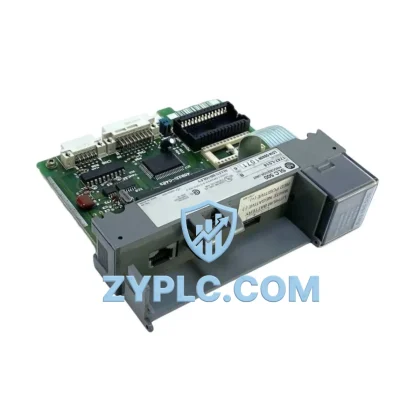
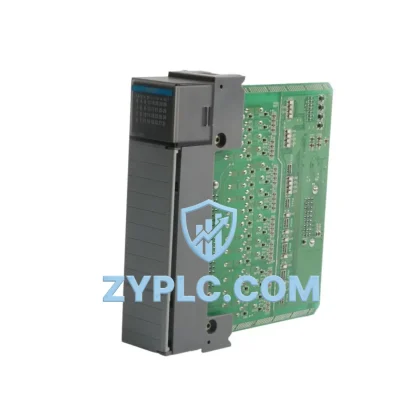
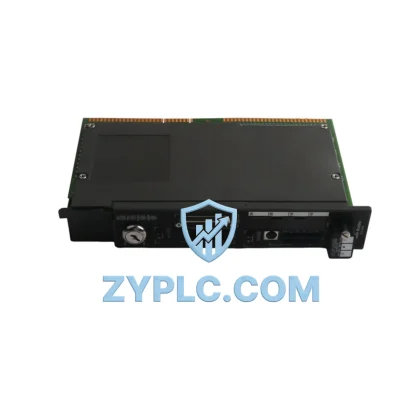
The ABB DSQC3060 (3HAC065726-001) is a high-reliability robot controller module engineered for seamless deployment within ABB IRC5 and IRC5P control cabinet architectures. Rather than functioning as a standalone component, the DSQC3060 occupies a critical position within the layered automation hierarchy — bridging the control layer, I/O processing layer, and communication backbone of ABB IRB-series robotic systems. Its role in maintaining signal integrity, coordinating axis motion, and supporting real-time data exchange makes it an indispensable element in both new system builds and long-term maintenance programs across industrial automation environments.
In a complete ABB robot control architecture, the DSQC3060 works in close coordination with the IRC5 main computer unit, the DSQC662 fieldbus adapter, and the DSQC1000 drive module to ensure synchronized motion control and deterministic cycle execution. The module interfaces directly with the axis computer board — typically the DSQC668 or DSQC540 — to relay encoder feedback, manage servo loop timing, and maintain positional accuracy across all six robot axes. This tight integration between the controller module and the drive chain is what enables the IRB 6700, IRB 760, IRB 4600, and IRB 2600 series robots to achieve the repeatability tolerances demanded by automotive welding, palletizing, and precision assembly applications.
At the I/O layer, the DSQC3060 supports structured communication with distributed I/O nodes via the DSQC652 digital I/O board and DSQC651 analog I/O board, enabling the controller to receive sensor signals, manage end-effector outputs, and coordinate safety interlocks without introducing latency into the control loop. This architecture ensures that the robot cell remains responsive to upstream PLC commands — typically delivered via PROFIBUS-DP, DeviceNet, or EtherNet/IP — while simultaneously managing internal motion sequences with microsecond-level precision.
From a network layer perspective, the DSQC3060 supports integration with plant-level SCADA systems and MES platforms through the IRC5 controller’s built-in Ethernet port and optional fieldbus gateway modules such as the DSQC688. This connectivity allows production engineers to implement remote diagnostics, cycle time monitoring, and predictive maintenance routines without interrupting live production. In redundant system designs — common in automotive body-in-white lines and continuous process applications — the DSQC3060 supports hot-standby configurations that minimize unplanned downtime and protect throughput targets.
The power layer of the IRC5 cabinet, anchored by the DSQC609 power supply unit and supported by the DSQC604 capacitor bank, provides the stable DC bus voltage that the DSQC3060 requires for consistent operation across ambient temperature ranges from 0°C to 45°C. This thermal tolerance, combined with the module’s conformal-coated PCB design, makes it suitable for deployment in foundry environments, paint shop booths, and outdoor-rated enclosures where humidity and particulate contamination are ongoing concerns.
At the human-machine interface layer, the DSQC3060 communicates status and fault data to the FlexPendant teach pendant and to the RobotStudio offline programming environment, enabling maintenance technicians to perform rapid fault isolation, parameter backup, and firmware verification without specialized test equipment. This transparency across the HMI layer significantly reduces mean time to repair (MTTR) and supports the structured preventive maintenance intervals that ABB recommends for IRC5-based installations operating on multi-shift production schedules.
For system integrators managing multi-robot cells, the DSQC3060’s compatibility with MultiMove configurations — where a single IRC5 controller coordinates up to four mechanical units simultaneously — adds substantial architectural value. In such configurations, the module’s deterministic communication with the DSQC668 axis computer and the DSQC662 fieldbus adapter ensures that coordinated path planning remains synchronized across all active manipulators, a requirement in arc welding, dispensing, and collaborative handling applications where path deviation between robots must be held within fractions of a millimeter.
Long-term supply chain continuity is a critical consideration for any automation program built around ABB IRC5 architecture. The DSQC3060 is stocked and available for immediate dispatch, supported by a 12-Month Warranty covering manufacturing defects and functional performance. Each unit undergoes functional verification prior to shipment, ensuring that replacement modules can be installed and commissioned with minimal engineering intervention — a key advantage in facilities where robot downtime carries significant production cost implications.
Architecture Specification Table
| System Role |
Robot Controller Module — IRC5 Control Cabinet |
| Part Number |
DSQC3060 / 3HAC065726-001 |
| Compatible Series |
ABB IRB 760, IRB 6700, IRB 4600, IRB 2600, IRB 1600 |
| Controller Platform |
ABB IRC5 / IRC5P / IRC5 Compact |
| Communication Protocols |
PROFIBUS-DP, DeviceNet, EtherNet/IP, Modbus TCP |
| Operating Voltage |
24 VDC (nominal), supplied via IRC5 internal DC bus |
| Operating Temperature |
0°C to +45°C (storage: -25°C to +55°C) |
| Installation Environment |
IRC5 control cabinet, DIN rail or backplane mount |
| Redundancy Support |
Hot-standby compatible in dual-cabinet IRC5 configurations |
| Origin |
Sweden (ABB Robotics) |
| Warranty |
12-Month Warranty — functional performance and manufacturing defects |
| Contextual Integration |
Fully supported — SCADA, MES, RobotStudio, FlexPendant |
Coordinated Control System Design
The DSQC3060 achieves its full performance potential when deployed as part of a coordinated IRC5 system architecture. In a typical six-axis IRB 6700 installation, the module operates alongside the DSQC668 axis computer for servo loop management, the DSQC662 fieldbus adapter for plant network integration, and the DSQC1000 drive module for power conversion and motor control. The DSQC609 power supply unit provides regulated DC power to the controller backplane, while the DSQC604 capacitor bank ensures ride-through capability during brief supply interruptions.
At the I/O layer, the DSQC652 digital I/O board and DSQC651 analog I/O board extend the controller’s signal handling capacity, enabling integration with safety light curtains, pneumatic valve banks, and vision system triggers. For multi-robot cell architectures, the DSQC688 Ethernet fieldbus adapter provides the network gateway function that allows the IRC5 controller to participate in plant-wide EtherNet/IP or PROFINET topologies. The FlexPendant (DSQC679) completes the HMI layer, providing operators and maintenance technicians with real-time access to controller diagnostics, program management, and fault history — all of which are made accessible through the DSQC3060’s system communication interface.
Application in Layered Automation Systems
The ABB DSQC3060 is deployed across a broad range of industrial automation sectors where system reliability, architectural consistency, and long-term parts availability are non-negotiable requirements. In automotive manufacturing, the module supports body-in-white welding lines where IRB 6700 and IRB 760 robots operate in synchronized multi-robot cells, requiring deterministic controller communication and rapid fault recovery to protect line OEE targets. In electronics assembly, IRB 1600 and IRB 2600 installations rely on the DSQC3060’s precise I/O timing to coordinate pick-and-place sequences with conveyor indexing and vision inspection systems.
In petrochemical and process industries, the module’s operating temperature range and conformal coating make it suitable for use in climate-controlled control rooms adjacent to hazardous process areas, where the IRC5 controller manages material handling robots in drum filling, valve actuation, and sample handling applications. Food and beverage packaging lines benefit from the DSQC3060’s compatibility with hygienic-rated IRB robot variants, where the controller module must maintain consistent cycle times across high-throughput palletizing and case-packing operations. In metal fabrication and foundry environments, the module’s thermal tolerance supports reliable operation in high-ambient-temperature press-tending and die-casting extraction applications where controller uptime directly determines press utilization rates.
Architecture Engineering FAQ
Q1: Is the DSQC3060 directly interchangeable with other ABB controller modules in the IRC5 cabinet?
The DSQC3060 (3HAC065726-001) is designed for specific slot positions within the IRC5 controller backplane. Before installation, engineers should verify compatibility with the installed RobotWare version and confirm the module’s functional role against the cabinet wiring diagram. In most IRC5 and IRC5P configurations, the DSQC3060 can be replaced without full system reconfiguration, provided that parameter backup and restoration procedures are followed using RobotStudio or the FlexPendant backup utility. Our technical team can assist with compatibility verification prior to order confirmation.
Q2: How does the DSQC3060 support system redundancy and minimize unplanned downtime?
In dual-cabinet IRC5 configurations, the DSQC3060 supports hot-standby redundancy, allowing a secondary controller module to assume control in the event of a primary module fault without interrupting the robot program execution. For single-cabinet installations, maintaining a stocked spare DSQC3060 on-site is the most effective strategy for minimizing MTTR. Our 12-Month Warranty and in-stock availability ensure that replacement units can be dispatched rapidly, reducing the lead time risk associated with OEM procurement channels.
Q3: What commissioning steps are required when installing a replacement DSQC3060 in an existing IRC5 system?
Replacement commissioning typically involves: (1) performing a full system parameter backup via the FlexPendant or RobotStudio before removing the existing module; (2) installing the DSQC3060 into the correct backplane slot with power isolated; (3) restoring the system backup after power-up to re-establish all motion parameters, I/O configurations, and network settings; and (4) performing a controlled test cycle to verify axis calibration and I/O response. No specialized firmware flashing is required in most cases, as the IRC5 controller manages module initialization automatically upon first boot with a valid system backup present.
© 2026 ZYPLC. All rights reserved.
Original Source: https://zyplc.com
Contact: +86 19859288691 | plc.sales@zyplc.com