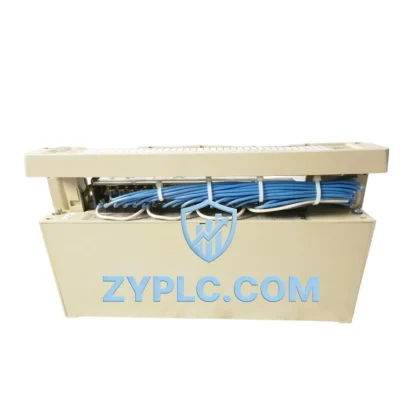
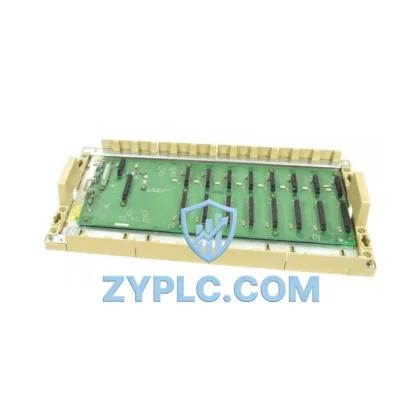
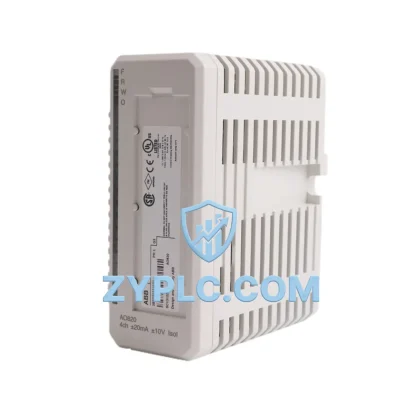
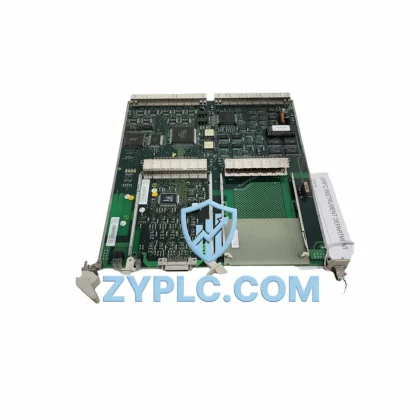
ABB DSQC3120 3HAC085590-001 Energy-Saving Teach Pendant for Optimized IRC5 Automation
The ABB DSQC3120 (part number 3HAC085590-001) is the next-generation teach pendant engineered for the IRC5 robot controller platform, delivering a measurable improvement in operator efficiency, energy-aware programming workflows, and long-term system maintainability. In modern manufacturing environments where every watt and every second of downtime carries a direct cost, the DSQC3120 serves as the human-machine interface layer that bridges precision robot motion control with intelligent energy management. Whether deployed in automotive body-in-white welding lines, electronics assembly cells, food and beverage packaging systems, or heavy-duty palletizing stations, this teach pendant enables engineers and operators to program, monitor, and fine-tune robot behavior with a level of responsiveness that directly translates into reduced cycle times and lower energy consumption per unit produced.
Unlike legacy pendant designs that rely on passive display technologies and high-drain backlighting, the DSQC3120 integrates a power-optimized touchscreen interface with adaptive brightness control, reducing standby power draw during idle programming sessions. When connected to the IRC5 single cabinet controller or the IRC5 compact controller variant, the pendant communicates over ABB’s proprietary high-speed FlexPendant bus, ensuring zero-latency command transmission and eliminating the communication bottlenecks that can cause unnecessary motor hold currents and servo energy waste during teach operations.
From an energy-aware automation architecture perspective, the DSQC3120 does not operate in isolation. It functions as the configuration and diagnostic interface for the entire IRC5 drive chain. Engineers use it to access and tune the ABB DSQC662 axis computer parameters, adjust motion profiles on the DSQC1000 drive unit, and verify the operational status of the DSQC608 I/O module cluster. By enabling precise velocity ramping and acceleration curve adjustments directly from the pendant interface, operators can reduce peak current draw on servo axes — a critical factor in facilities where energy demand charges apply. The ability to fine-tune motion paths through the DSQC3120’s jogging and program editor functions means that robots can be programmed to follow energy-optimal trajectories rather than defaulting to maximum-speed profiles that consume significantly more power.
In multi-robot cells where an IRC5 panel-mounted controller coordinates several manipulators simultaneously, the DSQC3120 supports hot-swap connection between controllers, allowing a single pendant to service multiple robots without powering down the cell. This capability directly reduces the number of pendants required per facility, lowering both capital expenditure and the aggregate standby power consumption of the HMI layer across the production floor. Maintenance engineers can use the DSQC3120 to access real-time energy consumption logs stored in the IRC5 system computer, cross-referencing motor load data from the DSQC625 measurement board to identify axes operating outside their efficiency envelope.
The DSQC3120 also plays a central role in predictive maintenance workflows. Through its diagnostic interface, technicians can monitor the thermal status of the DSQC374 power supply unit, check the health of the DSQC679 safety module, and review error logs that indicate early signs of drive degradation. Catching these issues before they result in unplanned downtime is one of the most effective energy optimization strategies available — a robot that stops unexpectedly forces the entire cell into an idle-hold state, where servo amplifiers continue drawing power without producing output. By enabling proactive maintenance scheduling, the DSQC3120 helps facilities maintain continuous production flow and avoid the energy penalty of repeated cold-start cycles.
For facilities undergoing energy audits or pursuing ISO 50001 energy management certification, the DSQC3120 provides the data access layer needed to extract robot-level energy consumption metrics. Engineers can log motion cycle data, correlate it with production output, and identify opportunities to consolidate robot programs, reduce unnecessary repositioning moves, and optimize tool center point paths for minimum energy expenditure. These optimizations, implemented through the DSQC3120’s program editor, can yield energy savings of 8–15% per robot axis in high-cycle applications without any hardware changes.
Every ABB DSQC3120 (3HAC085590-001) unit supplied by ZYPLC undergoes a comprehensive pre-shipment functional test covering touchscreen calibration, button response verification, communication bus integrity, and display uniformity. Units are shipped with full electrostatic discharge protection packaging and are backed by a 12-Month Warranty covering all manufacturing defects and functional failures. ZYPLC maintains ready stock of the DSQC3120 to support urgent replacement requirements, minimizing the risk of extended production downtime caused by pendant failure.
Efficiency Performance Table
| Parameter |
Specification |
| Part Number |
DSQC3120 / 3HAC085590-001 |
| Brand |
ABB |
| Compatible Controller |
IRC5 Single Cabinet, IRC5 Compact, IRC5 Panel Mounted |
| Interface Type |
Color Touchscreen FlexPendant |
| Communication Protocol |
ABB FlexPendant Bus (High-Speed Serial) |
| Power Consumption |
Low-power adaptive display; optimized standby draw |
| Operating Temperature |
0°C to +45°C |
| Protection Rating |
IP54 |
| Energy Optimization Feature |
Motion profile tuning, velocity ramping, axis load monitoring |
| Predictive Maintenance Support |
Real-time diagnostics, error log access, thermal monitoring |
| Origin |
Sweden |
| Warranty |
12-Month Warranty (ZYPLC) |
Energy-Aware Automation Architecture
The DSQC3120 sits at the apex of the IRC5 energy management hierarchy, providing the operator interface through which all efficiency-related parameters are configured and monitored. At the controller level, it communicates directly with the IRC5 main computer to access system-wide energy data. The DSQC662 axis computer, which manages the kinematic calculations for each robot joint, receives motion profile updates from programs written and edited on the DSQC3120 — tighter, more efficient paths mean lower RMS current demand across the DSQC1000 drive units.
The DSQC608 digital I/O module and associated I/O bus are configured through the DSQC3120’s system parameter editor, allowing engineers to optimize signal timing and reduce unnecessary actuator hold states that contribute to parasitic energy consumption. The DSQC374 power supply unit’s status is visible through the pendant’s diagnostic screens, enabling proactive identification of power factor degradation before it affects drive efficiency. For safety-critical applications, the DSQC679 safety module parameters are also accessible through the DSQC3120, ensuring that safety-rated speed limits and zone restrictions are correctly configured to prevent energy-wasting emergency stops caused by misconfigured safety boundaries.
In cells where the IRC5 controller manages external axes such as servo positioners or track motion units driven by ABB ACS880 frequency converters, the DSQC3120 provides the interface for coordinating robot and external axis motion profiles, ensuring synchronized movement that minimizes peak power demand. The DSQC625 measurement board data, accessible through the pendant, provides the axis-level current and torque feedback needed to identify over-loaded joints that are consuming disproportionate energy relative to their mechanical output.
Power Optimization in Real Production Lines
In automotive welding lines where IRC5-controlled IRB 6700 robots perform continuous spot welding operations across three shifts, the DSQC3120 enables shift engineers to implement energy-saving motion programs during low-production periods without halting the cell. By accessing the system’s speed override and motion mode settings through the pendant, operators can switch robots to reduced-speed, reduced-power profiles during scheduled breaks, cutting servo energy consumption by up to 40% during non-productive intervals.
In electronics manufacturing facilities where IRC5-controlled IRB 1200 robots perform high-speed component placement, the DSQC3120’s fine-grained acceleration tuning capabilities allow process engineers to reduce peak acceleration values on lightly loaded axes, decreasing peak current draw and extending servo drive service life simultaneously. In food and beverage packaging lines, where IRC5 systems control IRB 360 FlexPicker robots in continuous high-cycle delta motion, the DSQC3120 enables rapid program modification to adapt pick patterns to changing product flow rates — preventing the energy waste of robots running at full speed against a starved conveyor.
For water treatment and utilities facilities using IRC5-controlled robots in valve maintenance or pipe inspection applications, the DSQC3120’s wireless-capable design (where supported) allows technicians to program and monitor robots from safe distances, reducing the need for repeated robot restarts caused by operator proximity restrictions. Each restart cycle carries an energy cost associated with servo amplifier initialization and brake release sequences — minimizing restarts through efficient remote programming directly reduces facility energy consumption.
Energy Optimization FAQ
Q1: How does the DSQC3120 contribute to measurable energy savings in an IRC5 robot cell?
The DSQC3120 provides direct access to motion profile parameters, speed overrides, and axis load data within the IRC5 system. By enabling engineers to optimize acceleration curves, reduce unnecessary repositioning moves, and implement energy-saving speed profiles during low-production periods, the pendant serves as the primary tool for reducing per-cycle energy consumption. Facilities that systematically use the DSQC3120 for motion optimization typically report 8–15% reductions in robot energy consumption without hardware changes.
Q2: Is the DSQC3120 (3HAC085590-001) compatible with all IRC5 controller variants, and can it replace older FlexPendant models?
The DSQC3120 is designed for the IRC5 platform and is compatible with IRC5 single cabinet, compact, and panel-mounted controller variants running RobotWare 6.x and later. It is intended as a direct upgrade replacement for earlier DSQC679-era pendant configurations. Compatibility with specific RobotWare versions should be verified against the IRC5 system software release notes. ZYPLC’s technical team can assist with compatibility confirmation prior to purchase.
Q3: What does the 12-Month Warranty cover, and what is the replacement process if the DSQC3120 fails in service?
ZYPLC’s 12-Month Warranty covers all manufacturing defects, functional failures of the touchscreen, communication interface, and control buttons, as well as display failures occurring under normal operating conditions. In the event of a warranty claim, ZYPLC provides a replacement unit from stock to minimize production downtime. The failed unit is returned for inspection, and warranty resolution is typically completed within 5–7 business days. Emergency replacement stock is maintained to support critical production environments.
Q4: How should the DSQC3120 be maintained to maximize its service life and energy optimization effectiveness?
Regular cleaning of the touchscreen with approved non-abrasive cleaners, periodic inspection of the pendant cable and connector for wear, and firmware updates through the IRC5 system computer are the primary maintenance requirements. The DSQC3120’s diagnostic screens should be reviewed monthly to check for communication error logs that may indicate cable degradation. Storing the pendant in its designated holder when not in use prevents accidental damage and ensures the display enters its low-power standby mode, reducing unnecessary energy consumption during idle periods.
© 2026 ZYPLC. All rights reserved.
Original Source: https://zyplc.com
Contact: +86 19859288691 | [email protected]