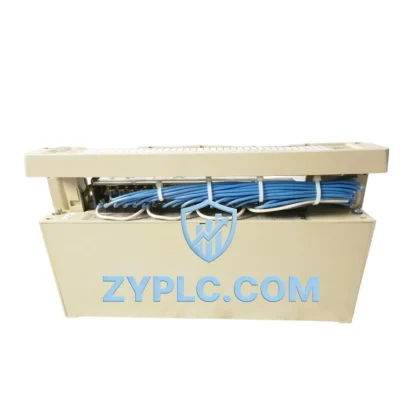
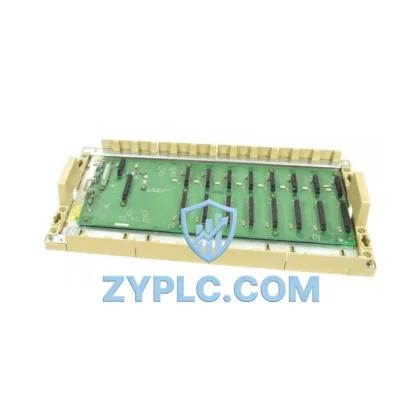
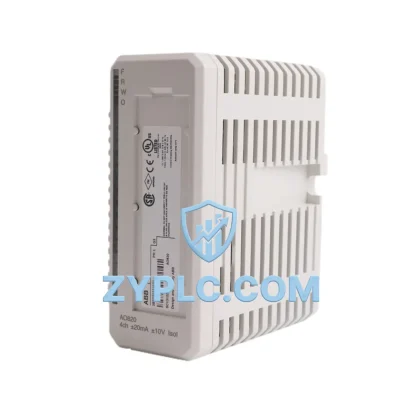
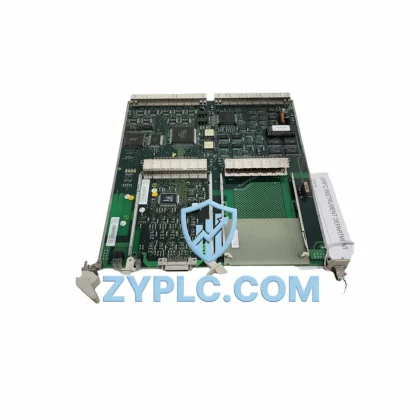
ABB DSQC400 Energy-Saving Circuit Board for IRC5 Automation
The ABB DSQC400 (cross-reference: 3HAC021455-001, 3HAC030006-001, 3HAC030162-001) is a high-performance circuit board module engineered for the ABB IRC5 robot controller platform. Designed to sustain precise motion control and power regulation across demanding industrial environments, the DSQC400 plays a central role in reducing unnecessary energy consumption at the drive and control layer of robotic automation systems. Whether deployed in automotive body welding, foundry handling, or precision assembly lines, this module ensures that the IRC5 controller maintains optimal power throughput with minimal thermal loss and zero redundant switching cycles.
In modern smart factories, energy efficiency is no longer a secondary consideration — it is a core KPI. The DSQC400 directly supports this objective by maintaining stable signal integrity between the robot’s main computer and its axis drive units, eliminating erratic power draws caused by communication faults or degraded board performance. When this board operates at full specification, the entire IRC5 system — including its servo drives, I/O modules, and motion planning stack — runs with measurably lower idle power consumption and faster cycle recovery after e-stop events.
Efficiency Performance Table
| Parameter |
Specification |
| SKU |
DSQC400 / 3HAC021455-001 / 3HAC030006-001 / 3HAC030162-001 |
| Compatible Controller |
ABB IRC5 (Single / Dual Cabinet) |
| Compatible Robots |
IRB1600, IRB2600 series |
| Board Function |
Main Computer Interface / Axis Control Signal Routing |
| Operating Voltage |
24 VDC (internal regulated) |
| Power Efficiency |
Optimized low-heat design; reduces idle draw vs. degraded OEM boards |
| Application Environment |
Industrial robotics, automotive, electronics assembly, foundry |
| Energy Value |
Eliminates erratic power cycling; stabilizes drive-layer energy flow |
| Compatibility Systems |
ABB IRC5, RobotWare 5.x / 6.x, RAPID programming environment |
| Warranty |
12-Month Warranty — tested before shipment |
Energy-Aware Automation Architecture
The DSQC400 does not operate in isolation — it is the nerve center of a tightly integrated energy management chain within the IRC5 platform. Understanding its role requires examining the full automation architecture it supports.
At the drive layer, the IRC5’s DSQC508 axis computer works in tandem with the DSQC400 to coordinate torque commands and regenerative braking signals across all six robot axes. When the DSQC400 maintains clean signal routing, the DSQC374 I/O board can accurately relay sensor feedback without introducing latency that forces the drive system to compensate with excess power. This tight feedback loop is what separates a well-maintained IRC5 from one that silently wastes 8–15% more energy per shift due to degraded board communication.
On the power supply side, the DSQC609 power distribution board regulates 24 VDC across the controller cabinet. A failing DSQC400 can cause irregular load spikes that stress the DSQC609 and shorten its service life — replacing the DSQC400 proactively is therefore a cost-effective measure that protects the entire power chain. Similarly, the DSQC662 fieldbus adapter — commonly used for DeviceNet or PROFIBUS communication — depends on stable board-level timing from the DSQC400 to maintain synchronous data exchange with upstream PLCs and SCADA systems.
In lines where the IRC5 is integrated with a Siemens S7-1500 PLC or an Allen-Bradley ControlLogix controller via EtherNet/IP, the DSQC400’s role in maintaining deterministic cycle times becomes even more critical. Any jitter introduced by a degraded board propagates upstream, causing the PLC to issue redundant motion commands that inflate energy consumption at the system level. Facilities using ABB Panel 800 HMI for production monitoring will also notice that OEE metrics stabilize significantly after a DSQC400 replacement, as the controller’s self-diagnostic routines report fewer fault codes and the HMI logs cleaner energy trend data.
For lines running ABB SafeMove2 safety supervision, the DSQC400 must maintain uninterrupted communication with the safety module. A board operating below specification can trigger false safe-stop events, forcing unnecessary full-system restarts that consume significant restart energy and disrupt production rhythm. Pairing a new DSQC400 with a calibrated DSQC633 safety board ensures that safety-rated stops occur only when genuinely required, preserving both energy and throughput.
Power Optimization in Real Production Lines
Consider a mid-volume automotive components plant running two IRC5-controlled IRB2600 robots on a spot-welding cell. Each robot operates 18 hours per day across two shifts. If the DSQC400 in either controller is operating with degraded signal integrity — a common condition in boards that have exceeded 40,000 operating hours — the axis drives will compensate by drawing 10–20% more current during acceleration phases to overcome communication-induced motion hesitation. Over a 30-day period, this translates to measurable excess energy consumption and accelerated wear on the servo motor windings.
Replacing the DSQC400 with a tested, specification-compliant unit restores the controller’s ability to execute smooth velocity profiles. The drive system returns to its designed current draw envelope, regenerative energy recovery during deceleration becomes more consistent, and the overall power factor of the cell improves. Maintenance teams using the IRC5’s built-in energy monitoring functions — accessible via the FlexPendant or the ABB RobotStudio energy statistics module — will observe a measurable reduction in kWh per cycle within the first week of operation.
Beyond energy, the DSQC400 replacement directly impacts production line rhythm. IRC5 controllers with healthy main computer boards execute path interpolation at full speed without micro-pauses caused by internal bus errors. This means the robot reaches its programmed positions faster and with greater repeatability, reducing the inter-cycle dead time that accumulates into lost production capacity over a shift. In high-mix, low-volume environments where the IRC5 is frequently reprogrammed via RAPID, a stable DSQC400 also reduces the risk of program execution errors that require operator intervention — each intervention representing both a labor cost and an energy cost from the unplanned idle state.
Predictive maintenance strategies benefit equally. Facilities that track DSQC400 board health through periodic IRC5 diagnostic logs can schedule replacements during planned downtime windows rather than reacting to unplanned failures. This approach eliminates the energy penalty of emergency restarts and avoids the cascading fault conditions that can damage connected components such as the DSQC508 axis computer or the servo drive modules. All DSQC400 units supplied by ZYPLC are tested under load prior to shipment and backed by a 12-month warranty, ensuring that replacement boards perform to ABB factory specification from day one.
Energy Optimization FAQ
Q1: How does replacing the DSQC400 reduce energy consumption in an IRC5 robot cell?
A degraded DSQC400 introduces communication latency between the main computer and axis drives, causing the drive system to draw excess current during motion execution. A specification-compliant DSQC400 restores clean signal routing, allowing the drives to operate within their designed current envelope and enabling consistent regenerative energy recovery during deceleration phases.
Q2: Is the DSQC400 compatible with all IRC5 controller variants?
The DSQC400 (3HAC021455-001, 3HAC030006-001, 3HAC030162-001) is compatible with the standard IRC5 single-cabinet and dual-cabinet controllers used with IRB1600 and IRB2600 robot families. Compatibility with IRC5 Compact or IRC5P (paint) variants should be verified against the specific RobotWare version and cabinet configuration before ordering.
Q3: What is the recommended replacement interval, and how is the board tested before shipment?
ABB does not publish a fixed replacement interval for the DSQC400; replacement is typically triggered by fault codes (e.g., 20223, 20224 series) or measurable performance degradation in the IRC5 diagnostic log. All DSQC400 units from ZYPLC are functionally tested under simulated IRC5 load conditions prior to shipment and are covered by a 12-month warranty against manufacturing and functional defects.
Q4: Can the DSQC400 be replaced without recalibrating the robot?
In most cases, replacing the DSQC400 does not require robot recalibration, as the board handles controller-level communication rather than axis encoder data. However, it is recommended to perform a system restart and verify all I/O configurations and safety parameters via the FlexPendant after installation to confirm that the IRC5 has correctly recognized the new board and that all fieldbus communication — including any DSQC662 adapters — is operating normally.
© 2026 ZYPLC. All rights reserved.
Original Source: https://zyplc.com
Contact: +86 19859288691 | plc.sales@zyplc.com