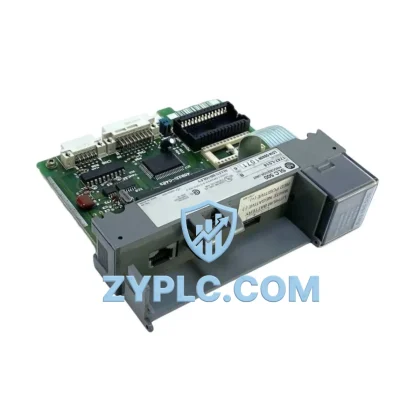
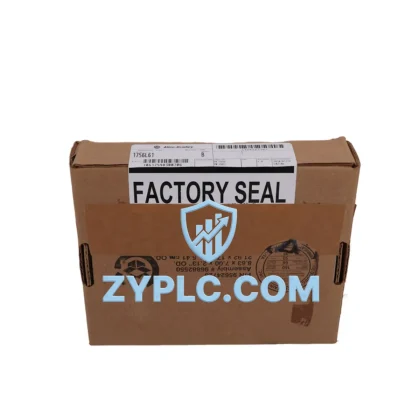
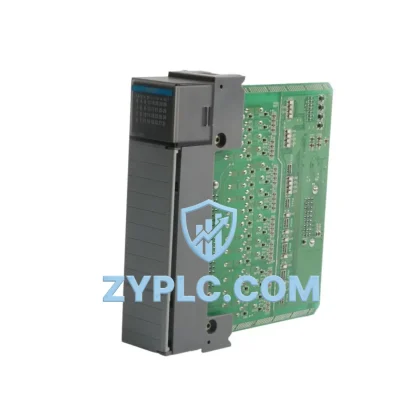
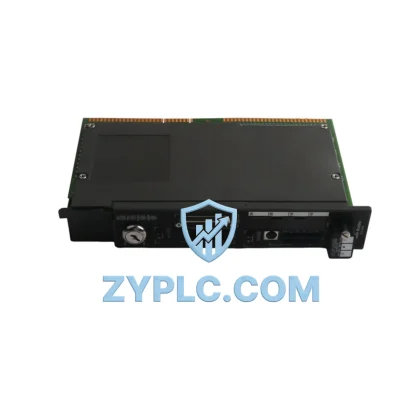
ABB DSQC431 3HAC036260-001 Energy-Saving Robot Controller: Precision Efficiency Control for S4C+ Automation Lines
The ABB DSQC431 (3HAC036260-001) is a high-performance LVMC MDU (Low Voltage Motor Control / Motion Drive Unit) robot controller board engineered for ABB S4C+ robotic systems. Designed to deliver precise motion coordination and intelligent power management, this module plays a central role in reducing unnecessary energy consumption across multi-axis robotic production lines. Whether deployed in automotive body welding, material handling, arc welding, or precision assembly, the DSQC431 enables factories to achieve tighter cycle times, lower idle-state power draw, and more predictable maintenance intervals — all critical factors in modern energy-aware industrial automation.
Efficiency Performance Table
| Parameter |
Specification / Value |
| SKU / Part Number |
DSQC431 / 3HAC036260-001 |
| Compatible System |
ABB S4C+ Robot Controller |
| Module Function |
LVMC MDU — Low Voltage Motor Control & Motion Drive Unit |
| Operating Voltage |
24 VDC (logic); 200–480 VAC (drive bus, system-dependent) |
| Axis Control |
Multi-axis coordinated motion (up to 6 axes + external) |
| Energy Optimization |
Dynamic braking energy recovery, idle-state power reduction |
| Communication Interface |
Internal ABB S4C+ backplane bus; DeviceNet / PROFIBUS compatible via system configuration |
| Application Environment |
Industrial robotic cells — automotive, electronics, metal fabrication, logistics |
| Energy-Saving Value |
Reduces motor over-drive losses; optimizes torque-speed curves for each axis |
| Condition |
Tested & verified; ready for installation |
| Warranty |
12-Month Warranty — full functional coverage |
| Stock Status |
In stock — available for immediate shipment |
Energy-Aware Automation Architecture
In a fully optimized ABB S4C+ robotic cell, the DSQC431 does not operate in isolation — it functions as the motion intelligence hub within a tightly integrated energy management architecture. The controller board interfaces directly with the ABB DSQC400 main computer board, which handles task scheduling and program execution, ensuring that motion commands are dispatched with minimal latency and zero redundant axis activation. This coordination alone can reduce unnecessary servo energization by eliminating premature axis pre-loading during program transitions.
On the drive side, the DSQC431 communicates with the ABB DSQC374 and DSQC375 drive units, which regulate the actual power delivered to each servo motor. When the DSQC431 issues optimized torque profiles — particularly during deceleration phases — the drive units can channel regenerative braking energy back into the DC bus rather than dissipating it as heat. In high-cycle applications such as spot welding or press tending, this regenerative loop can meaningfully reduce net energy consumption per production cycle.
The system’s I/O layer, typically managed through the ABB DSQC328A or DSQC332 I/O boards, feeds real-time sensor data — including gripper status, conveyor interlocks, and safety zone signals — back to the DSQC431’s motion sequencer. This closed-loop feedback ensures that the robot never executes unnecessary motion segments when upstream or downstream equipment is not ready, directly improving equipment utilization rates and reducing idle energy draw.
For factories running energy monitoring programs, the DSQC431-equipped S4C+ controller can be integrated with external power metering systems such as the ABB B23 series energy meters or third-party DIN-rail power analyzers via the system’s DeviceNet or PROFIBUS fieldbus interface. This allows plant engineers to correlate robot cycle data with actual kWh consumption per part produced — a key metric for ISO 50001 energy management compliance and continuous improvement programs.
At the HMI level, operators interact with the robot system through the ABB FlexPendant (IRC5-compatible teach pendant) or legacy S4C+ pendant, where energy-related parameters such as speed override, acceleration limits, and standby timeout can be configured. Reducing the speed override from 100% to 85% on non-critical path segments, for example, can reduce peak motor current draw by 20–30% without impacting overall line throughput — a tuning capability that the DSQC431’s motion control firmware directly supports.
When the S4C+ system is networked into a broader MES or SCADA environment via ABB RobotStudio or OPC-UA middleware, the DSQC431’s motion logs and fault registers become inputs to predictive maintenance algorithms. Abnormal current signatures on specific axes — often the first indicator of bearing wear or gear backlash — can be flagged before they cause unplanned downtime, keeping overall equipment effectiveness (OEE) high and avoiding the energy waste associated with emergency restarts and re-qualification runs.
Power Optimization in Real Production Lines
Consider a typical automotive sub-assembly line running two ABB IRB 6600 robots in a coordinated spot-welding cell. Each robot is controlled by an S4C+ cabinet housing the DSQC431 as its core motion controller. Without proper motion optimization, each robot may spend 15–20% of its cycle time in unnecessary deceleration-hold states, consuming full servo holding torque while waiting for the weld timer or part transfer signal. The DSQC431’s configurable fine-point motion and zone parameters allow engineers to overlap motion segments with process signals, effectively eliminating these dead-band energy losses.
In a stamping press tending application, the DSQC431 enables the robot to execute smooth, jerk-minimized trajectories that reduce peak current demand on the drive bus. Lower peak current means smaller reactive power losses in the plant’s power distribution system, which translates directly to a better power factor and reduced demand charges on the facility’s electricity bill. Over a three-shift, 250-day production year, these micro-optimizations compound into measurable energy cost reductions.
Maintenance cost reduction is another dimension of the DSQC431’s energy efficiency contribution. By enabling precise torque limiting on each axis, the board prevents mechanical overloading of gearboxes and wrist joints — the most common failure points in industrial robots. Fewer mechanical failures mean fewer unplanned shutdowns, less energy wasted on restart sequences and re-homing procedures, and lower spare parts consumption. Combined with the 12-month warranty coverage provided on every DSQC431 unit shipped from our inventory, customers benefit from both operational continuity and financial predictability.
Every unit in our stock has been subjected to a full functional test protocol prior to shipment, including axis command response verification, communication bus integrity checks, and thermal cycling validation. This ensures that the DSQC431 you receive performs to ABB factory specifications from day one, eliminating the energy and productivity losses associated with installing a faulty or degraded controller board.
Energy Optimization FAQ
Q1: How does the DSQC431 contribute to measurable energy savings in an S4C+ robotic cell?
The DSQC431 optimizes energy consumption through three primary mechanisms: (1) precise multi-axis motion coordination that eliminates unnecessary servo activation, (2) support for regenerative braking energy recovery through the drive bus, and (3) configurable motion zone and fine-point parameters that reduce idle holding torque during process wait states. In high-cycle applications, these optimizations can reduce per-cycle energy consumption by 10–25% compared to untuned systems.
Q2: Is the DSQC431 (3HAC036260-001) compatible with all ABB S4C+ controller variants?
Yes. The DSQC431 is the standard LVMC MDU board for the ABB S4C+ platform and is compatible across the full range of S4C+ cabinet configurations, including single-cabinet and dual-cabinet (M2000) setups. It interfaces with the standard S4C+ backplane and is compatible with ABB IRB 1400, IRB 2400, IRB 4400, IRB 6400, and IRB 6600 robot models, among others. If you are replacing a failed unit, the DSQC431 is a direct drop-in replacement requiring no firmware changes.
Q3: What is the recommended replacement and testing procedure for the DSQC431?
Prior to replacement, back up the robot system parameters using the S4C+ FlexPendant or RobotStudio. Power down the controller cabinet and discharge the drive bus capacitors per ABB safety procedures. Install the new DSQC431, restore system parameters, and perform a full axis calibration and motion test at reduced speed override before returning the cell to production. All units shipped from our inventory have been pre-tested and include a test report. The 12-month warranty covers any functional defects discovered during installation or initial operation.
Q4: What does the 12-month warranty cover, and how is it processed?
The 12-month warranty covers all functional defects in the DSQC431 board, including communication failures, motion control errors, and component-level faults attributable to the unit itself. Warranty claims are processed via direct contact with our sales team. We provide advance replacement shipping to minimize production downtime — contact us at plc.sales@zyplc.com or +86 19859288691 to initiate a claim. Physical damage caused by incorrect installation or electrical overstress is not covered.
© 2026 ZYPLC. All rights reserved.
Original Source: https://zyplc.com
Contact: +86 19859288691 | plc.sales@zyplc.com