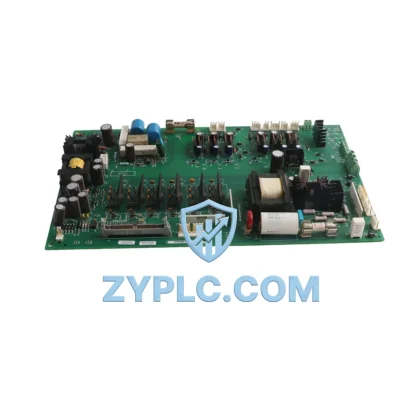
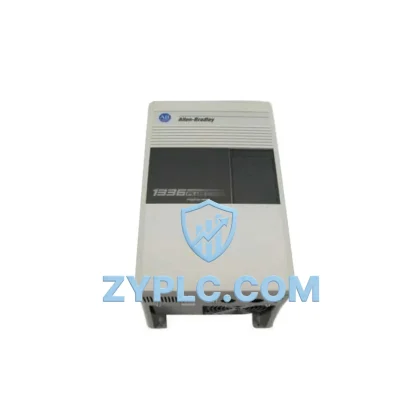
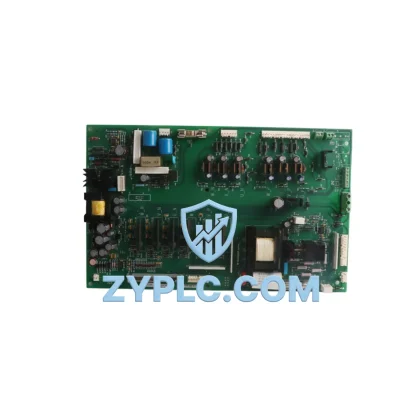
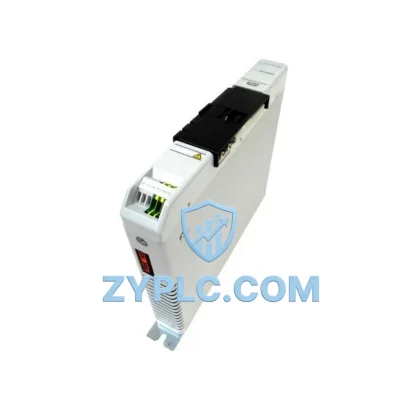
ABB DSQC505 3HAC4296-1 System-Ready Servo Drive for IRC5 Architecture
The ABB DSQC505 (part number 3HAC4296-1) is a precision servo drive unit engineered as a core motion control component within the ABB IRC5 robot controller architecture. Rather than functioning as a standalone device, the DSQC505 operates as an integral node within a layered automation system — coordinating axis motion commands from the main computer module, managing real-time current and torque feedback loops, and delivering synchronized multi-axis drive output to the robot’s joint motors. Understanding its role within the full IRC5 control hierarchy is essential for system integrators, maintenance engineers, and procurement specialists responsible for long-term robot fleet reliability.
In the IRC5 control architecture, the DSQC505 sits within the drive layer — positioned between the main computer board (DSQC562 or DSQC560) and the motor branch circuits. The main computer issues motion trajectory data via the internal drive bus, and the DSQC505 translates these commands into precise PWM signals that govern motor torque, velocity, and position. This tight integration with the IRC5 controller’s real-time operating system ensures deterministic motion performance across all six robot axes, making the DSQC505 a non-negotiable component in any IRC5-based robotic cell.
Architecture Specification Table
| Parameter |
Specification |
| System Role |
Servo Drive Unit — IRC5 Drive Layer |
| Part Numbers |
DSQC505 / 3HAC4296-1 / 3HNA019428-001 / 3HNA024966-001 |
| Compatible Controller |
ABB IRC5 Single Cabinet & Dual Cabinet |
| Drive Bus Interface |
Internal IRC5 Drive Bus (proprietary ABB protocol) |
| Axis Coverage |
Multi-axis servo output (axis 1–6 configuration dependent) |
| Control Signal |
PWM-based torque and velocity control |
| Feedback Interface |
Resolver / encoder feedback loop via IRC5 measurement board |
| Power Supply Compatibility |
IRC5 internal DC bus from DSQC609 or equivalent power unit |
| Installation Environment |
IRC5 controller cabinet, DIN-rail or backplane mounted |
| Operating Temperature |
0°C to +55°C (cabinet ambient) |
| Communication |
Integrated IRC5 internal bus; compatible with DeviceNet and Profibus gateway modules |
| Warranty |
12-Month Warranty — covers functional failure under normal operating conditions |
Coordinated Control System Design
The DSQC505 does not operate in isolation. Its performance and reliability are directly tied to the health and configuration of every other module within the IRC5 cabinet. A complete IRC5 system architecture typically includes the DSQC562 main computer board as the central processing unit, which handles program execution, path planning, and drive bus communication. The DSQC609 power unit supplies the regulated DC bus voltage that feeds the DSQC505’s internal power stage — any instability in the DSQC609 output will directly affect servo drive performance and may trigger axis fault alarms.
The DSQC508 axis computer (where applicable) handles lower-level axis interpolation and communicates with the DSQC505 to ensure synchronized multi-axis motion. The DSQC374 measurement board collects resolver and encoder feedback from each motor and routes position data back through the drive loop — making it a critical partner to the DSQC505 in maintaining closed-loop accuracy. For systems requiring expanded I/O, the DSQC652 digital I/O board and DSQC651 analog I/O board integrate into the same IRC5 backplane, enabling the controller to interface with external sensors, safety relays, and process signals without disrupting the drive layer.
Network connectivity within the IRC5 architecture is typically managed through the DSQC688 DeviceNet gateway or the DSQC667 Profibus adapter, allowing the robot controller to participate in plant-wide fieldbus networks alongside PLCs, SCADA systems, and distributed I/O nodes. The FlexPendant (IRC5 teach pendant) serves as the human-machine interface layer, providing operators with real-time axis status, fault diagnostics, and program management — all of which depend on the DSQC505 reporting accurate drive state data upstream. For cabinet power distribution and protection, the IRC5 system relies on coordinated circuit breakers and the DSQC604 power distribution board to ensure that drive faults are isolated without cascading to other system modules.
This Contextual Integration approach — where the DSQC505 is sourced, installed, and maintained as part of a coherent system architecture rather than as an isolated spare — is the foundation of long-term robot fleet reliability and reduced unplanned downtime.
Application in Layered Automation Systems
The ABB DSQC505 3HAC4296-1 is deployed across a wide range of industrial automation environments where IRC5-based robots perform critical process functions. In automotive manufacturing, IRC5 robots equipped with DSQC505 drive units handle spot welding, arc welding, and body assembly operations — where axis synchronization accuracy directly affects weld quality and cycle time consistency. The servo drive’s deterministic response to motion commands from the DSQC562 main computer ensures that multi-robot coordinated cells maintain positional repeatability within ±0.02 mm across extended production runs.
In electronics and semiconductor assembly, IRC5 robots perform high-speed pick-and-place, dispensing, and inspection tasks where the DSQC505’s low-latency drive response is essential for maintaining throughput without sacrificing placement accuracy. Food and beverage packaging lines rely on IRC5 systems for palletizing, case packing, and primary packaging — environments where the DSQC505 must sustain continuous duty cycles under washdown-adjacent conditions within sealed IRC5 cabinets.
In petrochemical and process industries, IRC5 robots are deployed for valve manipulation, sampling, and hazardous material handling — applications where the DSQC505’s integration with the IRC5 safety architecture (including SafeMove) ensures that axis motion is continuously monitored against configurable speed and position limits. Metal fabrication and foundry environments use IRC5 robots for casting extraction, grinding, and deburring, where the DSQC505 must deliver consistent torque output under high-inertia load conditions. Logistics and warehousing operations increasingly deploy IRC5 robots for goods-to-person fulfillment, where the DSQC505 supports the high-cycle, variable-load motion profiles required by modern automated storage and retrieval systems.
Across all these applications, maintaining a verified spare DSQC505 3HAC4296-1 in the maintenance inventory — backed by a 12-Month Warranty and full Contextual Integration support — is a recognized best practice for minimizing mean time to repair (MTTR) and protecting production continuity.
Architecture Engineering FAQ
Q1: Is the DSQC505 (3HAC4296-1) compatible with all IRC5 controller variants, including the IRC5 Compact and IRC5 Panel Mounted Controller?
The DSQC505 is designed for the standard IRC5 Single Cabinet and Dual Cabinet configurations. Compatibility with the IRC5 Compact (M2004 and later) and the IRC5 Panel Mounted Controller depends on the specific drive bay configuration and backplane revision of the target cabinet. Before installation, verify the cabinet’s drive module slot specification against the DSQC505 mechanical and electrical interface requirements. Our technical team can assist with pre-installation compatibility verification as part of the 12-Month Warranty support package.
Q2: What is the recommended procedure for replacing a DSQC505 in a live IRC5 system, and how does it affect system calibration?
Replacing the DSQC505 requires the IRC5 controller to be powered down and the DC bus fully discharged before the drive module is removed. After installation of the replacement unit, the IRC5 system must perform a drive initialization sequence via RobotStudio or the FlexPendant service routine. In most cases, robot calibration data stored in the DSQC562 main computer is preserved across drive replacements; however, fine calibration verification using the calibration pendulum or CalibWare tool is recommended after any drive module exchange to confirm axis zero-point integrity.
Q3: What does the 12-Month Warranty cover for the DSQC505, and what Contextual Integration support is included?
The 12-Month Warranty covers functional failure of the DSQC505 under normal operating conditions, including drive output faults, internal power stage failures, and bus communication errors that are attributable to the module itself rather than external wiring or cabinet conditions. Contextual Integration support includes pre-shipment functional testing, compatibility documentation for the target IRC5 system configuration, and post-installation technical consultation to assist with drive initialization, fault code interpretation, and system-level performance verification. Contact our engineering team at [email protected] or +86 19859288691 for case-specific support.
© 2026 ZYPLC. All rights reserved.
Original Source: https://zyplc.com
Contact: +86 19859288691 | [email protected]