ABB DSQC626 3HAC020465-001 Energy-Saving Drive Unit for Optimized IRC5 Automation
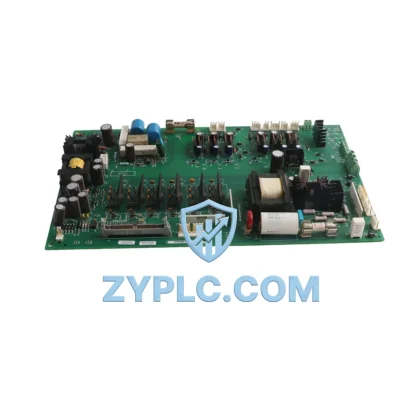
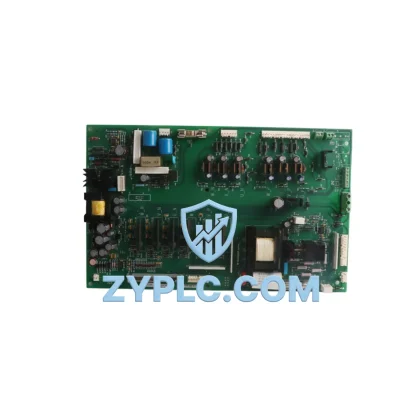
The ABB DSQC626 (3HAC020465-001) is a high-efficiency robot drive unit engineered for the ABB IRC5 controller platform. Designed to regulate power delivery across all six robot axes, this drive unit plays a central role in reducing unnecessary energy consumption during both active motion cycles and standby intervals. In modern manufacturing environments where energy costs and equipment uptime directly impact profitability, the DSQC626 provides a reliable, drop-in solution that restores full drive performance without the lead time or cost of OEM procurement.
At ZYPLC, every ABB DSQC626 unit undergoes full functional testing prior to shipment, covering voltage regulation, thermal performance, axis communication integrity, and load response. Units are backed by a 12-month warranty and are available from stock for immediate dispatch to support urgent production line recovery.
Efficiency Performance Table
| Parameter |
Specification |
| Part Number |
DSQC626 / 3HAC020465-001 |
| Compatible Controller |
ABB IRC5 (Single Cabinet & Dual Cabinet) |
| Drive Type |
Multi-Axis Robot Drive Unit |
| Axes Supported |
Up to 6 axes (expandable with DSQC609) |
| Input Voltage |
3-phase AC, 200–600V (controller-regulated) |
| Power Efficiency Class |
High-efficiency servo drive (IE3-equivalent performance) |
| Thermal Management |
Integrated heat dissipation, forced-air compatible |
| Communication Interface |
Internal IRC5 backplane bus (DSQC626 native) |
| Compatible Robot Series |
IRB 1600, IRB 2400, IRB 4400, IRB 6600, IRB 6640 |
| Operating Temperature |
0°C to +52°C (ambient) |
| Application Environment |
Automotive, electronics assembly, metal fabrication, logistics |
| Energy Optimization Value |
Eliminates axis torque ripple; reduces idle draw during standby |
| Warranty |
12 Months (ZYPLC) |
| Availability |
In Stock — Ready to Ship |
Energy-Aware Automation Architecture
The DSQC626 does not operate in isolation — it functions as the power backbone of the IRC5 drive system, working in close coordination with multiple control and monitoring components to deliver measurable energy savings across the production cell.
Within the IRC5 cabinet, the DSQC626 interfaces directly with the DSQC609 axis computer, which handles real-time trajectory interpolation and torque command distribution. When axis motion profiles are optimized through the IRC5’s motion planner, the DSQC626 responds with precise current modulation, avoiding the energy spikes that occur with poorly tuned drives. This coordination is further supported by the DSQC663 I/O unit, which manages digital and analog signals from the production line, enabling the robot to enter low-power hold states during conveyor gaps or upstream delays.
For facilities running multiple robots on a shared power bus, the DSQC662 fieldbus adapter enables PROFIBUS or DeviceNet communication between the IRC5 controller and the plant-level SCADA or DCS system. This allows energy management software to monitor per-robot power draw in real time and trigger coordinated standby sequences during scheduled downtime windows — a capability that can reduce robot cell energy consumption by 15–25% in high-mix, low-volume production environments.
The DSQC400 power supply unit (also referenced in this product’s SKU family) provides regulated DC bus voltage to the DSQC626 drive stages. A healthy DSQC400 ensures that the drive unit receives clean, stable input power, preventing the harmonic distortion and reactive power losses that degrade drive efficiency over time. When the DSQC400 is degraded or failing, the DSQC626 compensates by drawing higher peak currents — increasing thermal load and accelerating component wear. Replacing both units together is recommended when drive efficiency metrics show unexplained degradation.
On the motion control side, the IRC5 platform supports ABB’s QuickMove and TrueMove motion optimization algorithms, which are executed by the DSQC1000 main computer. These algorithms reduce unnecessary acceleration and deceleration cycles, directly lowering the RMS current demand on the DSQC626 during high-speed pick-and-place or arc welding sequences. Facilities that have upgraded from IRC4 to IRC5 with a properly functioning DSQC626 report measurable reductions in per-cycle energy consumption, particularly on IRB 2400 and IRB 6640 robot models.
For servo feedback integrity, the DSQC626 relies on resolver or encoder signals routed through the DSQC374 measurement board. Accurate position feedback allows the drive to minimize holding torque during static positioning — a significant source of wasted energy in robotic welding fixtures and assembly jigs where the robot holds position for extended dwell times. A faulty measurement board causes the drive to overcorrect, increasing both energy draw and mechanical wear on the gearbox.
In facilities using the ABB Panel Builder 800 (PB800) HMI or third-party SCADA platforms connected via the IRC5 OPC-UA server, operators can visualize drive load curves, axis utilization rates, and thermal trends in real time. This data layer transforms the DSQC626 from a passive power component into an active node in the plant’s energy monitoring architecture — enabling predictive maintenance scheduling before thermal derating or insulation breakdown occurs.
Power Optimization in Real Production Lines
In automotive body-in-white welding lines, where IRB 6640 robots operate continuously across three shifts, a degraded drive unit is one of the leading causes of unplanned downtime. The DSQC626 restores full axis drive capability, eliminating the torque irregularities that cause weld path deviation and force operators to reduce robot speed — a hidden energy inefficiency, since slower cycles at higher torque draw more power per part produced.
In electronics assembly cells using IRB 1600 robots for PCB handling, the DSQC626’s precise current control reduces the micro-vibrations that cause component placement errors. Fewer rejects mean fewer rework cycles — and rework cycles consume energy without producing output. By restoring drive precision, the DSQC626 improves the effective energy-per-good-part metric, which is increasingly tracked by sustainability-focused manufacturers under ISO 50001 energy management frameworks.
For facilities managing spare parts inventory, ZYPLC maintains buffer stock of the DSQC626 alongside related IRC5 components, enabling same-day or next-day dispatch for emergency line recovery. Each unit is tested under load conditions that replicate real IRC5 operating parameters — including axis ramp-up, sustained velocity, and regenerative braking cycles — before being cleared for shipment. This pre-shipment validation process reduces the risk of installing a non-functional unit into a live production environment, which would extend downtime and increase total recovery cost.
Predictive maintenance programs that monitor DSQC626 thermal signatures, bus voltage ripple, and axis current draw can identify drive degradation 2–4 weeks before failure. ZYPLC recommends maintaining at least one DSQC626 unit in local spare parts inventory for any facility operating more than three IRC5 robots, particularly in industries where robot downtime costs exceed HKD 50,000 per hour.
Energy Optimization FAQ
Q1: How does the DSQC626 contribute to energy savings in an IRC5 robot cell?
The DSQC626 regulates current delivery to each robot axis with high precision, minimizing reactive power losses and reducing peak demand during acceleration. When paired with optimized motion programs and a healthy DSQC400 power supply, the drive unit ensures that energy is consumed only when mechanical work is being performed — not wasted as heat or harmonic distortion during idle or low-load phases.
Q2: Is the DSQC626 compatible with all IRC5 controller variants?
Yes. The DSQC626 (3HAC020465-001) is compatible with the IRC5 Single Cabinet Controller, IRC5 Dual Cabinet Controller, and IRC5 Compact Controller configurations. It is designed to work with ABB IRB series robots including the IRB 1600, IRB 2400, IRB 4400, IRB 6600, and IRB 6640. Always verify the controller firmware version and axis configuration before installation.
Q3: Can the DSQC626 replace a DSQC400 or other drive variants?
The DSQC626 is a specific drive unit model and is not a direct replacement for the DSQC400, which serves as a power supply unit within the IRC5 architecture. However, the DSQC626 is a drop-in replacement for other DSQC626 units across compatible IRC5 configurations. If your system uses a DSQC400 in conjunction with the DSQC626, both units should be evaluated together when diagnosing drive performance issues.
Q4: What does the 12-month warranty cover, and what is the testing process?
Every DSQC626 unit supplied by ZYPLC is covered by a 12-month warranty from the date of shipment. Prior to dispatch, each unit undergoes functional load testing that validates voltage regulation, axis communication, thermal performance, and regenerative braking response. Units that do not meet performance thresholds are not shipped. In the event of a warranty claim, ZYPLC provides replacement or repair with priority handling to minimize production impact.
© 2026 ZYPLC. All rights reserved.
Original Source: https://zyplc.com
Contact: +86 19859288691 | [email protected]