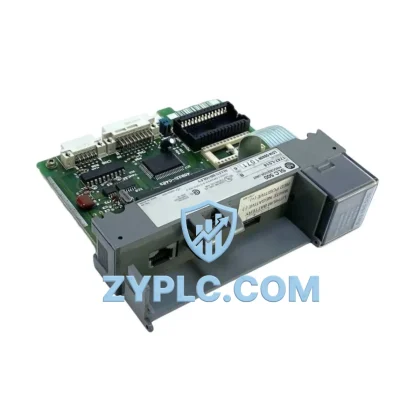
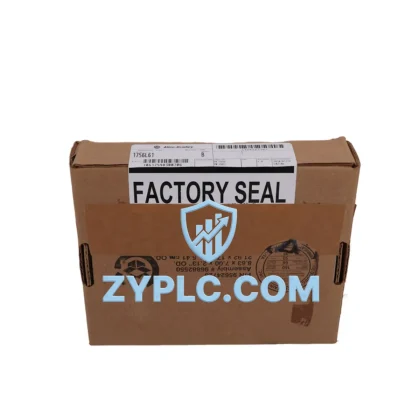
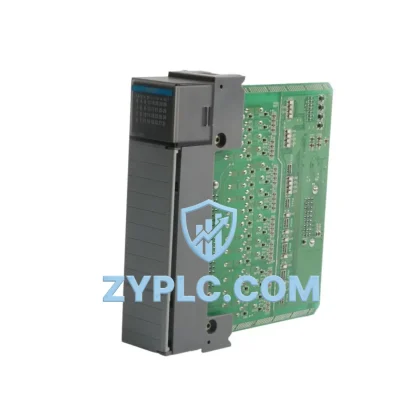
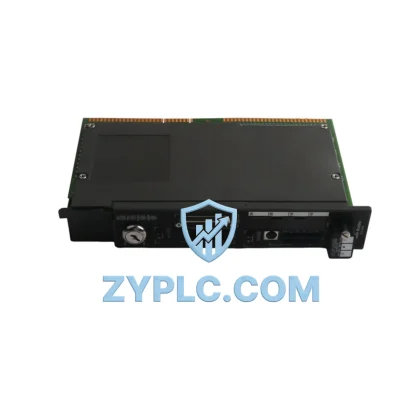
ABB DSQC639 3HAC025097-001 System-Ready Computer Unit for IRC5 Architecture
The ABB DSQC639 (part numbers 3HAC025097-001 and 3HAC041443-003) is the central processing and coordination module within the ABB IRC5 robot controller platform. Rather than functioning as a standalone component, this computer unit serves as the architectural backbone of the entire IRC5 control cabinet, orchestrating real-time communication between the motion control layer, I/O subsystems, fieldbus gateways, operator interfaces, and safety circuits. Understanding its role within the full system hierarchy is essential for engineers responsible for system integration, commissioning, spare parts planning, and long-term maintenance of ABB robotic installations across manufacturing, automotive, electronics assembly, and process automation environments.
The DSQC639 replaces the earlier DSQC609 and DSQC612 main computer boards and introduces enhanced processing capacity, improved memory architecture, and broader compatibility with the IRC5 Single Cabinet Controller and IRC5 Panel Mounted Controller variants. Its design supports both single-robot and MultiMove configurations, making it a versatile choice for complex coordinated motion applications where multiple manipulators must operate in synchronized paths under a unified control strategy.
From a system architecture perspective, the DSQC639 interfaces directly with the drive system through the internal axis computer (DSQC668 or DSQC673), manages I/O communication via the DSQC652 digital I/O board and DSQC651 analog I/O board, and coordinates fieldbus communication through gateway modules such as the DSQC688 DeviceNet gateway or DSQC378B Profibus adapter. The FlexPendant (IRC5 teach pendant) connects to the main computer through a dedicated USB and Ethernet interface, enabling real-time operator interaction without interrupting background process execution. This tightly integrated architecture ensures that signal latency between the operator interface layer and the motion execution layer remains within the deterministic bounds required for precision robotic applications.
Power distribution within the IRC5 cabinet is managed by the DSQC661 power supply unit, which provides regulated DC rails to the DSQC639 and associated modules. The computer unit monitors power quality continuously and initiates controlled shutdown sequences in the event of undervoltage or overcurrent conditions, protecting both the controller hardware and the connected manipulator from damage during unexpected power events. This power-aware design is particularly valuable in facilities where grid stability is variable, such as heavy industrial plants, foundries, and offshore processing environments.
For system architects designing redundant or high-availability robotic cells, the DSQC639 supports hot-standby configurations when paired with appropriate IRC5 redundancy options. In such deployments, a secondary controller monitors the primary system state and assumes control within milliseconds of a detected fault, ensuring continuous production without manual intervention. This capability is critical in automotive body-in-white welding lines, pharmaceutical dispensing systems, and food and beverage packaging lines where unplanned downtime carries significant financial and regulatory consequences.
Maintenance engineers benefit from the DSQC639’s structured diagnostic architecture. The module exposes detailed fault logs through the IRC5 event log system, accessible via RobotStudio or the FlexPendant interface. Error codes are categorized by subsystem, enabling rapid isolation of faults to specific hardware layers — whether the issue originates in the drive system, the I/O network, the fieldbus communication layer, or the main computer itself. This structured fault taxonomy reduces mean time to repair and supports predictive maintenance strategies by enabling trend analysis of recurring fault patterns over extended operational periods.
Inventory availability of the DSQC639 is a strategic consideration for facilities operating large fleets of IRC5 robots. Given the long service life of ABB robotic systems — often exceeding fifteen to twenty years in continuous production environments — maintaining a verified spare unit in stock eliminates the risk of extended downtime caused by component obsolescence or supply chain disruption. Each unit supplied by ZYPLC undergoes functional verification testing prior to dispatch and is covered by a 12-Month Warranty, providing procurement teams with the confidence required to justify spare parts investment to operations management.
Architecture Specification Table
| Parameter |
Specification |
| Part Numbers |
3HAC025097-001 / 3HAC041443-003 |
| Model |
DSQC639 |
| Brand |
ABB Robotics |
| System Role |
Main Computer Unit — IRC5 Controller Platform |
| Compatible Controllers |
IRC5 Single Cabinet, IRC5 Panel Mounted Controller |
| Operating Voltage |
24 VDC (supplied via DSQC661 PSU) |
| Communication Interfaces |
Ethernet (LAN), USB, Internal Backplane Bus |
| Fieldbus Support |
DeviceNet, Profibus, EtherNet/IP (via gateway modules) |
| MultiMove Support |
Yes — coordinated multi-robot configurations |
| Operating Temperature |
0°C to +52°C (controller cabinet ambient) |
| Country of Origin |
Sweden |
| Warranty |
12-Month Warranty (ZYPLC verified) |
| Contextual Integration |
Full Contextual Integration with IRC5 architecture |
Coordinated Control System Design
The DSQC639 operates at the apex of the IRC5 control hierarchy, coordinating a layered ecosystem of specialized modules. At the motion control layer, the axis computer module — typically the DSQC668 or DSQC673 — receives interpolated path data from the DSQC639 and translates it into drive commands for the servo amplifier units. The DSQC601 drive unit and associated DSQC602 rectifier unit manage power conversion for the manipulator axes, while the DSQC611 capacitor unit provides energy buffering during regenerative braking events.
At the I/O layer, the DSQC652 24-channel digital I/O board handles discrete signal exchange with end-of-arm tooling, conveyor interlocks, safety light curtains, and peripheral equipment. Where analog process signals are required — such as weld current feedback, force sensor inputs, or vision system outputs — the DSQC651 analog I/O board provides the necessary signal conditioning and conversion. Both modules communicate with the DSQC639 via the internal DeviceNet backbone embedded within the IRC5 cabinet backplane, ensuring deterministic I/O scan times compatible with high-speed production cycle requirements.
Network connectivity is extended to plant-level SCADA and MES systems through the DSQC688 DeviceNet master gateway or the DSQC378B Profibus DP adapter, depending on the facility’s fieldbus infrastructure. In modern installations adopting Industrial Ethernet standards, EtherNet/IP or PROFINET adapters provide seamless integration with Rockwell Automation, Siemens, or Omron supervisory systems without requiring protocol conversion middleware. The DSQC639’s Ethernet port also supports direct PC connectivity for RobotStudio offline programming, backup management, and remote diagnostic access.
Application in Layered Automation Systems
In automotive manufacturing, the DSQC639-based IRC5 controller is deployed extensively in body-in-white welding cells, where precise path repeatability and coordinated multi-robot synchronization are non-negotiable. The computer unit manages real-time coordination between welding robots, part handling manipulators, and fixture control systems, ensuring that weld schedules, clamp sequences, and part transfer cycles execute within millisecond-level timing tolerances.
In the electronics assembly sector, IRC5 systems equipped with the DSQC639 support high-precision dispensing, pick-and-place, and inspection applications where positional accuracy at the sub-millimeter level is required. The computer unit’s deterministic task execution model ensures that vision-guided correction data from camera systems is applied to robot paths within the same motion cycle, eliminating the latency that would otherwise compromise placement accuracy.
In process industries including petrochemical refining, water treatment, and power generation, IRC5 controllers with DSQC639 main computers are used in valve manipulation, sample handling, and maintenance robotics applications. The controller’s robust operating temperature range and sealed cabinet design make it suitable for deployment in environments with elevated ambient temperatures, airborne particulates, and chemical vapor exposure. Long-term reliability in these demanding conditions is supported by the 12-Month Warranty provided with each ZYPLC-supplied unit, giving plant engineers confidence in the component’s verified operational status prior to installation.
In mining and metallurgical applications, where robotic systems are used for ladle handling, ore sampling, and furnace tapping operations, the DSQC639’s fault-tolerant architecture and comprehensive diagnostic logging provide the operational visibility required to maintain production continuity in remote or hazardous locations where on-site technical support resources may be limited.
Architecture Engineering FAQ
Q1: Is the DSQC639 (3HAC025097-001) directly compatible with all IRC5 controller variants, and does it require firmware reconfiguration after installation?
The DSQC639 is compatible with the IRC5 Single Cabinet Controller and the IRC5 Panel Mounted Controller across RobotWare versions 5.x and 6.x. Following physical installation, the system requires a RobotWare license restoration and system parameter reload from a verified backup. Firmware version alignment between the DSQC639 and the axis computer module should be confirmed prior to commissioning to ensure drive communication stability. ZYPLC recommends retaining a full system backup before replacing the main computer unit.
Q2: Can the DSQC639 support redundant controller configurations, and what additional hardware is required for high-availability deployments?
Yes. The IRC5 platform supports controller redundancy configurations in which a secondary IRC5 cabinet monitors the primary system and assumes control upon detection of a main computer fault. This configuration requires a dedicated redundancy communication link between the two cabinets and appropriate RobotWare redundancy options. The DSQC639 in the secondary cabinet must be configured with identical system parameters and RobotWare licenses to ensure seamless failover. This architecture is recommended for production lines where robotic downtime directly impacts throughput KPIs.
Q3: What does the 12-Month Warranty cover, and how does ZYPLC’s Contextual Integration service support long-term maintenance planning?
The 12-Month Warranty covers verified functional performance of the DSQC639 under normal operating conditions consistent with ABB IRC5 system specifications. Units are tested prior to dispatch to confirm communication interface integrity, power input compliance, and backplane bus functionality. Contextual Integration refers to ZYPLC’s approach of supplying components with full awareness of the target system architecture — including compatible firmware versions, associated module compatibility, and installation environment requirements — ensuring that the supplied unit integrates correctly into the customer’s existing IRC5 infrastructure without compatibility-related commissioning delays.
© 2026 ZYPLC. All rights reserved.
Original Source: https://zyplc.com
Contact: +86 19859288691 | plc.sales@zyplc.com