ABB DSQC639 Energy-Saving Robot Controller for IRC5 Automation
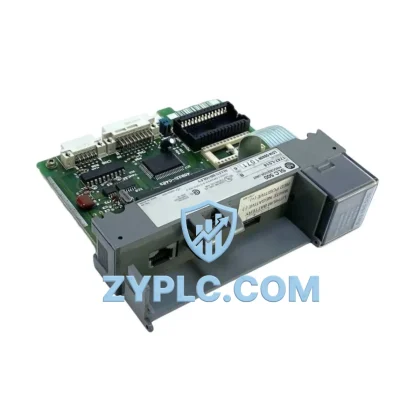
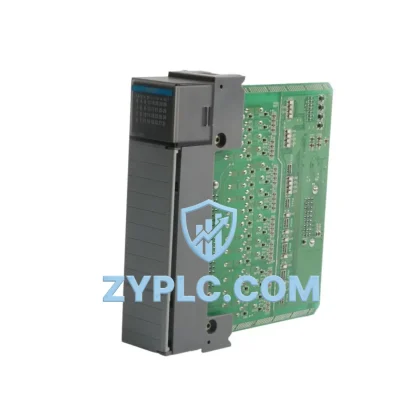
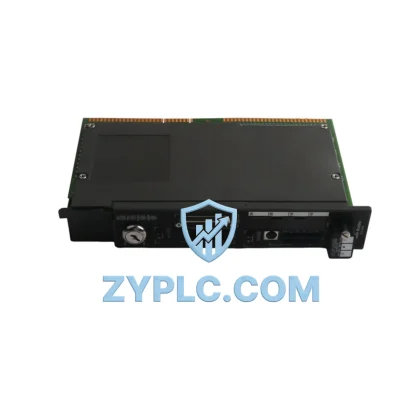
The ABB DSQC639 (part numbers 3HNA011195-001 / 3HAC022978-001) is a high-performance robot controller board engineered for the ABB IRC5 robot controller cabinet. Designed to serve as the central processing and coordination unit within the IRC5 platform, the DSQC639 governs motion planning, axis synchronization, I/O management, and real-time communication between the robot and its peripheral systems. In modern manufacturing environments where energy costs and equipment utilization rates are under constant scrutiny, the DSQC639 plays a pivotal role in ensuring that robotic cells operate at peak efficiency with minimal wasted power cycles.
Unlike generic replacement boards, the DSQC639 is purpose-built for ABB’s IRC5 architecture, meaning it integrates seamlessly with the ABB DSQC652 analog I/O board and the ABB DSQC651 digital I/O board to deliver precise, low-latency signal processing. This tight hardware integration reduces unnecessary polling cycles and idle-state power draw — a critical factor in facilities running multi-shift operations where cumulative energy waste compounds over time.
Efficiency Performance Table
| Parameter |
Specification / Value |
| Part Number |
3HNA011195-001 / 3HAC022978-001 |
| Compatible Platform |
ABB IRC5 Robot Controller |
| Board Function |
Main Computer / Axis Computer Board |
| Operating Voltage |
24 VDC (via IRC5 internal power supply) |
| Communication Protocols |
EtherNet/IP, DeviceNet, PROFIBUS-DP |
| Compatible Robot Series |
IRB 1600, IRB 2400, IRB 4400, IRB 6600, IRB 6640 |
| Application Environment |
Automotive, Electronics Assembly, Metal Fabrication, Logistics |
| Energy Optimization Value |
Reduces idle-state power draw; supports QuickMove & TrueMove motion optimization |
| Condition |
Tested & Verified Functional |
| Warranty |
12-Month Warranty |
| Stock Status |
In Stock — Ready to Ship |
Energy-Aware Automation Architecture
The DSQC639 does not operate in isolation — its energy efficiency impact is amplified when deployed within a well-integrated IRC5 automation architecture. In a typical high-throughput production cell, the DSQC639 coordinates with the ABB DSQC609 power supply unit to regulate voltage delivery across the controller cabinet, ensuring that downstream components such as servo drives and axis computers receive stable, correctly conditioned power without over-draw spikes that degrade both efficiency and component lifespan.
On the drive side, the DSQC639 interfaces directly with the ABB DSQC668 drive unit and ABB DSQC663 axis computer to execute motion profiles generated by RobotWare. When the DSQC639 processes optimized path data — particularly using ABB’s QuickMove and TrueMove algorithms — it minimizes unnecessary motor torque demand, which translates directly into lower energy consumption per robot cycle. In facilities running IRB 6640 or IRB 4400 robots on continuous welding or material handling lines, this optimization can meaningfully reduce per-unit energy cost over a production shift.
For facilities integrating the IRC5 system into a broader SCADA or MES environment, the DSQC639 supports communication via the ABB DSQC688 fieldbus adapter, enabling real-time data exchange over PROFIBUS-DP or DeviceNet. This connectivity allows energy monitoring systems to pull cycle-time and load data from the robot controller, feeding it into plant-level power dashboards. When combined with an external power quality analyzer or an energy metering module on the main distribution panel, production managers gain visibility into per-robot energy consumption — a prerequisite for any meaningful energy reduction initiative.
The DSQC639 also works in conjunction with the ABB FlexPendant (IRC5 variant) and the ABB DSQC679 teach pendant interface board, allowing operators to fine-tune motion parameters, adjust speed overrides, and configure energy-saving standby modes directly from the HMI. Reducing robot speed during non-critical path segments — a setting accessible through the FlexPendant — can cut motor energy draw by 15–30% without impacting overall cycle time on well-balanced lines.
For I/O-intensive applications such as vision-guided assembly or conveyor-synchronized pick-and-place, the DSQC639 manages signal routing to the ABB DSQC377B I/O module and external safety relay boards, ensuring that sensor polling and actuator triggering are handled with minimal CPU overhead. Efficient interrupt handling at the board level prevents the kind of processing bottlenecks that force robots into unplanned wait states — a hidden source of energy waste in poorly tuned cells.
Power Optimization in Real Production Lines
In automotive body shop applications, where ABB IRC5-controlled robots perform continuous spot welding across multi-station lines, the DSQC639’s role in motion coordination directly affects line takt time and energy balance. A faulty or degraded controller board often manifests as erratic axis behavior, extended deceleration phases, or unnecessary servo holds — all of which increase energy consumption per weld cycle. Replacing a failing board with a tested DSQC639 unit restores the motion profile integrity that the original system was commissioned to deliver.
In electronics manufacturing environments, where IRB 1600 or IRB 2400 robots handle precision component placement, the DSQC639 enables tight synchronization between robot motion and conveyor indexing signals. This synchronization eliminates idle wait time at the end of each robot cycle — a period during which servo drives remain energized but unproductive. By restoring proper board function, facilities recover the cycle efficiency that was lost due to controller degradation, without requiring a full robot replacement or line reconfiguration.
Predictive maintenance strategies also benefit from a properly functioning DSQC639. The board’s internal diagnostics and error logging capabilities — accessible via RobotStudio or the IRC5 event log — provide early warning signals for axis load anomalies, communication faults, and thermal events. Maintenance teams that monitor these logs proactively can schedule board replacements during planned downtime windows rather than responding to unplanned failures, which typically carry a much higher cost in lost production and emergency labor.
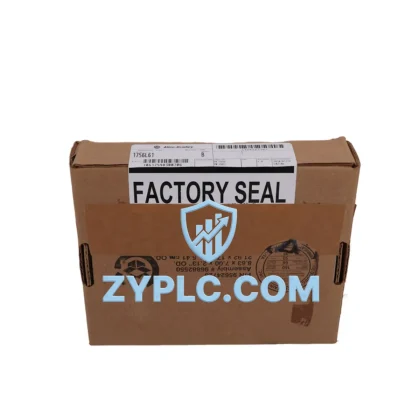
Every DSQC639 unit supplied by ZYPLC undergoes functional testing prior to shipment, including power-on verification, communication interface checks, and axis control signal validation. Units are shipped with protective packaging suitable for international freight and are backed by a 12-month warranty covering manufacturing defects and functional failures under normal operating conditions. In-stock units are available for same-day or next-day dispatch, supporting urgent maintenance requirements without extended lead times.
Energy Optimization FAQ
Q1: How does the ABB DSQC639 contribute to energy savings in an IRC5 robot cell?
The DSQC639 is the central processing board that executes motion planning and I/O coordination within the IRC5 controller. A properly functioning board ensures that ABB’s QuickMove and TrueMove motion optimization algorithms operate as designed, minimizing unnecessary torque demand and reducing energy consumption per robot cycle. A degraded board can cause erratic motion profiles that increase motor load and energy draw without improving throughput.
Q2: Is the DSQC639 compatible with all IRC5 controller variants and robot models?
The DSQC639 (3HNA011195-001 / 3HAC022978-001) is designed for the ABB IRC5 controller platform and is compatible with a range of ABB robot models including the IRB 1600, IRB 2400, IRB 4400, IRB 6600, and IRB 6640 series. Compatibility should be verified against the specific IRC5 cabinet revision and RobotWare version installed on your system. Contact ZYPLC with your cabinet serial number for confirmation.
Q3: What testing process does ZYPLC apply before shipping a DSQC639 unit?
Each DSQC639 unit undergoes a structured pre-shipment test protocol that includes power-on verification, communication interface testing (EtherNet/IP, DeviceNet, PROFIBUS-DP), and axis control signal output checks. Units that do not pass all test criteria are not offered for sale. Test records are retained and can be provided upon request for quality assurance purposes.
Q4: What does the 12-month warranty cover, and how is a warranty claim processed?
The 12-month warranty covers functional failures and manufacturing defects under normal operating conditions. It does not cover damage resulting from incorrect installation, electrical overstress, or physical impact. To initiate a warranty claim, contact ZYPLC via email or phone with the unit serial number and a description of the fault. ZYPLC will arrange for inspection and, where the fault is confirmed as warranty-eligible, provide a replacement unit or repair at no additional cost.
© 2026 ZYPLC. All rights reserved.
Original Source: https://zyplc.com
Contact: +86 19859288691 | plc.sales@zyplc.com