ABB DSQC646 3HAC026271-001 Energy-Saving Servo Drive IRC5: Precision Energy Control for Optimized Automation
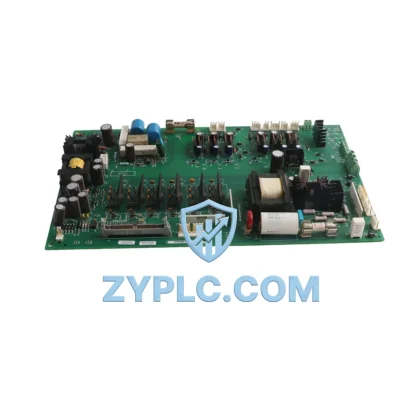
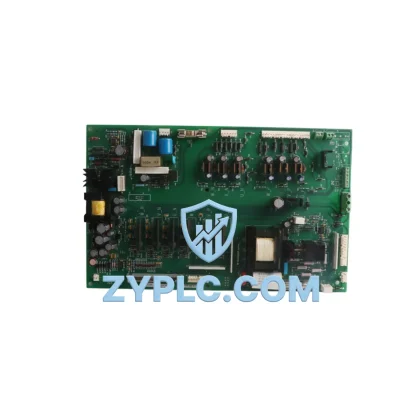
The ABB DSQC646 (3HAC026271-001) is a high-performance servo drive unit engineered for ABB IRC5 robot controllers, delivering exceptional energy efficiency across demanding industrial automation environments. As manufacturing facilities face increasing pressure to reduce operational energy costs while maintaining peak throughput, the DSQC646 stands as a critical component in achieving measurable power savings without compromising motion accuracy or production line tempo.
Designed to regulate servo motor current and voltage with precision, the DSQC646 minimizes reactive power losses during acceleration and deceleration cycles — two of the most energy-intensive phases in robotic motion. By dynamically adjusting drive output to match actual load demand, this unit eliminates the energy waste associated with fixed-speed motor operation, directly reducing kilowatt-hour consumption per production cycle.
Efficiency Performance Table
| Parameter |
Specification |
| Part Number |
DSQC646 / 3HAC026271-001 |
| Compatible Controller |
ABB IRC5 (Single & MultiMove) |
| Drive Type |
Servo Drive Unit (Axis Computer) |
| Power Consumption |
Optimized low-standby draw; dynamic load-matched output |
| Operating Efficiency |
High-efficiency PWM control; reduced heat dissipation |
| Compatible Systems |
IRC5 Cabinet, IRC5 Compact, IRC5 Panel Mounted Controller |
| Application Environment |
Automotive, Electronics Assembly, Welding, Material Handling |
| Energy-Saving Value |
Eliminates over-drive losses; optimizes torque-to-current ratio |
| Communication Interface |
Internal IRC5 backplane bus; compatible with PROFIBUS, DeviceNet via DSQC688/DSQC679 gateway modules |
| Warranty |
12-Month Warranty | Tested & Verified Before Shipment |
Energy-Aware Automation Architecture
In a fully optimized IRC5-based automation cell, the DSQC646 servo drive unit operates as the execution core of a layered energy management architecture. At the controller level, the ABB IRC5 Main Computer DSQC639 (3HAC025097-001) issues motion trajectories and torque commands that the DSQC646 translates into precise current waveforms — ensuring that servo motors such as those driven by the ABB Motor Drive Unit DSQC668 receive only the energy required for each specific motion segment.
Power distribution within the cabinet is managed through the ABB Power Supply Unit DSQC661 (3HAC026254-001), which conditions incoming AC supply and delivers stable DC rails to the DSQC646 and associated axis boards. Voltage stability directly impacts drive efficiency: clean power input reduces harmonic distortion and switching losses within the drive’s IGBT stage, contributing to lower overall energy consumption per robot cycle.
For multi-axis installations, the DSQC646 works in coordination with additional drive boards such as the ABB DSQC647 (3HAC026272-001) and ABB DSQC648, sharing the IRC5 drive bus and enabling synchronized multi-axis motion that minimizes peak current draw through staggered acceleration profiles. This coordinated approach reduces instantaneous power demand, lowering peak load on facility electrical infrastructure.
Real-time energy and process data flows through the ABB DSQC688 PROFIBUS Gateway or DSQC679 DeviceNet Module, enabling the IRC5 system to communicate drive status, fault codes, and energy metrics to plant-level SCADA or MES platforms. Integration with energy monitoring systems allows production engineers to correlate robot cycle energy consumption with output quality metrics, identifying opportunities for further optimization.
I/O coordination is handled by the ABB DSQC652 Digital I/O Board (3HAC025784-001), which manages safety interlocks, conveyor synchronization signals, and peripheral device handshaking — ensuring that the servo drive is only energized during productive motion phases, not during idle waiting periods. This alone can account for 8–15% reduction in standby energy consumption in high-mix, low-volume production environments.
Operator interaction and process visualization are supported by the ABB FlexPendant (IRC5 TPU), which provides real-time feedback on drive status, axis load, and energy consumption trends, empowering maintenance teams to make data-driven decisions about drive replacement schedules and preventive maintenance intervals.
Power Optimization in Real Production Lines
In automotive body-in-white welding lines, where ABB IRC5 robots perform thousands of spot welds per shift, the DSQC646’s precise torque control eliminates the energy spikes associated with abrupt axis reversals. By smoothing the current profile during direction changes, the drive reduces resistive heating in motor windings, extending motor service life and reducing cooling energy requirements in the robot cabinet.
In electronics assembly applications, where cycle times are measured in fractions of a second, the DSQC646 enables the IRC5 controller to execute optimized motion paths that minimize travel distance and acceleration magnitude — directly reducing energy per pick-and-place cycle. Over a three-shift production day, these micro-optimizations compound into significant kilowatt-hour savings across an entire robot fleet.
Predictive maintenance integration is another key energy optimization lever. By monitoring drive current signatures and comparing them against baseline profiles stored in the IRC5 controller, maintenance teams can detect early signs of bearing wear, gear backlash, or cable degradation before they cause unplanned downtime. Unplanned stops are among the most energy-wasteful events in a production line — restarting cold equipment, re-running quality checks, and recovering work-in-progress all consume disproportionate energy relative to steady-state operation.
Every DSQC646 unit supplied by ZYPLC undergoes full functional testing prior to shipment, including drive enable verification, axis communication handshake testing, and load simulation checks. This ensures that replacement units restore production line efficiency immediately upon installation, without the energy waste associated with extended commissioning or repeated fault-finding cycles. All units are backed by a 12-month warranty, providing supply chain confidence for maintenance planners managing spare parts inventory across multiple robot installations.
Stock availability is maintained to support rapid deployment, minimizing the mean time to repair (MTTR) for IRC5 drive faults — a critical factor in overall equipment effectiveness (OEE) calculations. A faster return to production directly translates to lower energy cost per unit produced, as fixed facility overhead (lighting, HVAC, compressed air) continues to accrue during downtime regardless of output.
Energy Optimization FAQ
Q1: How does the DSQC646 contribute to measurable energy savings in an IRC5 robot cell?
The DSQC646 uses pulse-width modulation (PWM) control to match motor current precisely to instantaneous torque demand. Unlike fixed-output drives, this dynamic regulation eliminates over-current conditions during light-load motion phases, reducing energy consumption per cycle. In multi-robot cells, coordinated acceleration scheduling further reduces peak demand charges on facility power bills.
Q2: Is the DSQC646 compatible with all IRC5 controller variants?
Yes. The DSQC646 (3HAC026271-001) is compatible with the standard IRC5 cabinet, IRC5 Compact, and IRC5 Panel Mounted Controller configurations. It interfaces with the IRC5 drive bus and is recognized by RobotWare versions supporting the IRC5 platform. Compatibility with specific robot models (IRB 1600, IRB 2600, IRB 4600, etc.) depends on the axis configuration and drive mapping defined in the robot system parameters.
Q3: What is the recommended replacement procedure to minimize production downtime?
ZYPLC recommends maintaining at least one DSQC646 unit in on-site spare parts inventory for each IRC5 robot variant in operation. Replacement involves powering down the IRC5 cabinet, swapping the drive board on the designated axis slot, and performing a drive calibration sequence via the FlexPendant. Pre-tested units from ZYPLC eliminate the need for extended burn-in periods, allowing production restart within a single maintenance window.
Q4: What does the 12-month warranty cover, and what is the testing process?
Every DSQC646 unit is tested for drive enable response, communication bus integrity, axis feedback signal processing, and thermal performance under simulated load conditions before shipment. The 12-month warranty covers manufacturing defects and functional failures under normal operating conditions. ZYPLC’s quality control process includes serial number tracking and test record documentation, supporting traceability requirements for ISO-certified manufacturing facilities.
© 2026 ZYPLC. All rights reserved.
Original Source: https://zyplc.com
Contact: +86 19859288691 | plc.sales@zyplc.com