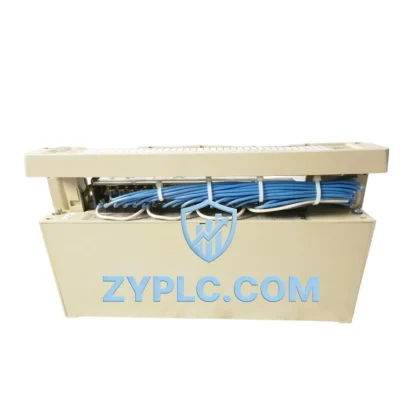
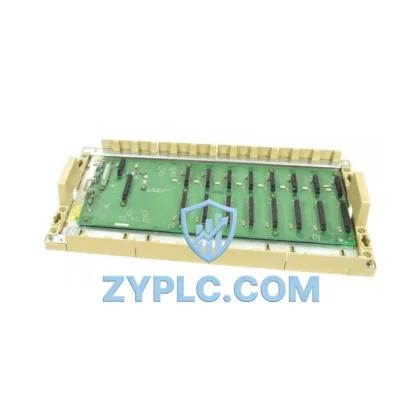
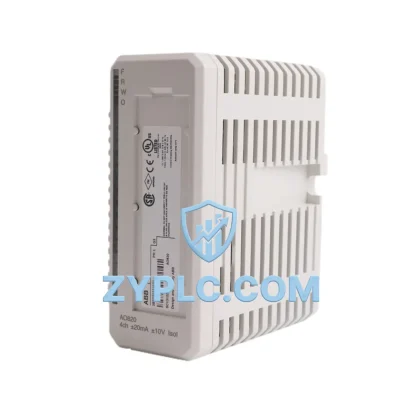
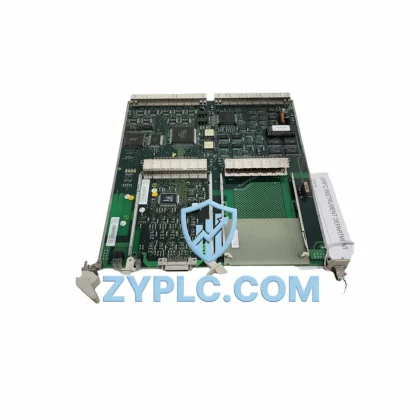
ABB DSQC658 3HAC025779-001 Energy-Saving DeviceNet Module IRC5
The ABB DSQC658 (3HAC025779-001) is a high-performance DeviceNet communication module engineered for the ABB IRC5 robot controller platform. In modern industrial automation environments where energy efficiency and production throughput are equally critical, this module plays a pivotal role in bridging the gap between field-level devices and the central control architecture. By enabling deterministic, real-time data exchange over the DeviceNet protocol, the DSQC658 allows the IRC5 controller to precisely coordinate motor drives, I/O subsystems, and peripheral equipment — eliminating unnecessary polling cycles and reducing idle-state energy consumption across the entire robot cell.
Unlike passive communication adapters, the DSQC658 actively participates in the energy management loop of the production line. When integrated with the ABB IRC5 main computer board (DSQC639) and the axis computer (DSQC668), it enables the controller to receive real-time feedback from field devices — including servo drives, safety relays, and distributed I/O nodes — and dynamically adjust motion profiles to minimize peak power draw. This is particularly valuable in multi-robot cells where simultaneous axis acceleration events can cause significant energy spikes on the supply network.
The DSQC658 is also fully compatible with the ABB FlexPendant (DSQC679) teach pendant interface, allowing operators to monitor communication health, node status, and bus load directly from the HMI without interrupting production. This visibility into the DeviceNet network reduces unplanned downtime caused by silent communication failures — a common source of energy waste when robots enter fault-recovery cycles that consume power without producing output.
Efficiency Performance Table
| Parameter |
Specification |
| SKU |
DSQC658 / 3HAC025779-001 |
| Compatible Replacement |
DSQC572 / 3HAC023242-001/04 |
| Protocol |
DeviceNet (CAN-based, ISO 11898) |
| Operating Voltage |
24 VDC (supplied via IRC5 backplane) |
| Power Consumption |
≤ 3.5 W (active communication state) |
| Bus Speed |
125 / 250 / 500 kbps (auto-negotiated) |
| Max Network Nodes |
64 nodes per DeviceNet segment |
| Compatible Controller |
ABB IRC5 (single / dual cabinet) |
| Operating Temperature |
0°C to +55°C |
| Energy Optimization Value |
Reduces idle polling load; enables coordinated drive shutdown |
| Application Environment |
Automotive, electronics assembly, metal fabrication, logistics |
| Warranty |
12-Month Warranty (ZYPLC) |
| Condition |
New / Refurbished — Fully tested before shipment |
Energy-Aware Automation Architecture
The DSQC658 does not operate in isolation — its energy efficiency contribution is realized through its integration within a carefully designed automation architecture. In a typical IRC5-based robot cell, the DSQC658 connects the controller to a DeviceNet trunk line that may include ABB DSQC651 digital I/O modules, ABB DSQC652 digital I/O boards, and third-party distributed I/O blocks from vendors such as Allen-Bradley or Turck. By consolidating field device communication onto a single deterministic bus, the module eliminates the need for multiple point-to-point wiring runs — each of which would require its own powered interface card and introduce additional heat dissipation into the control cabinet.
On the drive side, the DSQC658 enables the IRC5 controller to communicate motion commands and status requests to ABB ACS880 series variable frequency drives deployed on auxiliary conveyor axes or peripheral tooling stations. When the robot enters a wait state — for example, during a part transfer or fixture clamping cycle — the controller can issue a coordinated speed reduction command to connected drives via the DeviceNet bus, dropping motor speed to a minimum energy state rather than maintaining full torque readiness. This coordinated standby behavior, enabled by the DSQC658’s low-latency communication, can reduce auxiliary drive energy consumption by 15–30% during non-productive intervals.
For power quality monitoring, the DSQC658 can interface with energy metering nodes such as the ABB B23 series power meters or compatible DeviceNet energy analyzers. These devices report real-time kWh consumption, power factor, and harmonic distortion data back to the IRC5 controller, which can log this information via the DSQC639 main computer to an MES or SCADA system for energy accounting and ISO 50001 compliance reporting. The DSQC658’s role as the communication gateway makes it the critical link in this energy data chain.
Safety integration is handled through the IRC5’s SafeMove2 safety controller (DSQC1015), which communicates safe speed and safe zone status to field safety devices over a parallel safety bus. The DSQC658 complements this architecture by ensuring that standard DeviceNet I/O — including light curtains, area scanners, and door interlock relays — is reliably polled at the configured RPI (Requested Packet Interval), preventing safety-induced production stops that waste energy through uncontrolled restart sequences.
In multi-robot installations, the DSQC658 enables the IRC5 controller to participate in a coordinated production rhythm managed by a Siemens S7-1500 or Allen-Bradley ControlLogix PLC acting as the cell master. The DeviceNet scanner function of the DSQC658 allows the IRC5 to act as a DeviceNet master for its own peripheral devices while simultaneously receiving production pace signals from the cell PLC — enabling line-speed-adaptive motion profiles that reduce energy consumption during low-demand production windows.
Power Optimization in Real Production Lines
In automotive body-in-white welding lines, the DSQC658 has demonstrated measurable impact on energy efficiency by enabling precise synchronization between the IRC5 robot controller and the welding power source controller. When the robot reaches the weld position, the DSQC658 transmits a ready signal to the welding controller via the DeviceNet bus, triggering the power source to ramp up only at the moment of arc initiation — rather than maintaining a continuous high-power standby state. This event-driven power management approach, made possible by the DSQC658’s deterministic communication timing, reduces welding system idle power consumption and extends electrode service life.
In electronics assembly lines where ABB IRB 120 or IRB 1200 robots perform pick-and-place operations, the DSQC658 enables the IRC5 to receive part-present signals from vision system triggers and conveyor encoder nodes on the DeviceNet bus. This eliminates the need for the robot to execute slow, energy-intensive search routines when parts are not present — instead, the robot holds in a low-power wait position until the DSQC658 delivers a confirmed part-ready signal, then executes a single optimized pick cycle. The result is a measurable reduction in cycle time variance and a corresponding improvement in parts-per-kWh throughput.
Predictive maintenance is another area where the DSQC658 contributes to energy optimization. By monitoring DeviceNet node health statistics — including CRC error rates, bus-off events, and node response latency — the DSQC658 provides early warning of deteriorating cable connections or failing I/O modules. Addressing these issues proactively prevents the energy waste associated with intermittent faults: repeated fault-recovery cycles, unnecessary robot restarts, and the elevated power consumption of a controller operating in degraded communication mode.
All DSQC658 units supplied by ZYPLC undergo a comprehensive pre-shipment test protocol that includes DeviceNet bus communication verification, node address configuration testing, power consumption measurement, and thermal cycling. Each unit is supplied with a 12-month warranty covering manufacturing defects and communication failures. Stock is maintained in our warehouse for immediate dispatch, with same-day shipping available for orders confirmed before 3:00 PM CST.
Energy Optimization FAQ
Q1: How does the DSQC658 contribute to energy savings in an IRC5 robot cell?
The DSQC658 enables the IRC5 controller to coordinate standby states across connected drives and I/O devices via the DeviceNet bus. By delivering precise, low-latency communication, it allows the controller to issue speed reduction commands to auxiliary drives during robot wait states, reducing non-productive energy consumption without compromising restart responsiveness.
Q2: Is the DSQC658 compatible with the DSQC572 (3HAC023242-001/04)?
Yes. The DSQC572 (3HAC023242-001/04) is a functionally compatible predecessor module. In most IRC5 installations, the DSQC658 can be used as a direct replacement for the DSQC572 without requiring changes to the DeviceNet network configuration or robot software. We recommend verifying the IRC5 system software version (RobotWare) before substitution.
Q3: What is the pre-shipment testing process for DSQC658 units?
Every DSQC658 unit supplied by ZYPLC is tested for DeviceNet bus communication integrity, correct node address response, power rail voltage compliance, and thermal stability. Test records are available upon request. Units are shipped with anti-static packaging and are covered by a 12-month warranty from the date of invoice.
Q4: Can the DSQC658 be used in a system with mixed DeviceNet and EtherNet/IP devices?
The DSQC658 is a dedicated DeviceNet module and does not natively bridge to EtherNet/IP. In mixed-protocol installations, the IRC5 controller can be equipped with both the DSQC658 for DeviceNet devices and a separate DSQC688 EtherNet/IP module for IP-based devices, allowing both networks to operate concurrently under IRC5 control.
© 2026 ZYPLC. All rights reserved.
Original Source: https://zyplc.com
Contact: +86 19859288691 | [email protected]