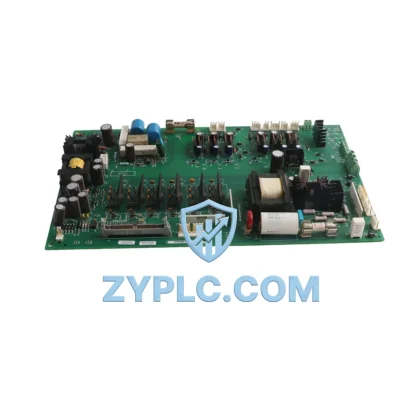
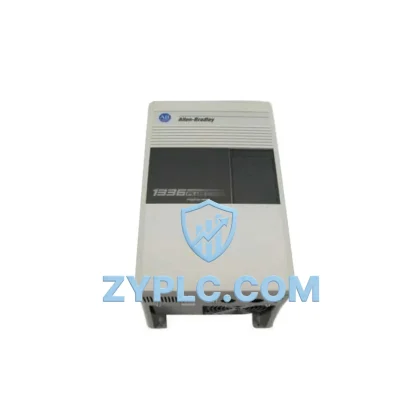
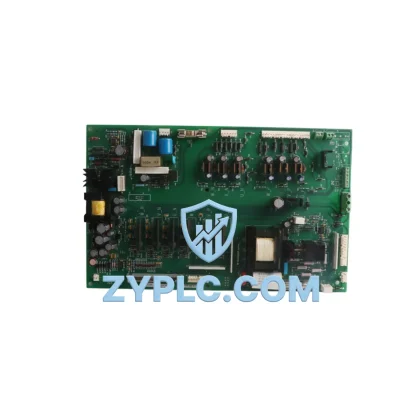
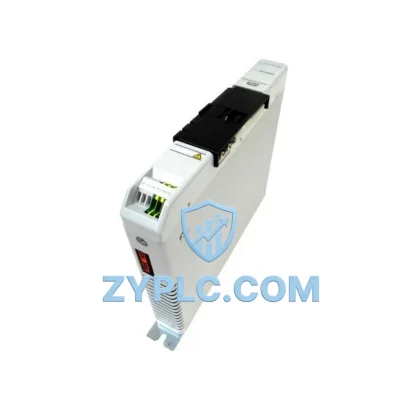
ABB DSQC664 3HAC030923-001 Energy-Saving Drive Unit for Optimized IRC5 Automation
The ABB DSQC664 (3HAC030923-001) is a high-efficiency drive unit engineered for the ABB IRC5 robot controller platform. Designed to deliver precise motor control and measurable energy savings across demanding industrial environments, this drive unit plays a central role in reducing unnecessary power consumption, improving production line throughput, and extending the operational lifespan of robotic systems. Whether deployed in automotive body shops, electronics assembly lines, or heavy-duty material handling cells, the DSQC664 enables factories to achieve tighter energy budgets without sacrificing motion accuracy or cycle time.
Every unit supplied by ZYPLC undergoes full functional testing prior to shipment, covering drive output integrity, communication handshake verification, and thermal performance under load. Stock is maintained on-site for rapid dispatch, and all units are backed by a 12-month warranty covering manufacturing defects and functional failures under normal operating conditions.
Efficiency Performance Table
| Parameter |
Specification |
| SKU / Part Number |
DSQC664 / 3HAC030923-001 |
| Brand |
ABB |
| Series |
IRC5 |
| Product Type |
Drive Unit |
| Operating Voltage |
200–600 VAC (3-phase) |
| Drive Efficiency Class |
IE2 / IE3 Compatible Motor Drive |
| Compatible Systems |
ABB IRC5 Single Cabinet, IRC5 Panel Mounted, IRC5 Compact |
| Communication Protocol |
DeviceNet, PROFIBUS, EtherNet/IP (via IRC5 controller) |
| Application Environment |
Automotive, Electronics Assembly, Welding, Material Handling |
| Energy Saving Value |
Regenerative braking support; reduced idle-state power draw |
| Cooling Method |
Forced air / integrated thermal management |
| Origin |
Sweden (ABB) |
| Warranty |
12-Month Warranty (ZYPLC) |
| Stock Status |
In Stock — Ready to Ship |
| Testing |
Full functional test before shipment |
Energy-Aware Automation Architecture
The DSQC664 does not operate in isolation — it functions as the power conversion backbone within a tightly integrated automation architecture. In a typical IRC5-based robotic cell, the drive unit works in concert with the ABB DSQC639 main computer board, which handles trajectory planning and axis interpolation, ensuring that motor torque commands are executed with minimal overshoot and energy waste. The ABB DSQC643 axis computer further refines per-axis current delivery, reducing reactive power losses that accumulate over multi-shift production schedules.
On the power supply side, the ABB DSQC662 power distribution board regulates DC bus voltage feeding into the DSQC664, stabilizing input conditions that directly affect drive efficiency. When the robot decelerates or performs braking maneuvers, regenerative energy is channeled back through the bus rather than dissipated as heat — a key mechanism for reducing net energy consumption in high-cycle applications such as spot welding or palletizing.
For facilities running mixed automation environments, the DSQC664 integrates cleanly with ABB AC500 PLCs via EtherNet/IP or PROFIBUS, enabling centralized energy monitoring across multiple robot cells from a single control platform. The ABB CP600 HMI series can be configured to display real-time drive load, cycle energy consumption, and fault diagnostics, giving operators actionable data to adjust production parameters before inefficiencies compound into downtime.
In servo-driven peripheral axes — such as positioners or conveyor indexers synchronized with the robot — the ABB MicroFlex e150 servo drive can be paired alongside the IRC5 system, sharing the same communication backbone and allowing coordinated motion profiles that minimize peak current draw across the entire cell. I/O expansion through the ABB DSQC652 digital I/O board ensures that peripheral sensors, safety relays, and energy metering devices are tightly coupled to the controller’s decision logic, enabling event-driven power management rather than time-based polling.
For energy monitoring at the facility level, integrating the IRC5 cell with an ABB B23 energy meter or compatible power quality analyzer allows engineers to correlate robot cycle data with actual kWh consumption, identifying which motion sequences carry the highest energy cost and optimizing path planning accordingly. This data-driven approach transforms the DSQC664 from a simple replacement component into a measurable contributor to the plant’s overall energy efficiency program.
Power Optimization in Real Production Lines
In high-volume automotive assembly plants, robotic cells running ABB IRC5 controllers with DSQC664 drive units have demonstrated consistent reductions in per-cycle energy consumption when motion programs are tuned to leverage the drive’s regenerative capability. During deceleration phases — particularly in large-payload applications such as body panel transfer or engine block handling — the kinetic energy recovered through the drive’s DC bus can offset a meaningful portion of the acceleration energy required at the start of the next cycle. Over thousands of cycles per shift, this accumulates into measurable kWh savings that directly reduce utility costs.
Beyond energy recovery, the DSQC664 contributes to production line optimization through its precise torque control characteristics. Consistent torque delivery reduces mechanical stress on gearboxes and joint bearings, extending mean time between maintenance interventions. Fewer unplanned stoppages mean higher overall equipment effectiveness (OEE), which is the ultimate measure of how efficiently a production asset converts available time into good output. Facilities that track OEE alongside energy KPIs consistently find that drive health is one of the strongest leading indicators of both metrics.
Predictive maintenance strategies benefit significantly from the diagnostic transparency of the IRC5 platform. Drive fault codes, thermal history, and load profiles logged by the DSQC664 can be exported via the robot controller’s data logging interface and analyzed against baseline performance curves. Deviations from baseline — such as increasing current draw at a given load point — signal bearing wear or lubrication degradation before they escalate into catastrophic failures. This shifts maintenance from reactive to condition-based, reducing both spare parts consumption and unplanned downtime costs.
For production lines with variable throughput demands — such as mixed-model assembly or seasonal volume fluctuations — the ability to adjust robot speed and acceleration profiles through the IRC5 teach pendant or remote PLC commands allows energy consumption to scale proportionally with actual production requirements. Running robots at 80% speed during low-demand periods can reduce drive energy consumption by 30–40% compared to full-speed operation, without requiring hardware changes. The DSQC664’s wide operating range supports this flexibility without compromising motion accuracy or repeatability.
Energy Optimization FAQ
Q1: How much energy can the ABB DSQC664 help save in a typical robotic cell?
Actual savings depend on application type, cycle time, and payload. In high-cycle applications with frequent deceleration — such as spot welding or pick-and-place — regenerative braking through the IRC5 drive system can recover 10–25% of braking energy per cycle. Combined with optimized motion profiles, facilities have reported net energy reductions of 15–30% per cell compared to older non-regenerative drive configurations.
Q2: Is the DSQC664 (3HAC030923-001) compatible with all IRC5 controller variants?
The DSQC664 is designed for the ABB IRC5 platform, including the Single Cabinet, Panel Mounted, and IRC5 Compact variants. Compatibility should be verified against your specific controller serial number and software version. ZYPLC’s technical team can assist with cross-referencing your controller configuration before purchase to ensure a direct fit replacement.
Q3: What is the recommended replacement and testing procedure for the DSQC664?
Replacement should be performed with the controller powered down and DC bus fully discharged. After installation, the IRC5 system should be powered up in manual mode and axis calibration verified before returning to automatic production. ZYPLC performs a full functional test on every DSQC664 unit prior to shipment, including drive output verification and communication interface checks, so the unit arrives ready for installation without requiring bench testing on your end.
Q4: What does the 12-month warranty cover, and how is a claim processed?
The 12-month warranty covers manufacturing defects and functional failures under normal operating conditions from the date of shipment. It does not cover damage resulting from incorrect installation, overvoltage events, or physical impact. To initiate a warranty claim, contact ZYPLC via email or phone with your order reference and a description of the fault. ZYPLC will arrange return logistics and provide a replacement or repair within an agreed timeframe to minimize your production downtime.
© 2026 ZYPLC. All rights reserved.
Original Source: https://zyplc.com
Contact: +86 19859288691 | [email protected]