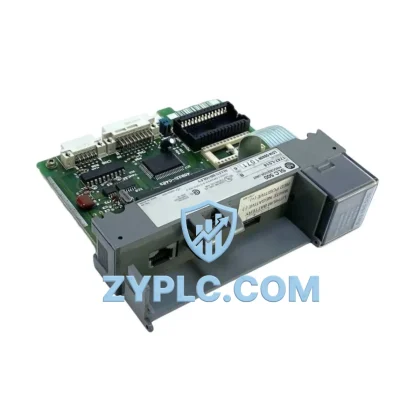
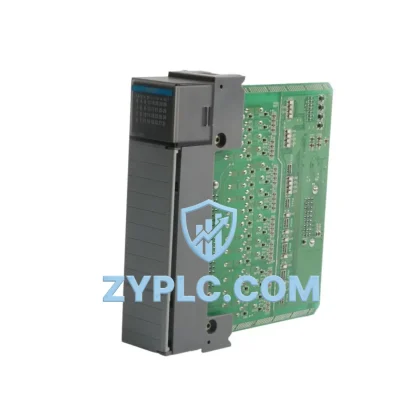
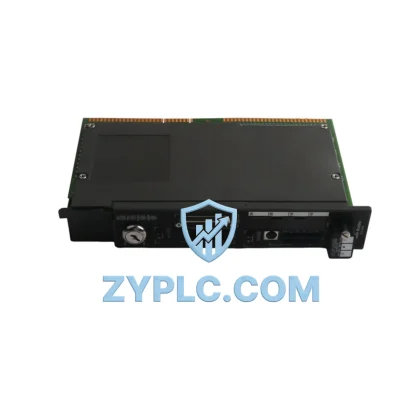
ABB DSQC679 3HAC023195-009 System-Ready Panel Interface for IRC5 Architecture
The ABB DSQC679 (part number 3HAC023195-009) is a dedicated FlexPendant interface and panel communication module engineered for deployment within the ABB IRC5 robot controller platform. Rather than functioning as a standalone component, the DSQC679 occupies a critical position within the IRC5 control cabinet’s internal communication hierarchy — bridging the operator interface layer with the main computer unit and motion control subsystems. In multi-axis robotic cells, process automation lines, and coordinated manufacturing environments, this module ensures that operator commands, safety interlocks, and real-time status signals are transmitted with the determinism and reliability that industrial-grade automation demands.
Understanding the DSQC679’s role requires viewing it through the lens of the complete IRC5 system architecture. The IRC5 controller is structured around a modular backplane design in which each functional layer — computation, motion, I/O, power, and human-machine interface — is handled by a dedicated module. The DSQC679 serves the HMI and panel communication layer, receiving input from the FlexPendant teach pendant and relaying operator instructions to the main computer board (DSQC1000 / 3HAC044168-001) and the axis computer (DSQC668 / 3HAC025338-001). This layered architecture allows system integrators to isolate faults, replace modules independently, and scale the controller configuration without disrupting the broader control loop.
In practice, the DSQC679 supports the contextual integration of operator-level commands into the robot’s real-time execution environment. When a technician uses the FlexPendant to jog axes, modify program parameters, or acknowledge safety faults, those inputs pass through the DSQC679 before reaching the motion planning and drive control layers. This makes the module indispensable not only during normal production but also during commissioning, maintenance windows, and fault recovery procedures — scenarios where reliable HMI communication directly affects downtime duration and system recovery speed.
Architecture Specification Table
| System Role |
FlexPendant Interface & Panel Communication Module — IRC5 HMI Layer |
| Part Number |
3HAC023195-009 |
| SKU / Model |
DSQC679 |
| Compatible Platform |
ABB IRC5 Robot Controller (Single Cabinet, Dual Cabinet, Panel Mounted) |
| Communication Interface |
Internal IRC5 backplane bus; FlexPendant USB/proprietary connector |
| Operating Voltage |
24 VDC (supplied via IRC5 internal power distribution) |
| Operating Temperature |
0°C to +55°C (storage: -25°C to +70°C) |
| Mounting |
DIN rail / IRC5 cabinet internal mounting bracket |
| Ingress Protection |
IP54 (within IRC5 cabinet enclosure) |
| Certifications |
CE, UL, RoHS compliant |
| Country of Origin |
Sweden |
| Warranty |
12-Month Warranty — covers functional defects under normal operating conditions |
| Contextual Integration |
Fully compatible with IRC5 RobotWare 5.x and 6.x software environments |
Coordinated Control System Design
The DSQC679 does not operate in isolation — its value is realized through its coordination with every other module in the IRC5 control cabinet. At the computation layer, the DSQC679 interfaces with the IRC5 main computer unit (DSQC1000, 3HAC044168-001), which runs the RobotWare operating system and manages program execution, path planning, and system supervision. The main computer relies on the DSQC679 to relay operator inputs and FlexPendant status data in real time, ensuring that manual interventions are reflected immediately in the execution environment.
At the motion control layer, the axis computer module (DSQC668, 3HAC025338-001) receives processed motion commands derived in part from operator inputs channeled through the DSQC679. In multi-robot or coordinated motion applications, the axis computer manages the servo drive signals for each robot axis, and any manual jog or speed override command entered via the FlexPendant must pass through the DSQC679 before influencing axis trajectories. This signal flow makes the DSQC679 a critical link in the operator-to-motion command chain.
The power distribution module (DSQC661, 3HAC026253-001) supplies regulated 24 VDC to the DSQC679 and other internal modules. In redundant power configurations — common in high-availability production lines — the power module’s health directly affects the DSQC679’s operational continuity. System architects designing for redundancy should ensure that the power distribution architecture supports uninterrupted supply to the HMI layer, as loss of the DSQC679 during production would disable operator override and emergency stop acknowledgment functions.
On the I/O layer, the IRC5 system typically incorporates distributed I/O modules such as the DSQC652 (3HAC025784-001) for digital I/O expansion, and the DSQC651 (3HAC025917-001) for analog signal handling. These modules communicate with the main computer via the internal DeviceNet or EtherNet/IP bus, and their status is visible to the operator through the FlexPendant interface managed by the DSQC679. In process automation applications — such as welding, material handling, or assembly — the I/O modules feed real-time sensor and actuator data into the operator display, enabling informed manual intervention when automated sequences require adjustment.
For fieldbus and network communication, the IRC5 platform supports optional communication modules such as the DSQC688 (3HAC031670-001) for PROFIBUS-DP or the DSQC1006 (3HAC050363-001) for EtherNet/IP connectivity. These modules extend the IRC5’s integration capability into plant-level SCADA systems, DCS platforms, and MES environments. The DSQC679 complements this network architecture by ensuring that local operator control remains available even when remote supervisory systems are active — a critical requirement in safety-critical applications where local override capability must be preserved.
In panel-mounted IRC5 configurations, the DSQC679 is often paired with the IRC5 panel interface board and external operator panels, enabling machine builders to design custom HMI layouts while retaining full FlexPendant functionality. This flexibility makes the DSQC679 suitable for integration into OEM machine designs, collaborative robot cells, and multi-controller coordinated systems where standardized operator interfaces are required across multiple robot units.
Application in Layered Automation Systems
Automotive & General Manufacturing: In automotive body-in-white welding lines and assembly stations, the DSQC679 enables operators to perform real-time speed adjustments, program selection, and fault acknowledgment without interrupting the broader production sequence. Its reliable FlexPendant communication ensures that line supervisors can intervene precisely and safely during high-throughput operations.
Electronics & Precision Assembly: In electronics manufacturing environments where robotic dispensing, soldering, and pick-and-place operations demand micron-level repeatability, the DSQC679 supports fine-tuned manual adjustments via the FlexPendant. Operators can modify tool offsets, adjust path parameters, and monitor I/O status in real time — capabilities that are essential during product changeovers and process validation.
Food & Beverage / Packaging: In hygienic packaging lines and palletizing cells, the DSQC679 facilitates rapid operator interaction during format changes and product transitions. Its compatibility with IRC5 SafeMove safety software ensures that manual interventions comply with functional safety requirements, reducing the risk of unsafe robot motion during operator access.
Petrochemical & Process Industries: In hazardous area applications where robot controllers are housed in pressurized or purged enclosures, the DSQC679’s role in maintaining reliable HMI communication is amplified. Operators rely on the FlexPendant interface for remote monitoring and controlled intervention, making the module’s signal integrity and thermal stability critical to safe operation.
Logistics & Warehousing: In automated storage and retrieval systems (ASRS) and goods-to-person fulfillment centers, IRC5-based robots equipped with the DSQC679 can be quickly reconfigured by operators to handle new SKU profiles, adjust pick heights, or respond to system exceptions — supporting the operational agility that modern logistics environments demand.
Architecture Engineering FAQ
Q1: Is the DSQC679 (3HAC023195-009) compatible with all IRC5 controller variants, including the IRC5 Compact and Panel Mounted versions?
The DSQC679 is designed for the standard IRC5 single-cabinet and dual-cabinet configurations. Compatibility with the IRC5 Compact and Panel Mounted variants depends on the specific RobotWare version and cabinet revision. We recommend verifying the controller’s hardware revision and RobotWare release before installation. Our technical team can assist with compatibility confirmation based on your controller’s serial number and software version.
Q2: What is the recommended procedure for replacing the DSQC679 in a live production environment, and how does the 12-Month Warranty apply to replacement units?
Replacement of the DSQC679 should be performed with the IRC5 controller powered down and locked out in accordance with your facility’s LOTO procedures. After installation, the RobotWare system will automatically detect the new module during boot. No additional software configuration is typically required. All DSQC679 units supplied by ZYPLC are covered by a 12-Month Warranty against functional defects under normal operating conditions, with technical support available throughout the warranty period.
Q3: Can the DSQC679 support contextual integration with third-party SCADA or MES systems communicating via EtherNet/IP or PROFIBUS?
The DSQC679 itself handles the HMI and panel communication layer within the IRC5 architecture. Contextual integration with SCADA or MES systems is managed at the network communication layer via dedicated fieldbus modules such as the DSQC688 or DSQC1006. However, the DSQC679 ensures that local operator status and override commands are always available to the system, complementing the remote supervisory integration provided by the network modules. This layered approach guarantees that operator control is never dependent solely on network availability.
© 2026 ZYPLC. All rights reserved.
Original Source: https://zyplc.com
Contact: +86 19859288691 | plc.sales@zyplc.com