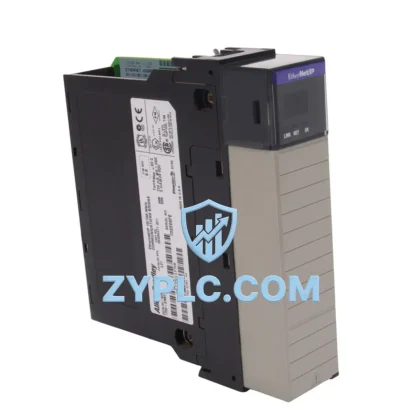
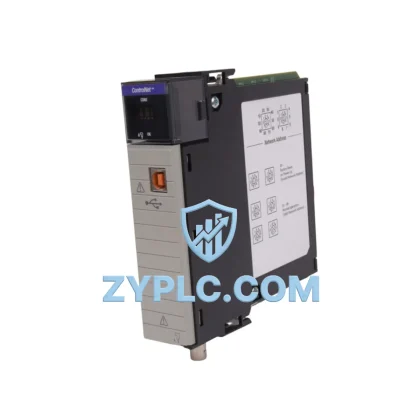
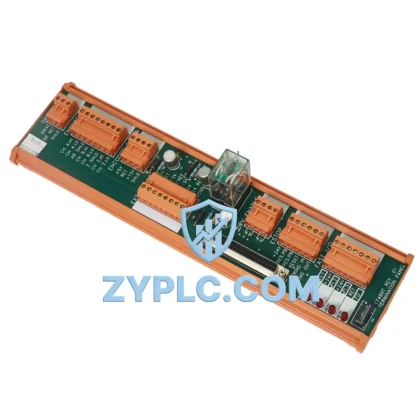
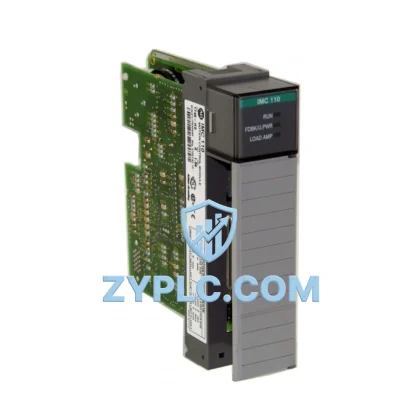
ABB EM-CAY System-Ready Ethernet Communication Module for SLC Architecture: Control System Architecture and Upstream-Downstream Coordination
In modern industrial automation, the reliability of a control system is not determined by any single component in isolation — it is defined by the coherence of the entire architecture. The ABB EM-CAY Ethernet Communication Module is engineered to serve as a critical network-layer node within SLC-based control platforms, enabling seamless data exchange between the controller layer, I/O subsystems, supervisory networks, and field devices. Designed for demanding industrial environments, the EM-CAY supports high-speed Ethernet communication with deterministic throughput, making it an essential element in distributed control architectures where signal integrity, latency management, and protocol consistency are non-negotiable.
The EM-CAY is not simply a connectivity device — it is a system-level enabler. When integrated into an ABB SLC control cabinet alongside compatible CPU modules, power supply units, and I/O expansion racks, it provides the communication backbone that allows the entire automation platform to function as a unified, coordinated system. Its role spans from real-time process data acquisition at the field level to structured data delivery at the SCADA or DCS supervisory layer, ensuring that every layer of the automation hierarchy operates with consistent, validated information.
Architecture Specification Table
| Parameter |
Specification |
| Model / SKU |
EM-CAY |
| Brand |
ABB |
| Product Type |
Ethernet Communication Module |
| Compatible Platform |
ABB SLC Control Architecture |
| System Role |
Network Layer Communication Node |
| Communication Protocol |
Ethernet (IEEE 802.3), TCP/IP, Modbus TCP |
| Data Transfer Rate |
10/100 Mbps |
| Connector Type |
RJ45 Ethernet Port |
| Electrical Supply |
Supplied via SLC backplane bus |
| Operating Temperature |
0°C to +60°C |
| Storage Temperature |
-40°C to +85°C |
| Relative Humidity |
5% to 95% (non-condensing) |
| Protection Rating |
IP20 (panel-mount installation) |
| Installation Method |
DIN rail / SLC rack slot mounting |
| Origin |
Sweden (ABB Group) |
| Warranty |
12-Month Warranty |
| Availability |
In stock — tested and verified prior to dispatch |
Coordinated Control System Design
The EM-CAY achieves its full potential when deployed within a coordinated ABB SLC control system architecture. At the controller layer, it interfaces directly with ABB SLC CPU modules, providing the processing core with a reliable Ethernet uplink to supervisory systems and peer controllers. The CPU module relies on the EM-CAY to transmit cyclic process data, alarm states, and diagnostic information to the SCADA layer without interruption, even under high network load conditions.
At the I/O layer, the EM-CAY works in conjunction with ABB SLC digital input modules, analog output modules, and mixed I/O expansion units mounted on the same backplane or connected via remote I/O racks. The communication module ensures that field signals — whether from pressure transmitters, flow meters, or motor drive feedback — are accurately timestamped and transmitted upstream with minimal latency. This is particularly important in process industries where signal timing directly affects control loop performance.
Power integrity is maintained through ABB SLC power supply modules, which provide regulated DC bus voltage to the backplane. The EM-CAY draws its operating power from this shared bus, eliminating the need for external power conditioning and simplifying cabinet wiring. In redundant power configurations, dual ABB SLC power supply units can be deployed to ensure uninterrupted module operation during a single power supply failure — a critical requirement in continuous process plants.
For human-machine interface integration, the EM-CAY’s Ethernet port connects directly to ABB Panel Builder HMI terminals or third-party SCADA workstations via standard TCP/IP networking. This allows operators to monitor real-time process variables, acknowledge alarms, and issue setpoint changes from centralized control rooms or remote engineering stations. The Contextual Integration capability of the EM-CAY ensures that data tags are consistently mapped across the control hierarchy, reducing configuration errors during commissioning and simplifying long-term maintenance.
In multi-node architectures, the EM-CAY supports peer-to-peer communication between multiple SLC controller racks distributed across a plant floor. This enables coordinated control strategies — such as cascade control, ratio control, and interlocking sequences — to be executed across physically separated control panels without relying on a central communication server. ABB SLC terminal base units and bus coupler modules facilitate the physical interconnection of distributed racks, while the EM-CAY manages the logical data routing between nodes.
For applications requiring communication gateway functionality, the EM-CAY can be paired with ABB CI590 PROFIBUS DP communication interface modules or Modbus RTU gateway adapters, enabling legacy field devices and third-party instruments to be integrated into the Ethernet-based control network. This hybrid communication architecture extends the useful life of existing field instrumentation while modernizing the supervisory and control layers.
Application in Layered Automation Systems
Manufacturing and Discrete Production Lines: In automotive assembly, electronics manufacturing, and precision machining environments, the EM-CAY enables real-time synchronization between PLC-controlled motion axes, robotic work cells, and MES production scheduling systems. Its deterministic Ethernet communication ensures that production data — cycle times, part counts, quality inspection results — is delivered to the factory information system without delay, supporting lean manufacturing and OEE optimization initiatives.
Power Generation and Electrical Substation Automation: In power plant auxiliary systems and electrical substation control panels, the EM-CAY provides the communication link between protection relay systems, bay controllers, and substation SCADA platforms. Its compatibility with IEC 61850-compliant network architectures (via appropriate protocol converters) makes it suitable for integration into modern digital substation environments where communication reliability is a safety-critical requirement.
Petrochemical and Refinery Process Control: In continuous process plants handling hydrocarbons, chemicals, and refined products, the EM-CAY supports the integration of SLC-based safety instrumented systems (SIS) with the plant DCS network. Its robust operating temperature range and vibration tolerance make it suitable for installation in field junction boxes and local control panels located in classified hazardous areas (with appropriate enclosure protection).
Water and Wastewater Treatment: Municipal water treatment facilities and industrial effluent treatment plants rely on distributed control architectures to manage pumping stations, chemical dosing systems, and filtration processes spread across large geographic areas. The EM-CAY’s Ethernet connectivity enables remote monitoring and control of outlying pump stations from a central SCADA system, reducing the need for on-site operator presence and improving response times to process upsets.
Mining, Metallurgy, and Mineral Processing: In ore processing plants, smelters, and mineral beneficiation facilities, the EM-CAY supports the integration of conveyor control systems, crusher automation, and flotation cell management into a unified plant control network. Its ability to operate reliably in high-dust, high-vibration environments — when installed in appropriately rated enclosures — makes it a practical choice for harsh industrial applications.
Architecture Engineering FAQ
Q1: Is the ABB EM-CAY compatible with existing ABB SLC racks and backplanes already installed in my control cabinet?
A: Yes. The EM-CAY is designed for direct slot installation into standard ABB SLC backplane racks. It communicates with the CPU module via the internal SLC bus, requiring no additional wiring between the communication module and the controller. Before installation, verify that your SLC CPU firmware version supports the EM-CAY module type — ABB typically documents compatible firmware revisions in the module’s hardware installation manual. If you are integrating the EM-CAY into an existing system, a firmware update may be required to enable full feature support.
Q2: Can the EM-CAY support redundant Ethernet network configurations for high-availability control systems?
A: The EM-CAY provides a single Ethernet port for network connectivity. For redundant network architectures, it is recommended to implement network-level redundancy using managed Ethernet switches with ring topology (e.g., RSTP or MRP protocols) rather than relying on dual-port module redundancy. In safety-critical applications requiring controller-level redundancy, the EM-CAY should be deployed in conjunction with a redundant CPU configuration, where each CPU module has its own dedicated EM-CAY communication module connected to separate network segments.
Q3: What does the 12-Month Warranty cover, and what support is available during the warranty period?
A: All ABB EM-CAY modules supplied by ZYPLC are covered by a 12-Month Warranty from the date of dispatch. This warranty covers manufacturing defects, component failures under normal operating conditions, and functional non-conformance with published ABB specifications. Modules are tested and verified prior to shipment to ensure correct operation. During the warranty period, ZYPLC provides technical support for installation, commissioning, and system integration queries. In the event of a warranty claim, ZYPLC will arrange module replacement or repair at no additional cost to the customer. For post-warranty support, extended service agreements and spare module supply programs are available upon request.
© 2026 ZYPLC. All rights reserved.
Original Source: https://zyplc.com
Contact: +86 19859288691 | plc.sales@zyplc.com