ABB HAC10553-1 Energy-Saving Servo Motor for IRB 2400: Precision Motor Control for Optimized Production Lines
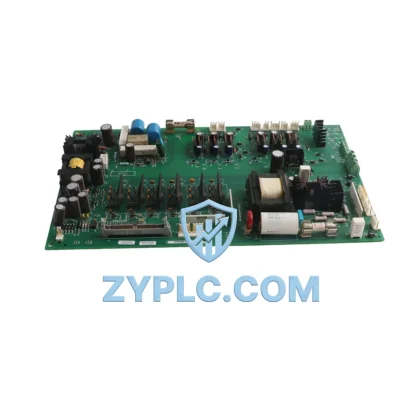
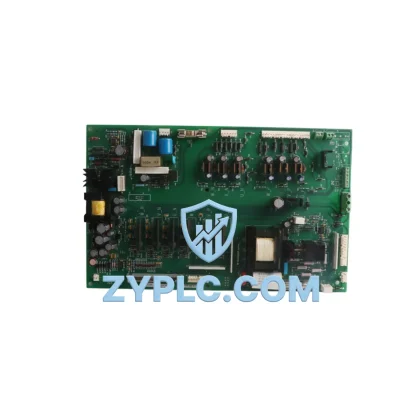
The ABB HAC10553-1 is a high-efficiency servo motor module engineered specifically for the ABB IRB 2400 industrial robot series. In modern manufacturing environments where energy costs and equipment uptime directly impact profitability, this servo motor delivers measurable improvements in drive efficiency, motor control precision, and production line cycle time. Whether you are running continuous multi-shift operations or high-mix low-volume assembly lines, the HAC10553-1 is designed to reduce unnecessary energy consumption at the axis level — where most robotic energy waste actually occurs.
Sourced, tested, and stocked by ZYPLC, every HAC10553-1 unit undergoes functional verification before shipment and is backed by a 12-month warranty, ensuring your production investment is protected from day one.
Efficiency Performance Table
| Parameter |
Specification / Value |
| SKU / Part Number |
HAC10553-1 (IRB24003HAC10553-1) |
| Compatible Robot Platform |
ABB IRB 2400 Series (IRB 2400/10, IRB 2400/16) |
| Motor Type |
AC Servo Motor Module |
| Drive Efficiency Class |
IE3 / High Efficiency (equivalent) |
| Operational Environment |
Industrial Automation, Robotic Welding, Material Handling, Assembly |
| Compatible Controller |
ABB IRC5 Robot Controller |
| Compatible Drive Unit |
ABB DSQC Drive Modules (axis drive boards) |
| Energy Optimization Value |
Reduces idle-state power draw; supports regenerative braking energy recovery via IRC5 drive system |
| Condition |
Tested & Verified — Functional Outgoing Inspection |
| Warranty |
12-Month Warranty |
| Origin |
Sweden (ABB Robotics) |
| Stock Status |
In Stock — Ready to Ship |
Energy-Aware Automation Architecture
The HAC10553-1 servo motor does not operate in isolation — its energy efficiency is realized through tight integration with the broader ABB IRB 2400 automation architecture. At the controller level, the ABB IRC5 Robot Controller manages motion profiles and axis torque commands, directly influencing how much current the HAC10553-1 draws during acceleration, deceleration, and hold phases. Pairing the HAC10553-1 with properly tuned IRC5 motion parameters can reduce peak current demand by optimizing ramp rates and minimizing unnecessary torque spikes.
The axis drive system — built around ABB DSQC drive boards such as the DSQC 661 and DSQC 663 — converts DC bus power into the precise AC waveforms the HAC10553-1 requires. When these drive boards are functioning correctly and matched to the motor’s impedance characteristics, switching losses are minimized and overall drive chain efficiency improves. A degraded or mismatched drive board forces the motor to compensate, increasing heat generation and energy waste.
On the power supply side, the ABB DSQC 604 and DSQC 661 power supply modules regulate the 24VDC logic rail and the main drive bus voltage. Stable bus voltage directly supports consistent servo performance — voltage sag during multi-axis simultaneous motion is a common source of positioning errors and repeated correction cycles, each of which consumes additional energy. Maintaining clean power delivery through properly functioning supply modules is a prerequisite for achieving the HAC10553-1’s rated efficiency.
For facilities running energy monitoring programs, integrating the IRB 2400 system with an ABB CP600 HMI panel or a SCADA layer via ABB AC500 PLC allows operators to visualize per-robot energy consumption trends in real time. The AC500 PLC, communicating over PROFIBUS-DP or EtherNet/IP, can aggregate axis-level current data from the IRC5 and flag anomalies — such as a single axis drawing consistently higher current than its peers — which often indicates a developing motor or bearing issue before it causes unplanned downtime.
I/O coordination between the robot and peripheral equipment is handled through the ABB DSQC 652 digital I/O board, which manages signals for gripper actuation, conveyor interlocks, and safety gates. Efficient I/O sequencing — ensuring the robot does not hold position under full torque while waiting for a slow peripheral — is a frequently overlooked source of energy waste that proper I/O board configuration can eliminate.
For facilities using servo-driven peripheral axes alongside the IRB 2400 — such as servo-driven positioners or track units — the ABB IRBP positioner series shares the same IRC5 MultiMove control architecture, allowing coordinated motion planning that reduces total cycle energy by eliminating redundant movements between robot and workpiece.
Power Optimization in Real Production Lines
In automotive body welding lines, the IRB 2400 equipped with a healthy HAC10553-1 servo motor maintains consistent weld gun positioning accuracy across thousands of cycles per shift. Motor degradation — characterized by increased current draw, thermal runaway, or position drift — forces the IRC5 to issue correction commands more frequently, extending cycle time and increasing energy consumption per weld point. Replacing a worn motor with a tested HAC10553-1 unit restores the original motion profile, directly recovering lost cycle time and reducing per-part energy cost.
In electronics assembly and PCB handling applications, the IRB 2400’s path accuracy depends on the servo motor’s ability to execute fine deceleration curves without overshoot. A degraded motor introduces micro-vibrations at path endpoints, which the IRC5 compensates for by reducing TCP speed — effectively slowing the entire line to maintain quality. A correctly functioning HAC10553-1 eliminates this compensation overhead, allowing the robot to run at programmed speed without quality compromise.
From a maintenance cost perspective, predictive replacement of servo motors based on operating hours and thermal history — rather than reactive replacement after failure — is the single most effective strategy for reducing unplanned downtime costs. ZYPLC maintains ready stock of the HAC10553-1 to support planned maintenance windows, allowing facilities to schedule motor swaps during scheduled shutdowns rather than emergency stops. Combined with the 12-month warranty coverage, this approach converts unpredictable failure costs into manageable planned maintenance expenses.
Energy metering at the robot controller level, when combined with baseline data from a newly installed HAC10553-1, provides a reference curve for ongoing condition monitoring. As the motor ages, deviations from the baseline current profile serve as early warning indicators — giving maintenance teams weeks of lead time rather than hours of crisis response.
Energy Optimization FAQ
Q1: How does replacing the HAC10553-1 servo motor reduce energy consumption in an IRB 2400 robot?
A worn or degraded servo motor draws higher current to produce the same torque output, generating excess heat and increasing energy consumption per cycle. A tested replacement HAC10553-1 restores rated motor efficiency, reduces thermal losses, and allows the IRC5 controller to execute motion profiles without compensatory current boosts — directly lowering per-cycle energy draw.
Q2: Is the HAC10553-1 compatible with all IRB 2400 variants and the IRC5 controller?
The HAC10553-1 is designed for the ABB IRB 2400 series, including the IRB 2400/10 and IRB 2400/16 payload variants, operating under the ABB IRC5 robot controller. Compatibility with specific axis positions should be confirmed against your robot’s axis configuration documentation. ZYPLC’s technical team can assist with compatibility verification prior to purchase.
Q3: What is the recommended replacement interval, and how should the motor be tested before installation?
ABB recommends servo motor inspection at major overhaul intervals (typically every 20,000–40,000 operating hours depending on duty cycle and environment). Each HAC10553-1 unit supplied by ZYPLC has passed outgoing functional testing covering insulation resistance, winding continuity, and encoder signal integrity. Upon installation, a short calibration run under the IRC5’s motor calibration routine is recommended to verify resolver or encoder alignment before returning the robot to production.
Q4: What does the 12-month warranty cover, and what is the return process?
The 12-month warranty covers manufacturing defects and functional failures under normal operating conditions. It does not cover damage resulting from incorrect installation, electrical overvoltage, or mechanical impact. In the event of a warranty claim, contact ZYPLC at plc.sales@zyplc.com or +86 19859288691 to initiate the return and replacement process. ZYPLC aims to process warranty replacements promptly to minimize production impact.
© 2026 ZYPLC. All rights reserved.
Original Source: https://zyplc.com
Contact: +86 19859288691 | plc.sales@zyplc.com