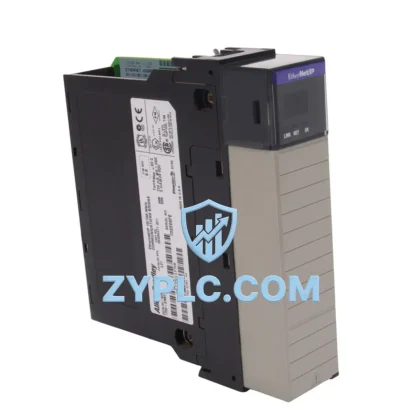
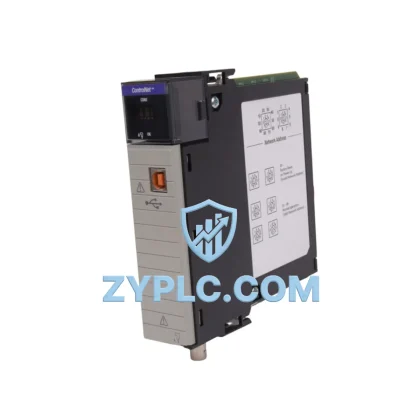
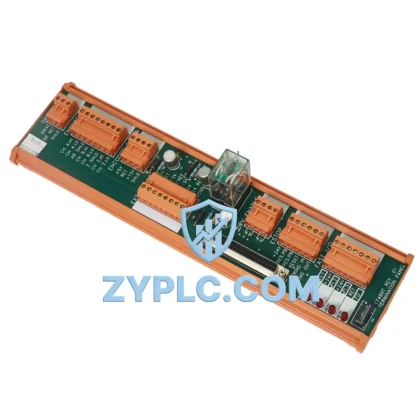
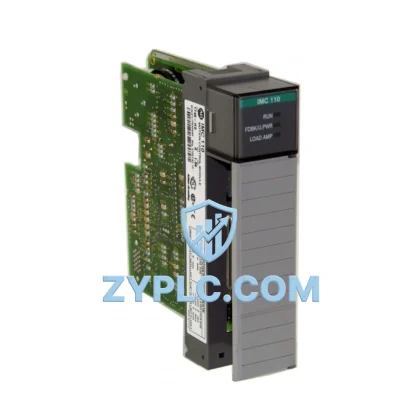
ABB IIMCL01 System-Ready Multibus Link Termination for ACS/DCS Architecture
The ABB IIMCL01 Multibus Communication Link Termination Module is a precision-engineered communication interface component designed to operate within ABB’s layered industrial automation architecture. Rather than functioning as a standalone device, the IIMCL01 is conceived as a structural element within a broader control system — one that bridges the communication layer with the I/O layer, the control layer, and the field device layer in a coherent, deterministic signal flow. In ACS and DCS environments where communication integrity directly determines process reliability, the IIMCL01 provides the termination discipline that prevents signal reflection, bus contention, and data corruption across multi-node Multibus networks.
In modern industrial control architectures, the communication backbone is as critical as the CPU itself. The IIMCL01 ensures that the Multibus segment it terminates maintains proper impedance matching, enabling stable data exchange between the central processing unit — such as the ABB PM864A or PM866 processor module — and distributed I/O stations, remote terminal units, and field-level devices. Without proper bus termination, high-speed communication segments are susceptible to signal degradation that manifests as intermittent faults, watchdog trips, and unpredictable controller behavior. The IIMCL01 eliminates this risk by providing a clean, passive termination point that anchors the bus topology.
Within a typical ABB System 800xA or AC 800M control platform, the IIMCL01 is installed at the physical end of a Multibus segment, working in coordination with modules such as the CI854A PROFIBUS DP communication interface, the TB820V2 Modulebus optical port unit, and the SD821 or SD822 power supply modules. The power layer, supplied through the SD series, feeds the backplane and communication modules simultaneously, ensuring that the IIMCL01 and its neighboring I/O modules — including the DI810 digital input module and the AO810V2 analog output module — operate within a stable voltage envelope. This coordinated power and communication design is fundamental to achieving the high availability targets demanded by continuous process industries.
The IIMCL01 also plays a role in redundancy architecture. In systems where the communication bus is configured in a redundant ring or dual-bus topology, proper termination at both ends of each segment is mandatory. The IIMCL01 supports this requirement, enabling engineers to design fault-tolerant communication paths where a single cable fault or module failure does not interrupt process control. This is particularly relevant in applications where the ABB S800 I/O system is deployed across geographically distributed cabinets, with the IIMCL01 ensuring that each segment boundary is correctly defined and electrically stable.
From a system integration perspective, the IIMCL01 simplifies commissioning. Engineers working with ABB’s Control Builder engineering tool can verify bus topology and termination status during the configuration phase, reducing the risk of field-level communication errors during startup. The module’s passive design means it introduces no additional latency or processing overhead, making it transparent to the control system’s cycle time calculations. This characteristic is especially valuable in high-speed process control applications where deterministic communication timing is a hard requirement.
Long-term maintenance efficiency is another key advantage of the IIMCL01 within a standardized ABB architecture. Because the module conforms to the physical and electrical standards of the ABB S800 and AC 800M platform, it can be replaced without reconfiguration of the communication segment. Maintenance teams familiar with the ABB ecosystem can swap the module during a planned maintenance window without requiring specialized tools or firmware updates. This plug-and-play serviceability reduces mean time to repair (MTTR) and supports the lifecycle management strategies of facilities operating under strict uptime commitments.
Inventory availability for the IIMCL01 is maintained to support both planned procurement cycles and emergency replacement scenarios. All units supplied are tested against ABB’s original functional specifications and are covered by a 12-Month Warranty, providing procurement engineers and plant managers with the assurance needed for long-term asset planning. The module’s compatibility with the broader ABB Multibus ecosystem — including the TB807 Modulebus modem unit, the CI801 PROFIBUS DP interface, and the TP830 test panel — means that a single inventory position supports multiple architectural configurations.
Architecture Specification Table
| Parameter |
Specification |
| System Role |
Multibus Communication Link Termination |
| Compatible Platform |
ABB AC 800M, System 800xA, ACS/DCS Architecture |
| Bus Type |
Multibus (ABB Modulebus) |
| Termination Function |
Passive impedance termination for Multibus segment end |
| Installation Position |
End-of-segment, backplane or DIN rail mount |
| Operating Voltage |
24 VDC (supplied via backplane) |
| Operating Temperature |
0°C to +55°C |
| Communication Compatibility |
ABB Multibus / Modulebus protocol |
| Redundancy Support |
Dual-bus and ring topology compatible |
| Country of Origin |
Germany |
| Warranty |
12-Month Warranty — all units tested to OEM specification |
Coordinated Control System Design
The IIMCL01 achieves its full value when considered within the context of a complete ABB control system architecture. In a representative System 800xA deployment, the communication layer begins at the ABB PM864A or PM866 CPU module, which manages the control logic and communicates with I/O stations via the Modulebus. The TB820V2 Modulebus optical port unit extends this communication path over fiber optic cable, enabling long-distance I/O distribution without signal degradation. At the end of each Modulebus segment, the IIMCL01 provides the necessary termination to maintain bus integrity.
The I/O layer, populated with modules such as the DI810 digital input module, DO810 digital output module, and AO810V2 analog output module, relies on stable Modulebus communication to exchange process data with the CPU at deterministic scan rates. Any impedance mismatch at the bus termination point — which the IIMCL01 prevents — would introduce errors into this data exchange, potentially causing false trips or missed control actions. The power layer, anchored by the SD821 or SD822 24 VDC power supply, feeds the backplane and ensures that all modules, including the IIMCL01, operate within their specified voltage range.
For systems requiring PROFIBUS DP connectivity to field devices such as variable frequency drives, smart valve positioners, or remote I/O clusters, the CI854A PROFIBUS DP communication interface works alongside the Modulebus infrastructure. The IIMCL01’s role in maintaining Modulebus stability indirectly supports the reliability of PROFIBUS segments by ensuring that the CI854A receives clean, error-free data from the CPU. In HMI-integrated architectures, the ABB Panel 800 operator interface communicates with the control system over Ethernet, while the underlying Modulebus — terminated by the IIMCL01 — handles the real-time I/O data that the HMI displays to operators.
Application in Layered Automation Systems
The IIMCL01 is deployed across a wide range of industrial sectors where ABB’s AC 800M and System 800xA platforms are the control standard. In power generation and transmission facilities, the module supports the communication infrastructure of turbine control systems, where bus integrity is a safety-critical requirement. In oil and gas processing plants, the IIMCL01 is installed in hazardous area control cabinets where the Modulebus connects explosion-proof I/O stations to the central DCS. In water and wastewater treatment facilities, the module supports distributed pump and valve control architectures where I/O stations are spread across large geographic areas.
In metals and mining applications, the IIMCL01 is used in conveyor control systems, crusher automation, and flotation cell management, where the harsh electrical environment makes proper bus termination essential for communication reliability. In chemical and petrochemical process plants, the module supports continuous process control architectures where any communication interruption can result in product quality deviations or safety system activations. In packaging and discrete manufacturing lines, the IIMCL01 enables high-speed I/O communication between the ABB CPU and servo drives, vision systems, and robotic controllers integrated into the Modulebus network.
Across all these applications, the IIMCL01’s contribution is consistent: it defines the electrical boundary of the Modulebus segment, ensures signal integrity, and supports the long-term reliability of the communication infrastructure that the entire control system depends upon.
Architecture Engineering FAQ
Q1: Is the ABB IIMCL01 compatible with both AC 800M and System 800xA architectures?
Yes. The IIMCL01 is designed for use within ABB’s Modulebus ecosystem, which is the communication backbone shared by both the AC 800M standalone controller platform and the System 800xA distributed control system. It can be installed at the end of any Modulebus segment in either architecture without requiring configuration changes, making it a universal termination solution for ABB Multibus-based systems.
Q2: Can the IIMCL01 be used in redundant bus configurations?
Yes. In dual-bus or ring topology configurations, each bus segment requires proper termination at both ends. The IIMCL01 is suitable for use in these redundant architectures, providing the impedance termination needed at each segment boundary. This ensures that a single cable fault or module failure does not propagate communication errors across the redundant bus, maintaining system availability in line with the high-uptime requirements of continuous process industries.
Q3: What does the 12-Month Warranty cover, and how does it support long-term maintenance planning?
The 12-Month Warranty covers functional defects identified during normal operation under the specified environmental and electrical conditions. All IIMCL01 units are tested against ABB’s original functional specifications prior to shipment, ensuring that the module performs to the same standard as a new OEM unit. For maintenance planners, this warranty provides a defined support window that aligns with annual maintenance cycles, enabling facilities to incorporate the IIMCL01 into their spare parts strategy with confidence in the module’s reliability and post-sale support.
© 2026 ZYPLC. All rights reserved. | Original Source: https://zyplc.com | Contact: +86 19859288691 | plc.sales@zyplc.com