ABB JINT-C1C Energy-Saving Power Board Driver: Efficiency Control & Production Line Optimization
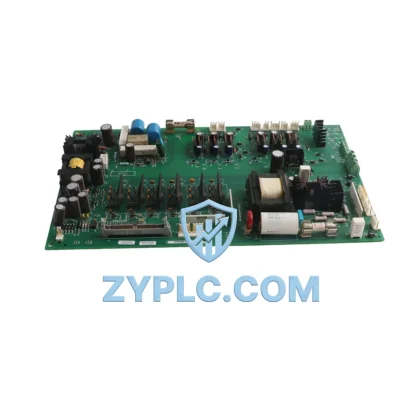
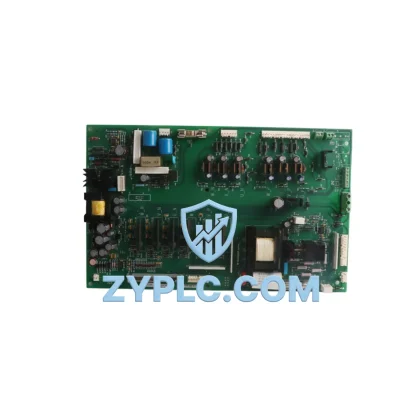
The ABB JINT-C1C is a high-efficiency power board driver engineered for demanding industrial automation environments where energy consumption, motor control precision, and production line continuity are mission-critical. As a core component within the ABB JINT Series drive architecture, the JINT-C1C delivers reliable gate-drive signal processing, DC bus power regulation, and IGBT protection logic that directly reduces switching losses and improves overall inverter efficiency. For factories operating continuous-duty motor loads — from conveyor systems and compressors to pump stations and machining centers — the JINT-C1C provides the foundational drive intelligence needed to cut energy waste at the source.
Unlike generic replacement boards, the JINT-C1C is designed to integrate seamlessly with ABB’s ACS series variable frequency drives, including the ACS800 and ACS880 platforms. When paired with these drives, the board enables precise PWM frequency control and dynamic braking coordination, allowing the drive system to match motor output exactly to load demand rather than running at fixed speed. This load-following behavior is one of the most effective strategies for reducing energy consumption in variable-torque applications, where even a 10–15% reduction in motor speed can translate to 25–35% savings in electrical energy draw.
Efficiency Performance Table
| Parameter |
Specification |
| SKU |
JINT-C1C |
| Brand / Series |
ABB / JINT Series |
| Product Category |
Power Board Driver / Drive Control PCB |
| Compatible Drive Platforms |
ABB ACS800, ACS880, ACS600 Series VFDs |
| Operating Voltage Range |
24 VDC (control supply); compatible with 380–690 VAC main power |
| Switching Efficiency |
Optimized IGBT gate drive; reduced switching losses vs. legacy boards |
| Application Environment |
Industrial automation, motor control centers, pump/fan/compressor drives |
| Energy Optimization Value |
Enables load-adaptive motor control; supports up to 35% energy reduction in variable-torque loads |
| Communication Compatibility |
Supports DDCS fiber-optic communication within ABB drive systems |
| Origin |
Germany |
| Warranty |
12-Month Warranty |
| Stock Status |
In Stock — Tested & Verified Before Shipment |
Energy-Aware Automation Architecture
Effective energy optimization in a modern production facility is never the result of a single component — it requires a coordinated architecture spanning sensing, control, drive, and feedback layers. The ABB JINT-C1C sits at the heart of this architecture as the drive’s power board, translating control commands from the ABB RMIO-02C main control board into precise IGBT switching sequences that govern motor torque and speed. When the RMIO-02C issues a speed reference derived from a PLC or DCS, the JINT-C1C executes that reference with minimal latency and switching loss, ensuring the motor operates at its most efficient point on the torque-speed curve.
At the field level, energy data originates from current transformers and voltage sensors embedded in the drive’s input and output stages. This data feeds into the ABB AINT-02C auxiliary interface board, which handles analog I/O and measurement signal conditioning before passing values upstream to the control layer. Simultaneously, the ABB APOW-01C power supply board ensures stable 24 VDC and 5 VDC rails for all logic circuits, including the JINT-C1C itself — any ripple or dropout in these supply rails can cause erratic switching behavior and increased heat dissipation, so a healthy power supply board is a prerequisite for energy-efficient drive operation.
For facilities running Profibus DP or PROFINET-based control networks, the ABB RDCO-03C DDCS communication board provides the fiber-optic link between the drive and the plant’s automation backbone, enabling real-time energy monitoring data to flow to SCADA systems or energy management platforms. This closed-loop visibility allows production engineers to identify drives operating outside their efficiency envelope and schedule predictive maintenance before a fault causes unplanned downtime — a key lever for improving overall equipment effectiveness (OEE).
On the motor side, pairing the JINT-C1C-equipped drive with an ABB M3BP series IE3 or IE4 efficiency-class motor maximizes the system-level energy return. The drive’s vector control algorithms, enabled by the JINT-C1C’s precise gate timing, can extract full torque at low speeds without the slip losses typical of direct-on-line starters. For multi-axis applications, the ABB ACS880 multidrives cabinet allows DC bus sharing between drive modules, so regenerative energy from decelerating axes is immediately reused by accelerating axes rather than dissipated as heat through braking resistors.
HMI visibility is provided through ABB CP600 series operator panels connected via Ethernet or serial links, giving line operators real-time feedback on drive load percentage, energy consumption per production cycle, and fault history. This operator-level transparency supports a culture of energy awareness on the shop floor, where small behavioral adjustments — such as reducing idle-speed setpoints during non-production periods — can compound into significant monthly energy savings.
Power Optimization in Real Production Lines
In a typical continuous process line — such as a paper mill, water treatment plant, or automotive paint shop — the drives controlling pump and fan motors account for 60–70% of total electrical energy consumption. When a power board driver like the JINT-C1C degrades or fails, the drive may fall back to open-loop V/Hz control or trip on overcurrent faults, forcing the motor to run inefficiently or causing unplanned shutdowns. Replacing a worn JINT-C1C with a verified, tested unit restores closed-loop vector control capability, immediately recovering the energy efficiency that had been silently eroding.
Beyond fault recovery, the JINT-C1C supports proactive energy management strategies. By maintaining accurate IGBT switching timing, it enables the drive to implement sleep-mode logic — automatically reducing motor speed or entering standby during low-demand periods, then ramping back up smoothly when process demand returns. In pump applications, this alone can reduce energy consumption by 20–30% compared to throttle-valve flow control on a fixed-speed motor.
Maintenance teams benefit from the JINT-C1C’s role in predictive maintenance workflows. Drives equipped with a healthy power board produce consistent thermal signatures and current waveforms. When energy monitoring systems detect anomalies — rising DC bus ripple, asymmetric phase currents, or increasing switching temperatures — maintenance engineers can correlate these signals to power board degradation and schedule replacement during planned downtime rather than reacting to an emergency breakdown. This shift from reactive to predictive maintenance reduces mean time to repair (MTTR), extends motor and drive service life, and keeps production lines running at their designed throughput and energy efficiency targets.
All JINT-C1C units supplied by ZYPLC are sourced from verified supply channels, subjected to functional testing prior to shipment, and covered by a 12-month warranty. Stock is maintained to support urgent replacement requirements, with global shipping available to minimize drive downtime for facilities worldwide.
Energy Optimization FAQ
Q1: How does replacing the JINT-C1C improve energy efficiency compared to running a degraded board?
A degraded power board driver introduces timing errors in IGBT gate signals, increasing switching losses and causing the drive to operate in a less efficient control mode. A new JINT-C1C restores precise gate drive timing, enabling the ACS800 or ACS880 to return to full closed-loop vector control — the most energy-efficient operating mode for variable-speed motor applications.
Q2: Is the JINT-C1C compatible with my existing ABB drive system without additional configuration?
The JINT-C1C is designed as a direct replacement for compatible ABB JINT Series drive platforms. In most cases, no parameter reconfiguration is required after board replacement, as drive parameters are stored on the RMIO control board or an external memory unit. We recommend verifying the exact drive model and firmware version before ordering to confirm compatibility.
Q3: What is the recommended replacement interval, and how do I know when the JINT-C1C needs replacing?
There is no fixed calendar interval — replacement is condition-based. Key indicators include recurring overcurrent or overvoltage faults without load changes, increased drive operating temperature, erratic motor speed response, or energy monitoring data showing rising consumption for the same production output. If your SCADA or drive diagnostics flag these symptoms, the power board should be inspected and tested.
Q4: What does the 12-month warranty cover, and what is the testing process before shipment?
Every JINT-C1C unit undergoes functional verification testing before shipment, confirming gate drive output signals, power supply rail integrity, and protection circuit response. The 12-month warranty covers manufacturing defects and functional failures under normal operating conditions. For warranty claims or technical support, contact ZYPLC directly at plc.sales@zyplc.com or +86 19859288691.
© 2026 ZYPLC. All rights reserved.
Original Source: https://zyplc.com
Contact: +86 19859288691 | plc.sales@zyplc.com