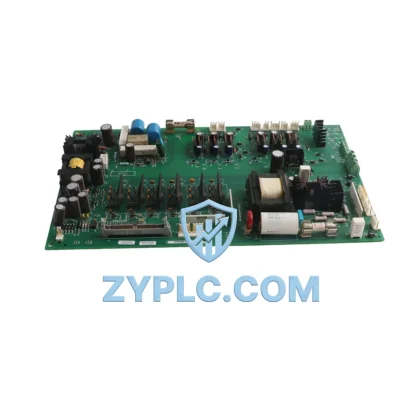
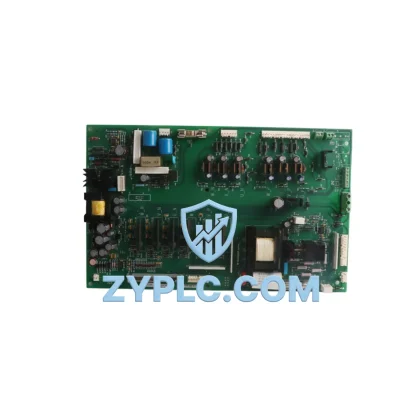
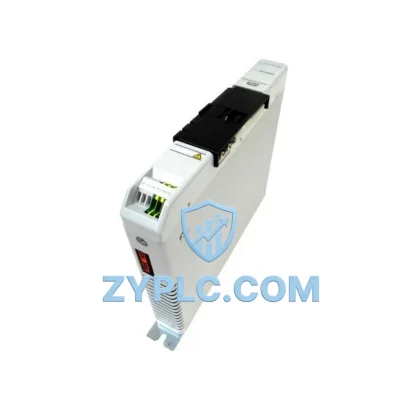
ABB N.P.0285A8148 AFM106 System-Ready Power Supply for AC31 Architecture
The ABB N.P.0285A8148 AFM106 is a dedicated power supply module engineered for deployment within the ABB Advant AC31 programmable logic controller architecture. Rather than functioning as a standalone component, this module is designed to serve as the foundational energy layer of a distributed control system, delivering stable, regulated DC power to the CPU rack, I/O expansion modules, and communication interfaces that together form a complete industrial automation solution. In layered automation environments — spanning the control layer, field I/O layer, network layer, power layer, HMI layer, and actuator layer — the AFM106 ensures that every upstream and downstream component receives consistent, noise-filtered power, which is critical for maintaining signal integrity, deterministic scan cycles, and long-term system reliability.
Within the AC31 control architecture, the N.P.0285A8148 AFM106 is typically installed on the primary backplane alongside the AC31 CPU module (such as the 07KT98 or 07KT97 series processors), where it supplies the logic bus with the regulated voltage required for uninterrupted PLC operation. The module’s design accommodates the modular expansion philosophy of the AC31 platform, allowing engineers to scale the system by adding additional I/O modules — including digital input/output cards, analog signal modules, and specialty function modules — without compromising power stability across the rack. This scalability is essential in applications where the control system must grow incrementally alongside the process it governs.
From a system architecture perspective, the AFM106 power supply interacts directly with the AC31 backplane bus, distributing power to all rack-mounted modules in a coordinated manner. When paired with communication gateway modules such as the CI626 PROFIBUS interface or Ethernet-based communication adapters, the power supply must maintain voltage stability even under variable load conditions caused by high-frequency data polling and real-time fieldbus transactions. The AFM106 is engineered to handle these dynamic load profiles, making it suitable for integration into systems where PROFIBUS DP, MODBUS RTU, or industrial Ethernet protocols are active simultaneously.
Redundancy is a key consideration in mission-critical control environments, and the AC31 architecture supports redundant power configurations where two AFM106 modules — or an AFM106 paired with an external 24VDC UPS system — provide failover capability. This dual-supply arrangement ensures that a single power source failure does not interrupt the control loop, which is particularly important in continuous process industries such as petrochemical refining, water treatment, and power generation. Engineers designing redundant architectures should also consider the placement of terminal modules, surge protection devices, and DIN rail grounding components to complete the protective power distribution layer.
The HMI layer of an AC31-based system typically includes operator panels or SCADA workstations connected via serial or Ethernet links to the CPU. The AFM106 power supply indirectly supports HMI communication stability by ensuring the CPU and communication modules maintain consistent operating voltage, preventing the voltage sags that can cause communication timeouts or HMI disconnection events. In systems where CP600 operator panels or third-party HMI terminals are deployed, stable power delivery from the AFM106 is a prerequisite for reliable human-machine interaction.
At the actuator and drive layer, the AC31 system’s analog output modules and relay output cards — which interface with variable frequency drives, servo controllers, and pneumatic valve actuators — depend on the power supply module to maintain signal accuracy. Voltage fluctuations at the power supply level can introduce offset errors in analog output signals, leading to imprecise speed control or valve positioning. The AFM106’s regulated output eliminates this risk, ensuring that 4–20mA and 0–10V analog signals remain within specification throughout the operating cycle.
For maintenance engineers and system integrators, the N.P.0285A8148 AFM106 offers straightforward installation on standard DIN rail within the AC31 rack enclosure. Its compact form factor is compatible with the standard AC31 backplane dimensions, and its front-panel LED indicators provide immediate visual confirmation of power status, simplifying fault diagnosis during commissioning and routine maintenance. Replacement procedures are well-documented within the ABB Advant Controller 31 system manual, and the module’s plug-in connector design allows hot-swap replacement in systems configured for redundant power operation, minimizing process downtime during maintenance windows.
ZYPLC maintains verified stock of the ABB N.P.0285A8148 AFM106 and supports global procurement for industrial automation projects requiring AC31 system components. All units are supplied with a 12-Month Warranty and full Contextual Integration support, ensuring that the module is verified for compatibility within your specific AC31 architecture before shipment. Our technical team can assist with system configuration advice, cross-reference verification, and spare parts planning for long-term AC31 platform maintenance strategies.
Architecture Specification Table
| System Role |
Rack Power Supply Module — AC31 Advant Controller Platform |
| Part Number |
N.P.0285A8148 / AFM106 |
| Brand |
ABB (ASEA Brown Boveri) |
| Series |
Advant Controller AC31 |
| Module Type |
PLC Power Supply Module |
| Output Voltage |
24 VDC (regulated, logic bus supply) |
| Input Voltage Range |
85–264 VAC / 100–370 VDC (wide-range input) |
| Installation |
DIN Rail / AC31 Backplane Rack Mount |
| Communication Compatibility |
PROFIBUS DP, MODBUS RTU, Industrial Ethernet (via gateway modules) |
| Operating Temperature |
0°C to +55°C (standard industrial environment) |
| Protection Class |
IP20 (panel/cabinet installation) |
| Country of Origin |
Germany |
| Warranty |
12-Month Warranty — all units verified before shipment |
| Contextual Integration |
Full AC31 architecture compatibility verification included |
Coordinated Control System Design
The ABB N.P.0285A8148 AFM106 operates at the heart of a coordinated AC31 control system, supplying regulated power to every module in the rack. In a typical AC31 installation, the AFM106 powers the 07KT98 CPU module, which executes the IEC 61131-3 control program and manages all I/O communication. Digital input modules such as the DC532 24VDC digital input card and digital output modules like the DO532 relay output module draw their logic supply directly from the backplane bus energized by the AFM106. For analog process control, the AI523 analog input module and AO523 analog output module require stable power to maintain 4–20mA signal accuracy across the full operating range.
Communication is managed through gateway modules such as the CI626 PROFIBUS DP interface, which connects the AC31 CPU to field devices including remote I/O stations, intelligent motor controllers, and distributed valve manifolds. The CI627 MODBUS communication module extends connectivity to legacy field instruments and third-party controllers. All of these communication modules depend on the AFM106’s stable bus voltage to maintain deterministic polling cycles and prevent communication timeouts. In systems requiring HMI connectivity, the CP600 operator panel interfaces with the CPU via serial or Ethernet links, with the AFM106 ensuring the CPU maintains the processing capacity needed for simultaneous HMI and fieldbus communication. Terminal modules and TU516 base units complete the physical layer, providing secure field wiring termination points that integrate cleanly with the power-distributed rack architecture established by the AFM106.
Application in Layered Automation Systems
The ABB N.P.0285A8148 AFM106 is deployed across a wide range of industrial sectors where the AC31 platform has established a long operational history. In manufacturing and discrete production lines, the module powers AC31 systems managing conveyor sequencing, robotic cell coordination, and quality inspection stations, where consistent power delivery ensures zero-drift analog measurements and reliable digital I/O response times. In power generation and electrical substation automation, the AFM106 supports AC31 controllers managing transformer protection relays, switchgear control, and load monitoring systems, where power supply redundancy is a regulatory requirement.
In petrochemical and refinery applications, the module is integrated into AC31 systems controlling pump stations, heat exchanger bypass valves, and flare management systems, where the wide-range AC input capability accommodates the variable power quality common in heavy industrial environments. Water and wastewater treatment facilities rely on AC31 systems powered by the AFM106 for SCADA-connected pump control, chemical dosing automation, and effluent monitoring, benefiting from the module’s long service life and low maintenance requirements. In mining and metallurgical processing, the AFM106 supports AC31 controllers managing ore conveying systems, crusher sequencing, and smelter process control, where the module’s robust design handles the vibration and temperature extremes of underground and surface mining environments. Packaging and filling line applications use AC31 systems to coordinate servo-driven filling heads, label applicators, and end-of-line palletizers, with the AFM106 ensuring the CPU and motion control interfaces maintain synchronization throughout high-speed production cycles.
Architecture Engineering FAQ
Q1: Is the ABB N.P.0285A8148 AFM106 compatible with all AC31 backplane configurations, including expanded rack systems?
Yes. The AFM106 is designed for the standard ABB Advant AC31 backplane and is compatible with both single-rack and expanded multi-rack configurations. In expanded systems where additional I/O racks are connected via the AC31 expansion bus, each remote rack requires its own power supply module. The AFM106 can be used in both the primary CPU rack and remote I/O expansion racks, ensuring consistent power architecture across the entire system. Engineers should verify the total current draw of all installed modules against the AFM106’s rated output current to confirm adequate power budget before commissioning.
Q2: Can the AFM106 be used in a redundant power supply configuration, and what additional components are required?
The AC31 architecture supports redundant power supply configurations using two AFM106 modules connected in parallel through a diode ORing module or an external redundancy controller. In this arrangement, both power supplies operate simultaneously, and if one fails, the other assumes the full load without interruption to the control system. For applications requiring uninterrupted operation during mains power failures, the AFM106 can also be paired with a 24VDC UPS buffer module installed upstream of the rack. This configuration is recommended for continuous process industries including petrochemical, water treatment, and power generation, where control system downtime carries significant safety and financial consequences.
Q3: What does the 12-Month Warranty cover, and how does ZYPLC’s Contextual Integration support work?
All ABB N.P.0285A8148 AFM106 units supplied by ZYPLC are covered by a 12-Month Warranty against manufacturing defects and functional failures under normal operating conditions. Prior to shipment, each unit undergoes functional verification to confirm output voltage regulation, input range performance, and backplane connector integrity. ZYPLC’s Contextual Integration support means our technical team reviews your specific AC31 system configuration — including CPU model, rack layout, I/O module count, and communication requirements — to confirm that the AFM106 is the correct power supply variant for your application. This pre-shipment verification reduces the risk of compatibility issues during installation and commissioning, supporting faster project delivery and long-term system reliability.
© 2026 ZYPLC. All rights reserved.
Original Source: https://zyplc.com
Contact: +86 19859288691 | plc.sales@zyplc.com