ABB NDSC-02 3ADT220090R0039 System-Ready DCS Board: Control System Architecture and Upstream-Downstream Coordination
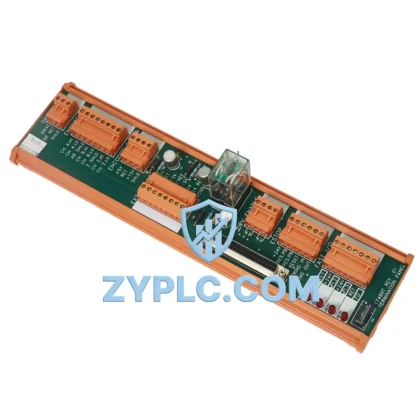
The ABB NDSC-02 (part number 3ADT220090R0039) is a dedicated DCS communication and synchronization board engineered for deployment within the AC800M distributed control system platform. Rather than functioning as a standalone component, the NDSC-02 is designed from the ground up to serve as a structural node within a layered automation architecture — coordinating signal flow between the controller layer, I/O subsystems, network infrastructure, and field devices. Its role is to ensure that the AC800M controller maintains deterministic, low-latency communication across all connected modules, enabling the system to operate as a unified, coherent control fabric rather than a collection of isolated components.
In modern industrial automation, the reliability of a distributed control system depends not only on the processing capability of the central CPU module but equally on the integrity of the communication and synchronization boards that bind the architecture together. The NDSC-02 fulfills this function within the AC800M ecosystem, providing the internal bus coordination and signal arbitration that allows the PM865, PM866, and PM891 processor modules to exchange data with I/O clusters, redundancy partners, and supervisory systems without timing conflicts or data loss. This contextual integration capability is what distinguishes the NDSC-02 as a system-critical component rather than a peripheral accessory.
Architecture Specification Table
| Parameter |
Specification |
| Part Number |
3ADT220090R0039 |
| Model |
NDSC-02 |
| Brand |
ABB |
| Series / Platform |
AC800M Distributed Control System |
| Product Type |
DCS Communication & Synchronization Board |
| System Role |
Internal bus coordination, signal synchronization, inter-module communication arbitration |
| Compatible Controllers |
PM865, PM866, PM891 (AC800M series) |
| Communication Capability |
Internal AC800M backplane bus; supports redundant controller configurations |
| Electrical Interface |
Board-level PCB module; direct backplane or rack-mount installation |
| Operating Voltage |
Supplied via AC800M rack backplane (24 VDC nominal) |
| Operating Temperature |
0°C to +55°C (standard industrial range) |
| Mounting |
Internal module slot within AC800M controller rack |
| Country of Origin |
Sweden |
| Warranty |
12-Month Warranty — covers manufacturing defects and functional failure under normal operating conditions |
| Condition |
Tested, verified functional stock |
Coordinated Control System Design
The NDSC-02 achieves its full value only when understood within the context of the complete AC800M control system architecture. At the controller layer, the board works in direct coordination with the PM865 or PM866 CPU modules, providing the synchronization backbone that allows dual-redundant controller pairs to maintain hot-standby status. When one controller assumes primary control, the NDSC-02 ensures that the secondary unit receives continuous state updates, enabling bumpless switchover in the event of a primary controller fault — a capability essential for continuous process industries such as petrochemical refining, power generation, and water treatment.
At the I/O layer, the NDSC-02 supports communication with S800 I/O modules, including AI810 analog input modules, AO810 analog output modules, DI810 digital input modules, and DO810 digital output modules. These modules are typically distributed across field I/O clusters connected via the MasterBus 300 or PROFIBUS DP network, and the NDSC-02 plays a role in ensuring that the controller’s scan cycle remains synchronized with the I/O update rate, preventing data skew that could compromise control loop performance in high-speed applications.
At the network layer, the AC800M architecture relies on the CEX-Bus and ModuleBus for internal communication, while external connectivity is handled through dedicated communication modules such as the CI854 PROFIBUS DP interface or the CI857 HART multiplexer interface. The NDSC-02 supports the internal coordination that allows these communication modules to exchange data with the CPU without bus contention, maintaining deterministic cycle times even under high I/O load conditions. This is particularly important in applications where multiple fieldbus segments are aggregated into a single controller domain.
At the power layer, the AC800M system is typically powered by the SD821 or SD822 power supply modules, which provide regulated 24 VDC to the controller rack and I/O clusters. The NDSC-02 draws its operating power from the rack backplane, and its low power consumption profile ensures that it does not impose additional load on the power budget of the controller cabinet — a consideration that becomes significant in high-density rack configurations where multiple communication and I/O modules share a common power rail.
At the human-machine interface layer, the AC800M system integrates with ABB’s System 800xA distributed control and safety system, where operator workstations running 800xA Operations provide real-time visualization of process variables, alarm management, and historical trending. The NDSC-02’s role in maintaining controller synchronization directly supports the data integrity of the 800xA historian and alarm server, ensuring that operator displays reflect accurate, up-to-date process states without latency artifacts introduced by communication board failures.
Application in Layered Automation Systems
The NDSC-02 finds application across a broad range of industrial sectors where the AC800M platform is deployed as the primary distributed control system. In power generation facilities — including thermal, hydroelectric, and combined-cycle gas turbine plants — the board supports the redundant controller configurations required by IEC 61511 functional safety standards, ensuring that turbine control and boiler management systems maintain continuous operation during planned and unplanned maintenance events.
In petrochemical and refinery applications, the NDSC-02 is deployed within AC800M systems managing distillation column control, heat exchanger regulation, and compressor surge protection. The board’s contribution to controller synchronization is critical in these environments, where process upsets caused by controller switchover delays can result in product quality deviations, safety system activations, or unplanned shutdowns with significant economic consequences.
In water and wastewater treatment facilities, the AC800M platform — supported by components such as the NDSC-02 — manages pump sequencing, chemical dosing, filtration control, and effluent monitoring across geographically distributed treatment stages. The board’s support for redundant controller architectures allows water utilities to meet regulatory uptime requirements without relying on manual intervention during controller maintenance windows.
In mining and minerals processing applications, the NDSC-02 supports AC800M systems controlling conveyor drives, crusher sequencing, flotation cell management, and tailings pump stations. The harsh electrical environment of mining installations — characterized by high-voltage switching transients, ground loops, and electromagnetic interference from variable-frequency drives — places particular demands on the communication integrity of DCS boards, and the NDSC-02’s design for industrial-grade reliability addresses these challenges directly.
In metallurgical and steel production facilities, the board is deployed within AC800M systems managing electric arc furnace control, continuous casting machine sequencing, and rolling mill automation. These applications require precise coordination between the controller layer and high-speed I/O modules, and the NDSC-02’s synchronization function ensures that the controller’s output commands reach field actuators within the timing windows required for product quality control.
Architecture Engineering FAQ
Q1: Is the NDSC-02 3ADT220090R0039 compatible with both simplex and redundant AC800M controller configurations?
Yes. The NDSC-02 is designed to support both simplex and hot-standby redundant configurations within the AC800M platform. In redundant deployments, the board facilitates the state synchronization between primary and secondary PM865 or PM866 controller modules, enabling bumpless switchover without process disruption. Engineers should verify the specific firmware revision of the installed CPU modules to confirm compatibility with the NDSC-02 hardware revision in use, as ABB periodically releases compatibility matrices for AC800M system components.
Q2: What installation and commissioning considerations apply when replacing an NDSC-02 in a live AC800M system?
Replacement of the NDSC-02 in an operational system should be performed during a planned maintenance window with the controller in a safe state. Prior to removal, engineers should document the current controller configuration using ABB’s Control Builder M engineering tool and verify that a backup of the application program and hardware configuration is stored on the engineering workstation. After installation of the replacement board, the controller should be powered up in offline mode and the hardware configuration re-downloaded before returning the system to automatic control. The 12-Month Warranty covers manufacturing defects identified during commissioning, and ZYPLC’s technical support team is available to assist with installation verification.
Q3: How does the 12-Month Warranty apply to the NDSC-02, and what long-term maintenance support is available?
All NDSC-02 units supplied by ZYPLC are covered by a 12-Month Warranty from the date of shipment, covering manufacturing defects and functional failures under normal operating conditions as defined by ABB’s published environmental and electrical specifications. Units that exhibit failure within the warranty period are eligible for replacement or repair at no additional cost, subject to inspection confirming that the failure mode is consistent with a manufacturing defect rather than installation error or environmental damage. For long-term maintenance planning, ZYPLC maintains stock of AC800M system components including communication boards, CPU modules, and I/O modules, supporting customers’ spare parts inventory strategies for systems with extended operational lifecycles.
© 2026 ZYPLC. All rights reserved.
Original Source: https://zyplc.com
Contact: +86 19859288691 | plc.sales@zyplc.com