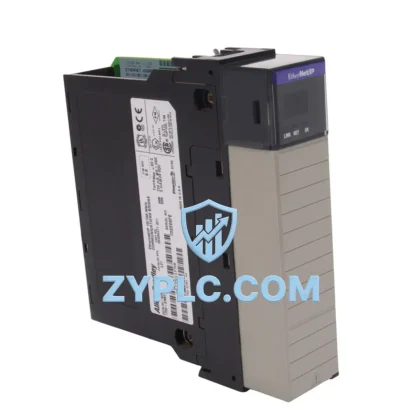
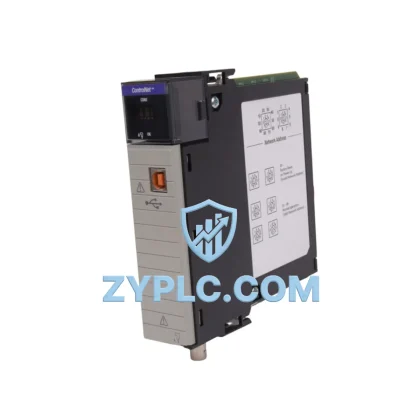
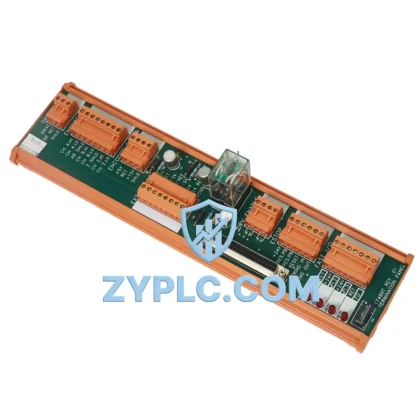
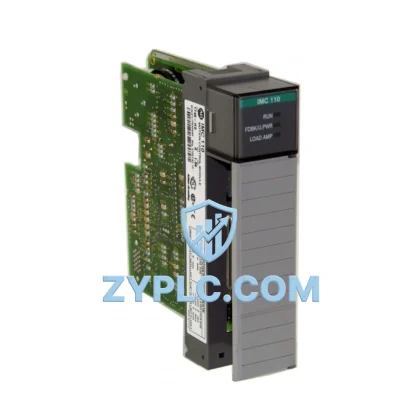
ABB NINT-73C Energy-Saving Interface Board for Optimized ACS800 Automation
The ABB NINT-73C is a high-performance interface board engineered to serve as the communication and control backbone within ABB’s ACS800 and ACS600 variable speed drive platforms. In modern industrial energy optimization strategies, the interface board is not a peripheral accessory — it is the functional bridge between the drive’s power electronics and the plant-level automation network. By ensuring precise, low-latency signal exchange between the control unit, I/O modules, and fieldbus communication layers, the NINT-73C directly contributes to reducing energy waste, improving motor control accuracy, and sustaining the operational efficiency that high-throughput production lines demand.
Deployed across manufacturing, process, and utility industries, the NINT-73C enables the ACS800 drive system to respond dynamically to load variations, optimizing motor torque and speed in real time. This responsiveness is the foundation of energy-efficient drive operation: motors consume only the power required by the actual process load, eliminating the fixed-speed overconsumption that characterizes older drive architectures. The result is measurable reduction in electricity consumption, lower thermal stress on motor windings, and extended equipment service life — all of which translate directly into lower total cost of ownership.
Efficiency Performance Table
| Parameter |
Specification |
| System Role |
Drive-to-control communication interface board |
| Compatible Platform |
ABB ACS800 / ACS600 Variable Speed Drive Series |
| Communication Layer |
DDCS fiber-optic link, fieldbus adapter interface |
| Control Interface |
RDCO / RMIO board integration |
| Signal Type |
Digital control signals, encoder feedback, I/O expansion |
| Operating Voltage |
24 VDC (internal drive supply) |
| Operating Temperature |
0°C to +55°C (drive cabinet environment) |
| Energy Optimization Value |
Enables real-time load-adaptive motor control, reducing idle and partial-load energy waste |
| Compatible Systems |
ACS800-01, ACS800-04, ACS800-07, ACS600 series |
| Application Environment |
Industrial drives, pump/fan/compressor control, conveyor systems |
| Warranty |
12-Month Warranty |
Energy-Aware Automation Architecture
The NINT-73C interface board functions as the central coordination node within the ACS800 drive’s internal architecture. It connects the RMIO (Relay and Motor I/O) board — which handles analog and digital I/O for speed reference, torque limit, and fault relay outputs — with the RDCO (DDCS Communication Option) board that manages fiber-optic communication to the master controller. This three-layer internal architecture ensures that control commands from the plant PLC or DCS are translated into precise motor control actions with minimal latency.
In a typical energy-optimized production cell, the ACS800 drive equipped with the NINT-73C interfaces with an ABB AC500 PLC or ABB 800xA Distributed Control System via PROFIBUS-DP or Modbus TCP fieldbus adapters such as the RPBA-01 PROFIBUS Adapter or RCAN-01 CANopen Adapter. These communication modules plug directly into the drive’s fieldbus adapter slot, with the NINT-73C managing the internal routing of control data between the fieldbus layer and the drive’s motor control processor.
For multi-drive installations — common in pump stations, HVAC systems, and conveyor networks — the NINT-73C supports DDCS (Distributed Drive Control System) fiber-optic ring topology, allowing a single master controller to coordinate multiple ACS800 drives simultaneously. This architecture eliminates redundant control wiring, reduces signal interference, and enables synchronized speed and torque control across drive groups, which is essential for energy-balanced multi-motor systems.
Power quality monitoring within the drive system is enhanced when the ACS800 with NINT-73C is paired with ABB’s PSTX Softstarter or CM-series current monitoring relays at the motor feeder level. These components provide upstream visibility into motor starting currents and running load profiles, feeding data back through the control network to enable demand-side energy management. The NINT-73C’s role in maintaining stable, high-bandwidth communication between these layers ensures that energy optimization algorithms — whether embedded in the drive firmware or executed at the PLC level — receive accurate, real-time process feedback.
In servo-driven applications, the NINT-73C-equipped ACS800 may operate alongside ABB MicroFlex e150 servo drives or ACSM1 motion control drives, with coordinated speed references distributed via the DDCS network. This integration supports electronic line shafting and virtual master-follower configurations that eliminate mechanical gearboxes, reducing both energy losses and maintenance requirements in packaging, printing, and textile machinery.
Power Optimization in Real Production Lines
The energy impact of the NINT-73C becomes most visible in applications where motor loads vary significantly over the production cycle. In water and wastewater treatment facilities, ACS800 drives with NINT-73C boards control centrifugal pumps and blowers using PID feedback from flow transmitters and pressure sensors. By enabling precise speed modulation in response to demand signals, the drive system eliminates throttling valve losses and reduces pump energy consumption by 30–50% compared to fixed-speed operation — a well-documented benefit of variable speed drive technology applied through accurate interface board communication.
In mining and mineral processing, conveyor belt drives and crusher motor systems equipped with ACS800 drives rely on the NINT-73C to maintain stable communication between the drive and the plant SCADA system during high-load transients. The board’s ability to sustain reliable DDCS fiber-optic communication under electrical noise conditions — common in high-power drive environments — prevents nuisance faults that would otherwise trigger unnecessary drive trips, reducing production interruptions and the energy cost of repeated motor restarts.
Food and beverage processing lines benefit from the NINT-73C’s support for precise speed synchronization across multiple conveyor and mixing drives. Consistent product throughput at optimized motor speeds reduces both energy consumption and mechanical wear, extending the service intervals of gearboxes, couplings, and motor bearings. Predictive maintenance strategies are further supported by the drive’s ability to log motor current, voltage, and temperature data through the NINT-73C communication path, enabling condition-based maintenance scheduling that avoids both premature replacements and costly unplanned failures.
ZYPLC maintains verified stock of the ABB NINT-73C with full pre-shipment functional testing and traceability documentation. Each unit is supplied with a 12-Month Warranty, supporting both planned maintenance replacement programs and urgent breakdown recovery scenarios. Our inventory management ensures consistent availability, minimizing the risk of extended drive downtime due to spare parts shortages.
Energy Optimization FAQ
Q1: How does the NINT-73C contribute to measurable energy savings in ACS800 drive systems?
The NINT-73C enables the ACS800’s direct torque control (DTC) algorithm to receive accurate, low-latency feedback from motor I/O and fieldbus control signals. This precision allows the drive to continuously optimize motor flux and torque in response to actual load conditions, eliminating energy waste from over-excitation and speed overshoot. In variable-load applications such as pumps, fans, and compressors, this translates to energy savings of 20–50% compared to fixed-speed motor operation.
Q2: Is the NINT-73C compatible with both ACS800 and ACS600 drive platforms?
Yes. The NINT-73C is designed for compatibility across the ABB ACS800 and ACS600 drive families, which share common internal communication architecture. Before installation, verify the specific drive model and firmware version against ABB’s compatibility documentation. ZYPLC’s technical team can assist with compatibility confirmation for your specific drive configuration.
Q3: What is the recommended replacement procedure for a failed NINT-73C in a running production environment?
Drive parameter backup should be performed before board replacement using the ACS800’s parameter upload function or the DriveWindow software tool. After installing the replacement NINT-73C, restore parameters and verify DDCS communication link status and fieldbus adapter recognition before returning the drive to service. ZYPLC supplies replacement boards with pre-shipment testing documentation to minimize commissioning time.
Q4: What warranty and supply assurance does ZYPLC provide for the NINT-73C?
ZYPLC supplies the ABB NINT-73C with a comprehensive 12-Month Warranty covering manufacturing defects and functional performance. All units undergo pre-shipment functional testing and ship with full traceability records. Our stocking strategy ensures consistent availability for both scheduled maintenance programs and emergency replacement requirements, reducing the risk of extended production downtime.
© 2026 ZYPLC. All rights reserved.
Original Source: https://zyplc.com
Contact: +86 19859288691 | plc.sales@zyplc.com