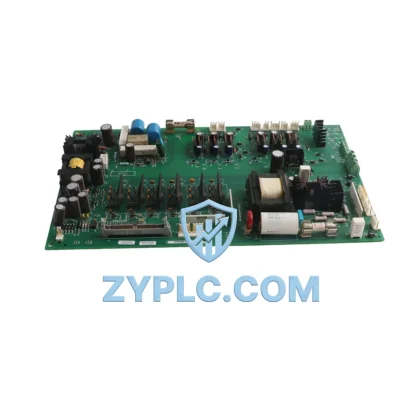
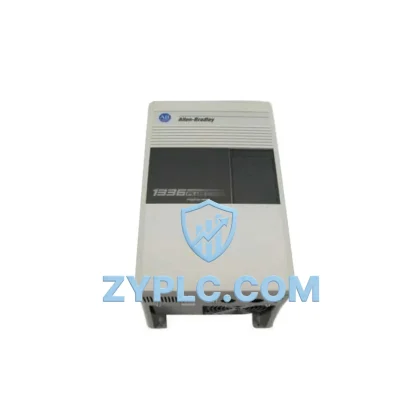
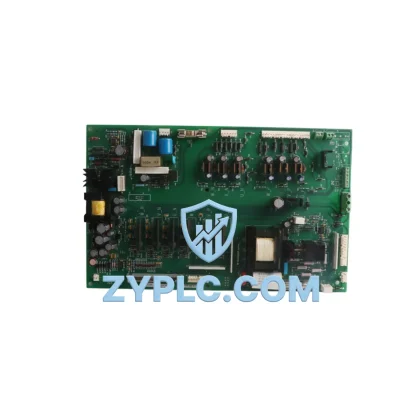
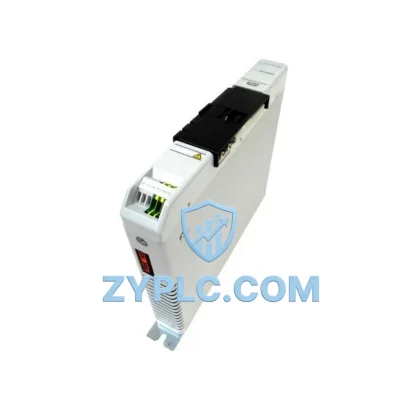
ABB NPCI-03 System-Ready Power Supply for Freelance DCS Architecture
In distributed control system (DCS) engineering, power integrity is not a peripheral concern — it is the foundation upon which every control layer depends. The ABB NPCI-03 is a dedicated power supply module engineered specifically for the ABB Freelance DCS platform, delivering stable, conditioned DC power to the I/O station backplane and ensuring that every connected module — from analog input cards to communication gateways — operates within its rated electrical envelope. Rather than treating the NPCI-03 as a standalone component, system architects should understand its role as a structural enabler: it defines the power budget of the I/O station, governs the electrical headroom available for module expansion, and directly influences the redundancy posture of the entire control node.
The Freelance DCS architecture is organized around a layered model in which the AC800F controller CPU communicates with distributed I/O stations via the PROFIBUS DP fieldbus or Ethernet-based protocols. Each I/O station is assembled on a modular backplane — typically the TB820 or TB840 series — and the NPCI-03 supplies the regulated 24 VDC rail that powers the station’s I/O modules, including the AI810 analog input module, the DI810 digital input module, the AO810 analog output module, and the DO810 digital output module. Without a correctly rated and properly installed power supply module, the entire I/O station becomes electrically unstable, leading to spurious diagnostics, communication dropouts on the PROFIBUS segment, and potential process upsets in the field.
From a system architecture perspective, the NPCI-03 sits at the intersection of the power layer and the I/O layer. Its output capacity must be sized against the aggregate current draw of all installed I/O modules in the station, including any future expansion slots that the project engineer intends to populate during commissioning or subsequent capacity upgrades. This forward-looking power budgeting discipline is essential in industries such as oil and gas processing, chemical manufacturing, power generation, and water treatment, where control system expansions are common and unplanned shutdowns for power upgrades are operationally unacceptable.
Architecture Specification Table
| Parameter |
Specification |
| System Role |
I/O Station Backplane Power Supply — ABB Freelance DCS |
| Compatible Platform |
ABB Freelance DCS (AC800F Series) |
| Output Voltage |
24 VDC Regulated |
| Backplane Compatibility |
TB820 / TB840 I/O Station Backplanes |
| Communication Layer |
PROFIBUS DP / Ethernet (via AC800F CPU) |
| Electrical Protection |
Overcurrent, Overvoltage, Short-Circuit Protection |
| Installation Environment |
Industrial Control Cabinet, DIN Rail or Panel Mount |
| Operating Temperature |
0°C to +55°C (standard industrial range) |
| Country of Origin |
Germany |
| Warranty |
12-Month Warranty — Covers manufacturing defects and functional failure under normal operating conditions |
| Contextual Integration |
Designed for Contextual Integration within ABB Freelance DCS I/O station architecture |
Coordinated Control System Design
The NPCI-03 does not operate in isolation. Its value is realized only when it is correctly integrated into a complete Freelance DCS I/O station alongside the full complement of ABB system components. A typical Freelance DCS node built around the NPCI-03 will include the AC800F controller CPU as the central processing unit, responsible for executing control logic and managing all PROFIBUS DP communications to the distributed I/O stations. The TB820 backplane provides the physical mounting and electrical interconnection for all I/O modules within the station, while the NPCI-03 supplies the power rail that keeps every slot energized.
On the signal side, the AI810 analog input module handles 4–20 mA process signals from field transmitters, while the AO810 analog output module drives control valves and variable-speed drives. The DI810 digital input module captures discrete signals from limit switches, pressure switches, and motor status contacts, and the DO810 digital output module issues commands to solenoid valves, motor starters, and alarm annunciators. All of these modules draw their operating power from the 24 VDC rail supplied by the NPCI-03, making the power supply module the common electrical dependency for the entire I/O station.
For applications requiring high availability, the Freelance DCS architecture supports redundant I/O station configurations in which a second NPCI-03 unit is installed in parallel, providing automatic power source switchover in the event of a primary supply failure. This redundancy capability is particularly important in continuous process industries — such as petrochemical refining, power plant auxiliary systems, and municipal water treatment — where a single I/O station failure can trigger a plant-wide process upset. The CI854 PROFIBUS DP communication interface module connects the I/O station to the AC800F controller, and its reliable operation depends directly on the stable power delivery of the NPCI-03.
At the human-machine interface layer, the ABB CP600 series operator panels or third-party SCADA systems connected via OPC DA/UA provide operators with real-time visibility into the process variables measured and controlled by the Freelance DCS I/O stations. The integrity of the data displayed on these interfaces is ultimately traceable to the electrical stability of the I/O station power supply — reinforcing the NPCI-03’s role as a foundational system component rather than a commodity item.
Application in Layered Automation Systems
The ABB NPCI-03 finds application across a wide range of process industries where the Freelance DCS platform is deployed as the primary automation solution. In power generation facilities — including thermal, hydroelectric, and combined-cycle gas turbine plants — the Freelance DCS manages boiler controls, turbine auxiliaries, and balance-of-plant systems. The NPCI-03 powers the I/O stations that monitor steam pressure, feedwater flow, generator excitation status, and cooling water temperature, providing the electrical foundation for safe and efficient plant operation.
In the oil and gas sector, Freelance DCS systems are commonly deployed in upstream wellhead automation, midstream pipeline monitoring, and downstream refinery process control. The NPCI-03 supports I/O stations installed in hazardous area control rooms and remote equipment buildings, where reliable power delivery is critical to maintaining continuous process monitoring and emergency shutdown system readiness. In water and wastewater treatment plants, the Freelance DCS manages pump sequencing, chemical dosing, filtration control, and effluent quality monitoring — all of which depend on stable I/O station power supplied by the NPCI-03.
Mining and minerals processing operations use the Freelance DCS to automate crushing circuits, conveyor systems, flotation cells, and tailings management. The NPCI-03 supports I/O stations in these environments, where electrical noise from large motor drives and variable-frequency drives demands a robust, well-regulated power supply to prevent signal interference and module resets. In pharmaceutical and food and beverage manufacturing, where GMP compliance and batch traceability are mandatory, the NPCI-03 contributes to system reliability by ensuring that I/O stations remain continuously powered throughout production campaigns, preventing data gaps in batch records and process historian logs.
Architecture Engineering FAQ
Q1: Is the ABB NPCI-03 compatible with all Freelance DCS I/O station backplanes, and can it support a fully populated station?
The NPCI-03 is designed for use with the ABB Freelance DCS I/O station architecture, including the TB820 and TB840 backplane families. Before finalizing the station design, engineers should calculate the total current draw of all installed I/O modules — including AI810, DI810, AO810, and DO810 cards — and verify that the aggregate load falls within the NPCI-03’s rated output capacity. For stations approaching the power budget limit, a redundant dual-supply configuration is recommended to provide both adequate capacity and supply redundancy.
Q2: What is covered under the 12-Month Warranty, and how does it apply to installed systems?
The 12-Month Warranty covers manufacturing defects and functional failures that occur under normal operating conditions within twelve months of the shipment date. It applies to the NPCI-03 module as supplied and does not cover damage resulting from incorrect installation, overvoltage events, environmental contamination, or unauthorized modification. For installed systems, warranty service is coordinated through ZYPLC’s technical support team, and replacement units are dispatched to minimize system downtime. Customers are encouraged to maintain a spare NPCI-03 in their critical spares inventory to ensure immediate availability in the event of a field failure.
Q3: How should the NPCI-03 be commissioned and tested during Freelance DCS system startup?
During system commissioning, the NPCI-03 should be installed in the designated power supply slot of the I/O station backplane before any I/O modules are inserted. The input supply voltage should be verified against the module’s rated input range before energization. After power-up, the output voltage should be measured at the backplane connector to confirm it is within the specified 24 VDC tolerance band. I/O modules should then be inserted one at a time, with the output voltage monitored after each insertion to detect any overload condition. The AC800F controller’s diagnostic interface should be used to verify that all I/O modules in the station are recognized and communicating correctly before the system is handed over for process commissioning.
© 2026 ZYPLC. All rights reserved.
Original Source: https://zyplc.com
Contact: +86 19859288691 | plc.sales@zyplc.com