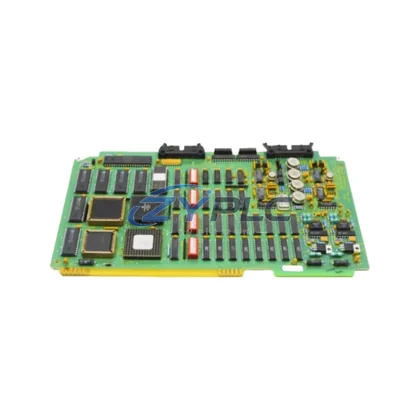
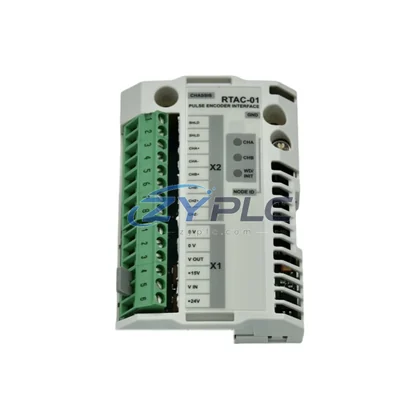
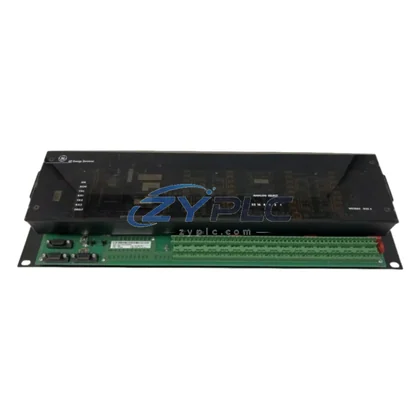
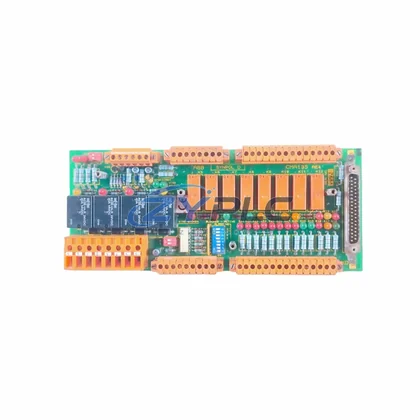
ABB NRED-61E Thick-Film Hybrid Module: Precision Drive Control for NRED Series Automation
The ABB NRED-61E is a high-efficiency thick-film hybrid module engineered for demanding industrial drive control applications within the ABB NRED series ecosystem. Designed to minimize switching losses and reduce parasitic heat generation, the NRED-61E plays a critical role in lowering overall system operating load across variable-speed drive platforms. In production environments where motor control precision directly impacts energy billing and equipment lifespan, this module delivers measurable improvements in drive efficiency, thermal stability, and control response accuracy.
Industrial facilities operating continuous-duty motor loads — including conveyor systems, pump stations, compressor banks, and HVAC air-handling units — benefit from the NRED-61E’s low on-state resistance characteristics, which reduce conduction losses during sustained operation. When integrated into ABB ACS series variable frequency drives, the module supports tighter PWM switching control, enabling smoother torque delivery and reduced harmonic distortion on the supply network. This directly translates to lower reactive power demand and improved power factor at the distribution panel level.
Product Specification Table
| Parameter |
Specification / Value |
| SKU |
NRED-61E |
| Product Type |
Thick-Film Hybrid Module |
| Series |
ABB NRED Series |
| Brand / Origin |
ABB / Sweden |
| Typical Power Dissipation |
Low conduction loss; optimized for continuous duty cycles |
| Operating Efficiency |
High-efficiency switching; reduced thermal runaway risk |
| Compatible Drive Systems |
ABB ACS series VFDs, NRED series drive control boards |
| Application Environment |
Industrial automation, motor control centers, pump & fan drives |
| Maintenance Value |
Reduces switching losses, improves power factor, lowers heat output |
| Warranty |
warranty terms confirmed during quotation — tested before shipment |
| Availability |
RFQ Available — shipment arranged after confirmation |
System Compatibility and Application
The NRED-61E does not operate in isolation — its maintenance planning value is fully realized when deployed within a well-structured automation architecture. In a typical ABB-based drive system, the module interfaces directly with the ABB NINT-41C or NINT-72C interface boards, which manage fieldbus communication between the drive and the plant control network. Upstream, an ABB AC500 PLC or AC800M controller issues speed and torque reference signals via PROFIBUS-DP or Modbus RTU, allowing the drive to dynamically adjust motor output in response to real-time process demand rather than running at fixed speed.
On the power measurement side, integrating an ABB M2M energy meter or a compatible CM-series power monitoring relay at the motor feeder circuit enables continuous tracking of active power, reactive power, and operating load per production shift. This data feeds back into the control loop, allowing the ABB ACS880 or ACS580 variable frequency drive — in which the NRED-61E serves as a core switching component — to apply operational-efficiency algorithms such as flux optimization and sleep mode activation during low-load periods.
For I/O expansion and sensor integration, the ABB CI854 communication interface or TU516 terminal unit provides additional analog and digital channels for connecting temperature sensors, vibration monitors, and current transducers. These inputs allow the control system to detect early signs of motor degradation or bearing wear, triggering predictive maintenance alerts before a fault causes unplanned downtime. The ABB RDCO-03C optical communication module further supports high-speed drive-to-controller data exchange, ensuring that operating load data is logged with millisecond-level resolution for post-process analysis.
At the HMI layer, an ABB CP600 panel or compatible operator terminal displays real-time energy KPIs — including kWh per production cycle, peak demand windows, and drive efficiency ratings — giving line supervisors immediate visibility into energy performance without requiring access to the SCADA system. This closed-loop architecture, anchored by the NRED-61E’s reliable switching performance, forms the foundation of a measurable energy reduction strategy across the production floor.
Maintenance and Replacement Notes
In real-world production environments, the impact of a degraded or inefficient drive switching module is rarely limited to the drive itself. A failing thick-film hybrid module in an ABB NRED series drive can cause irregular PWM output, increased motor winding temperature, elevated harmonic content on the supply bus, and — in worst cases — nuisance tripping that halts an entire production line. Replacing a worn NRED-61E with a tested, specification-compliant unit restores the drive’s ability to deliver clean, efficient power to the motor, directly reducing unplanned downtime and extending motor insulation life.
For facilities running multi-shift operations, the cumulative operational stability from maintaining drive components at peak efficiency are significant. A single ACS880 drive operating a 75 kW pump motor at 95% efficiency versus 88% efficiency represents a difference of approximately 5.25 kW of continuous loss — translating to over 37,800 kWh of wasted energy annually at 24/7 operation. Maintaining the NRED-61E in optimal condition is one of the lowest-cost interventions available to a maintenance team seeking to reduce energy spend without capital investment in new equipment.
Beyond operational stability, a properly functioning NRED-61E contributes to production line rhythm stability. Variable frequency drives that deliver consistent torque profiles reduce mechanical stress on couplings, gearboxes, and conveyor chains, lowering the frequency of mechanical maintenance interventions. In food processing, pharmaceutical, and automotive assembly lines — where production cadence is tightly controlled — this stability directly supports OEE (Overall Equipment Effectiveness) targets and reduces the risk of quality deviations caused by speed fluctuations.
All NRED-61E units supplied by ZYPLC are subject to pre-shipment functional testing, including switching performance verification and thermal cycling checks. Each unit is backed by a warranty terms confirmed during quotation, with availability confirmed by RFQ availability ensuring minimal lead time for maintenance and repair operations. For facilities managing planned maintenance schedules, ZYPLC maintains buffer inventory to support just-in-time spare parts supply without requiring large on-site safety stock.
Product Sourcing FAQ
Q1: How does replacing the NRED-61E improve energy efficiency in my ABB drive system?
A degraded thick-film hybrid module increases switching losses within the drive’s power stage, causing the drive to consume more energy to deliver the same motor output. A new, specification-compliant NRED-61E restores optimal switching performance, reducing heat generation and improving the drive’s overall conversion efficiency. In continuous-duty applications, this can yield stable operating performance per production cycle.
Q2: Is the NRED-61E compatible with all ABB ACS series variable frequency drives?
The NRED-61E is specifically designed for ABB NRED series drive control boards and is compatible with ABB ACS drive platforms that utilize this module family. Before installation, verify the drive’s service manual or bill of materials to confirm the NRED-61E is the correct replacement for your specific drive model and power rating. ZYPLC technical support can assist with cross-referencing if required.
Q3: What testing is performed on the NRED-61E before shipment?
Every NRED-61E unit supplied by ZYPLC undergoes pre-shipment functional testing to verify switching performance, electrical integrity, and thermal characteristics. Units that do not meet ABB specification thresholds are rejected prior to dispatch. This testing protocol ensures that the module performs correctly upon installation, reducing the risk of repeat failures and unplanned downtime.
Q4: What does the warranty terms confirmed during quotation cover, and how do I make a claim?
The warranty terms confirmed during quotation covers manufacturing defects and functional failures under normal operating conditions. It does not cover damage resulting from incorrect installation, overvoltage events, or operation outside the module’s rated parameters. To initiate a warranty claim, contact ZYPLC at plc.sales@zyplc.com or +86 19859288691 with your order reference and a description of the fault. ZYPLC will arrange inspection and replacement or credit as appropriate.