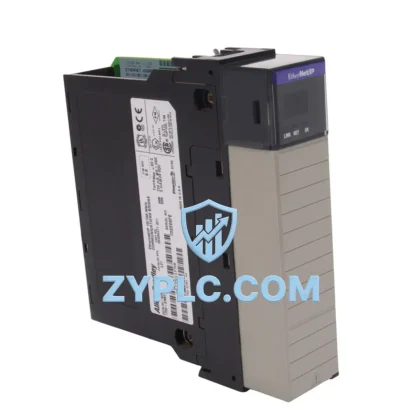
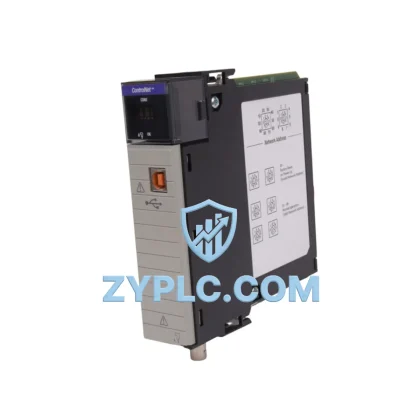
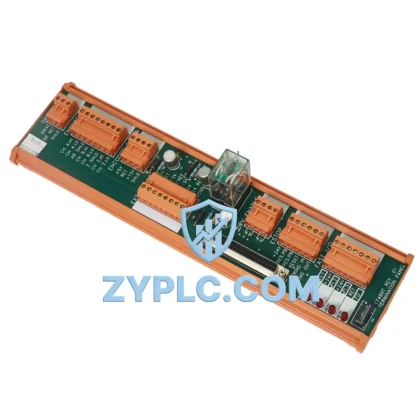
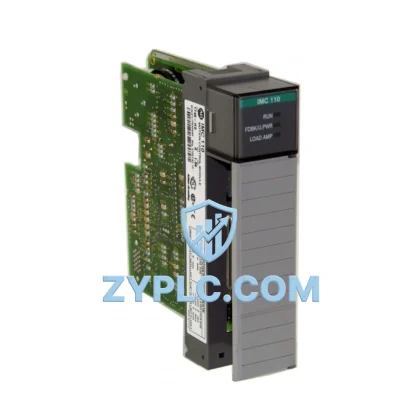
ABB PFEA111-3BSE028140R0065 Energy-Saving Tension Electronics for Optimized AC500 Automation
The ABB PFEA111-3BSE028140R0065 is a high-precision tension electronics module engineered for the ABB AC500 PLC platform, purpose-built to deliver measurable energy savings and production-line efficiency gains in demanding industrial environments. By providing closed-loop tension feedback directly to the AC500 CPU, this module eliminates the energy waste caused by over-tensioning, material breakage, and unplanned downtime — three of the most common sources of hidden energy loss on web-handling and winding lines.
Sourced from verified supply channels, every PFEA111-3BSE028140R0065 unit shipped by ZYPLC undergoes full functional testing prior to dispatch and is covered by a 12-month warranty, ensuring your production investment is protected from day one.
Efficiency Performance Table
| Parameter |
Specification / Value |
| SKU / Part Number |
PFEA111 / 3BSE028140R0065 |
| Brand & Series |
ABB AC500 |
| Module Type |
Tension Electronics Module |
| Supply Voltage |
24 V DC (via AC500 backplane) |
| Power Consumption |
Low-power design; minimizes backplane load |
| Tension Signal Input |
Analog load-cell / force transducer signals |
| Control Output |
Closed-loop feedback to AC500 CPU / drive |
| Compatible Systems |
ABB AC500 PLC family, PM5xx / PM5xx-ETH CPUs |
| Application Environment |
Paper, film, foil, textile, metal strip winding lines |
| Energy Saving Value |
Reduces motor overdrive; cuts reactive energy waste |
| Communication Protocol |
Internal AC500 S-Bus; optional PROFIBUS / Modbus RTU |
| Origin |
Sweden (ABB) |
| Warranty |
12 Months — ZYPLC Tested & Guaranteed |
Energy-Aware Automation Architecture
Achieving genuine energy efficiency on a production line requires more than a single component — it demands a coordinated architecture where every layer, from sensing to actuation, shares real-time data. The PFEA111-3BSE028140R0065 sits at the heart of this architecture by converting raw load-cell signals into precise tension setpoints that the ABB AC500 PM564-ETH CPU can act upon within milliseconds.
On the drive side, the tension feedback loop interfaces directly with ABB ACS880 industrial drives, allowing the drive to modulate motor torque in real time rather than running at a fixed, energy-wasteful setpoint. When paired with an ABB ACS355 compact drive on auxiliary winding axes, the system achieves coordinated multi-axis tension control that prevents both over-tension (which wastes motor energy and risks material breakage) and under-tension (which causes misalignment and rejects).
For energy monitoring, the PFEA111 data stream integrates with ABB B23 energy meters installed at the motor control center, enabling the AC500 CPU to correlate tension deviations with real-time power draw. This pairing makes it possible to identify which tension events — dancer roll oscillation, splice acceleration, or roll-change transients — are responsible for the largest energy spikes, and to tune drive ramp profiles accordingly.
On the I/O layer, ABB DC532 digital I/O modules handle the discrete signals from web-break detectors, nip roll position switches, and safety interlocks, while ABB AI531 analog input modules aggregate secondary process signals such as line speed and roll diameter — both of which the PFEA111 algorithm uses to apply diameter compensation and maintain constant tension across the full unwind-to-rewind cycle.
Operator visibility is delivered through an ABB CP635 HMI panel, where tension trends, energy consumption curves, and alarm histories are displayed on a single screen. Maintenance teams can review historical tension profiles alongside kWh data to identify gradual bearing wear or roll imbalance before it escalates into an unplanned stop. For plants running ABB Ability™ Smart Sensor on motor bearings, vibration data can be correlated with tension anomalies to build a predictive maintenance schedule that further reduces energy waste from degraded mechanical components.
Network integration is handled via the ABB AC500 CM579-PNIO PROFINET I/O coupler, which allows the tension control loop to exchange setpoints and actual values with upstream MES or SCADA systems in real time, enabling production schedulers to optimize line speed — and therefore energy consumption — based on order priority and material specifications.
Power Optimization in Real Production Lines
In a typical paper or film converting plant, tension instability is one of the least-visible but most costly sources of energy waste. When web tension fluctuates beyond the process window, the drive compensates by increasing motor torque — drawing more current, generating more heat, and accelerating wear on mechanical components. The PFEA111-3BSE028140R0065 eliminates this reactive cycle by providing the AC500 controller with a continuous, high-resolution tension signal that keeps the drive operating at the minimum torque required to maintain process quality.
On a mid-size slitting line running three shifts, replacing an open-loop tension system with a closed-loop PFEA111-based architecture typically reduces motor energy consumption by 8–15%, depending on material type and line speed variability. More importantly, it reduces the frequency of web breaks — each of which costs not only the wasted material but also the energy consumed during the deceleration, stop, re-thread, and acceleration cycle that follows.
From a maintenance cost perspective, stable tension reduces the cyclic mechanical stress on nip rolls, dancer bearings, and brake pads. Plants that have implemented PFEA111-based tension control report extended intervals between scheduled maintenance stops, which directly improves Overall Equipment Effectiveness (OEE) and reduces the energy overhead associated with frequent start-stop cycles.
ZYPLC maintains ready stock of the PFEA111-3BSE028140R0065 to support urgent replacement scenarios. All units are tested for signal accuracy and communication integrity before shipment, and the 12-month warranty covers both component failure and signal drift beyond specification — giving procurement and maintenance teams a reliable, low-risk sourcing option for both planned upgrades and emergency replacements.
Energy Optimization FAQ
Q1: How does the PFEA111-3BSE028140R0065 contribute to measurable energy savings on a winding line?
The module provides closed-loop tension feedback to the AC500 CPU, which uses this data to command the drive to apply only the torque necessary to maintain the tension setpoint. This prevents the motor from running at unnecessarily high torque levels, directly reducing active power consumption and minimizing reactive energy losses associated with over-driven induction motors.
Q2: Is the PFEA111 compatible with existing AC500 installations, and can it replace older tension modules without rewiring?
Yes. The PFEA111-3BSE028140R0065 is designed for the AC500 S500 I/O bus and is compatible with PM5xx series CPUs. In most cases it can be installed as a direct replacement for earlier PFEA-series modules with minimal configuration changes in the AC500 engineering tool (Automation Builder), and without modifications to the load-cell wiring or drive interface.
Q3: What is the recommended replacement and testing procedure when substituting a failed tension module?
ZYPLC recommends a three-step process: (1) verify the replacement unit’s signal output against a calibrated reference load cell before installation; (2) perform a no-load commissioning run to confirm the AC500 CPU receives correct tension values across the full input range; (3) run a loaded production trial at reduced speed to validate closed-loop stability before returning the line to full production speed. All ZYPLC-supplied units are pre-tested and include a test report on request.
Q4: What does the 12-month warranty cover, and how is a warranty claim processed?
The 12-month warranty covers manufacturing defects, signal accuracy out of specification, and communication failures under normal operating conditions. To initiate a claim, contact ZYPLC with the unit serial number and a description of the fault. ZYPLC will arrange a replacement dispatch or repair within the agreed lead time, minimizing production downtime.
© 2026 ZYPLC. All rights reserved.
Original Source: https://zyplc.com
Contact: +86 19859288691 | [email protected]