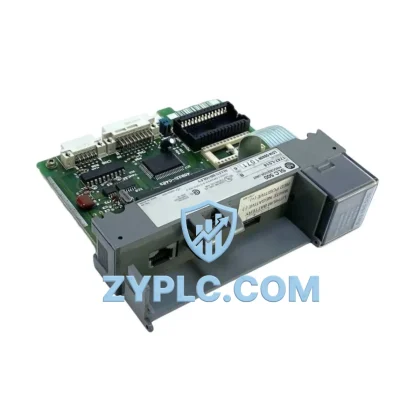
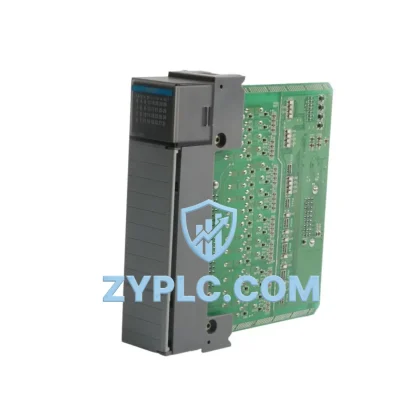
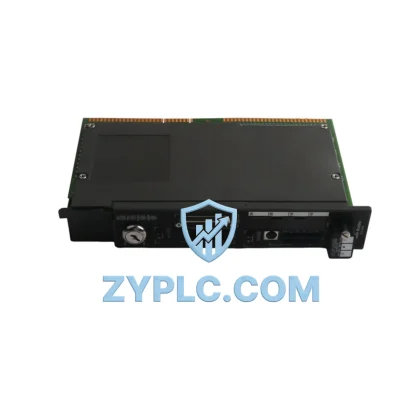
ABB PM154 3BSE003645R1 System-Ready CPU for AC800M Architecture
The ABB PM154 (3BSE003645R1) is a high-performance processor module engineered for deployment within the AC800M distributed control system platform. Rather than functioning as a standalone component, the PM154 is designed to operate as the central processing node within a layered automation architecture — coordinating signal acquisition from I/O modules, executing control logic, managing network communications, and interfacing with supervisory systems. Its role spans the control layer, I/O layer, and network layer simultaneously, making it a foundational element in any AC800M-based control cabinet build.
In modern industrial automation, system consistency depends on the seamless interaction between the CPU, power supply, I/O infrastructure, communication gateways, and human-machine interfaces. The PM154 achieves this by supporting the AC800M backplane architecture, where it communicates directly with expansion I/O modules such as the AI810 analog input module and DI810 digital input module via the internal S100 I/O bus. This tight integration eliminates signal latency between the field layer and the control layer, ensuring deterministic scan cycle performance even under high I/O load conditions.
From a redundancy design perspective, the PM154 supports hot-standby CPU redundancy when paired with a secondary PM154 unit and the appropriate redundancy link module. This configuration is critical in applications where process continuity cannot be interrupted — such as power generation, petrochemical processing, and water treatment facilities. The redundancy switchover is bumpless, preserving all process variable states and communication sessions without operator intervention. When combined with the PM851 or PM856 in a mixed-architecture cabinet, engineers can design tiered redundancy strategies that balance cost and availability across different process criticality zones.
Network layer integration is handled through the PM154’s built-in Ethernet port, which supports PROFINET, Modbus TCP, and OPC DA/UA communication protocols. This allows the module to interface with SCADA systems, MES platforms, and remote I/O gateways without requiring additional communication interface modules in most standard configurations. For installations requiring fieldbus connectivity, the CI854 PROFIBUS DP communication interface module can be mounted on the same rack, extending the PM154’s reach to legacy field devices and third-party instrumentation. The TB820 Modulebus Optical Port module further extends the I/O network over fiber optic links, enabling distributed cabinet architectures across large plant footprints.
Power supply integrity is maintained through the SD821 or SD822 power supply modules, which provide regulated 24 VDC to the AC800M rack. In redundant power configurations, dual power supplies are installed in parallel, with automatic failover ensuring uninterrupted CPU operation during single-supply failures. The PM154’s low power consumption profile makes it compatible with standard 19-inch rack enclosures and DIN-rail mounted control cabinets, supporting both centralized and distributed installation strategies.
For human-machine interface integration, the PM154 communicates with ABB’s Panel 800 series operator terminals and third-party HMI systems via OPC server connections. This enables real-time process visualization, alarm management, and trend logging at the supervisory layer without imposing additional load on the CPU’s control execution cycle. Engineering workstations running ABB’s Automation Builder or Control Builder M software connect to the PM154 via Ethernet for online programming, diagnostic monitoring, and firmware management.
From a maintenance and lifecycle perspective, the PM154’s modular design allows for field replacement without disturbing adjacent modules on the rack. Spare module availability is a key consideration in long-term plant maintenance planning, and ZYPLC maintains verified stock of PM154 units to support both emergency replacement and scheduled maintenance programs. All units supplied by ZYPLC are covered by a 12-Month Warranty, with pre-shipment functional testing performed on every module to confirm processor initialization, communication port integrity, and backplane interface performance.
Application environments for the PM154 span a wide range of process industries. In manufacturing automation, it serves as the primary controller for multi-axis production lines, coordinating motion control signals, safety relay outputs, and quality inspection triggers within a single scan cycle. In electrical power distribution, it manages protection relay logic, substation automation sequences, and grid synchronization routines. In mining and metallurgical processing, the PM154 handles high-temperature sensor inputs, variable frequency drive command outputs, and conveyor sequencing logic within harsh electromagnetic environments.
Architecture Specification Table
| Parameter |
Specification |
| System Role |
Central Processing Unit – AC800M Control Layer |
| Full SKU |
PM154 / 3BSE003645R1 |
| Brand |
ABB |
| Series |
AC800M |
| Supply Voltage |
24 VDC (via SD821/SD822 Power Supply) |
| Communication Ports |
Ethernet (PROFINET, Modbus TCP, OPC DA/UA) |
| Fieldbus Support |
PROFIBUS DP (via CI854), Modulebus (via TB820) |
| Redundancy |
Hot-Standby CPU Redundancy Supported |
| I/O Bus |
S100 Internal I/O Bus (AI810, DI810 compatible) |
| Installation |
AC800M Rack, 19-inch Cabinet or DIN-Rail Enclosure |
| Operating Temperature |
0°C to +55°C |
| Origin |
Sweden |
| Warranty |
12-Month Warranty (ZYPLC Verified Stock) |
Coordinated Control System Design
The PM154 operates most effectively when integrated within a fully coordinated AC800M system architecture. At the control layer, it works alongside the PM851 and PM856 processor modules in multi-controller configurations, where each CPU manages a dedicated process segment while sharing data via peer-to-peer Ethernet communication. The SD821 and SD822 power supply modules provide stable 24 VDC to the rack, with dual-supply configurations supporting power redundancy at the cabinet level.
At the I/O layer, the PM154 interfaces with the AI810 8-channel analog input module for 4–20 mA process signal acquisition, the DI810 digital input module for discrete field device status monitoring, and the DO810 digital output module for relay and solenoid command outputs. These modules mount directly on the S100 I/O bus, enabling high-speed data exchange with the PM154’s control execution engine. For extended I/O architectures, the TB820 Modulebus Optical Port module connects remote I/O clusters over fiber optic links, maintaining signal integrity across distances exceeding 100 meters.
At the network layer, the CI854 PROFIBUS DP communication interface module extends the PM154’s connectivity to legacy field instruments, variable frequency drives, and third-party smart sensors. This allows the PM154 to serve as the PROFIBUS master in hybrid automation environments where both modern Ethernet-based devices and legacy fieldbus instruments coexist within the same control architecture.
Application in Layered Automation Systems
In petrochemical processing plants, the PM154 manages continuous process control loops including temperature regulation, pressure control, and flow rate management across multiple reactor stages. Its deterministic scan cycle ensures that PID control outputs are updated within defined time windows, preventing process excursions that could compromise product quality or plant safety. The hot-standby redundancy capability is particularly valued in these environments, where unplanned shutdowns carry significant financial and safety consequences.
In water treatment and municipal utility systems, the PM154 coordinates pump sequencing, chemical dosing control, and filtration cycle management across distributed pump stations connected via Modbus TCP over fiber optic networks. Its ability to maintain communication sessions during CPU switchover events ensures that remote pump stations continue operating under local control logic during network interruptions.
In packaging and discrete manufacturing lines, the PM154 manages high-speed conveyor sequencing, vision system integration, and reject mechanism control within cycle times measured in milliseconds. Its compatibility with ABB’s Panel 800 HMI terminals allows line operators to monitor production throughput, adjust recipe parameters, and acknowledge alarms without interrupting the control execution cycle.
Architecture Engineering FAQ
Q1: Is the PM154 (3BSE003645R1) compatible with existing AC800M racks and I/O modules?
Yes. The PM154 is fully compatible with the standard AC800M rack system and communicates with all S100 I/O bus modules including the AI810, DI810, and DO810 series. It can be installed in any AC800M rack slot designated for CPU modules without requiring rack hardware modifications.
Q2: Can the PM154 be used in a redundant CPU configuration, and what additional components are required?
Yes. The PM154 supports hot-standby CPU redundancy. A redundant configuration requires two PM154 units installed in the same or adjacent racks, connected via the redundancy link interface. The redundancy switchover is automatic and bumpless, preserving all process variable states and active communication sessions.
Q3: What warranty and quality assurance does ZYPLC provide for the PM154?
All PM154 units supplied by ZYPLC are covered by a 12-Month Warranty. Each unit undergoes pre-shipment functional testing including processor initialization verification, Ethernet communication port testing, and backplane interface integrity checks. Replacement units are dispatched within 24 hours for warranty claims on verified defective modules.
© 2026 ZYPLC. All rights reserved.
Original Source: https://zyplc.com
Contact: +86 19859288691 | [email protected]