ABB PM564-RP-ETH 1SAP121100R0071 System-Ready CPU for AC500 Architecture: Control System Integration and Coordinated Automation Design
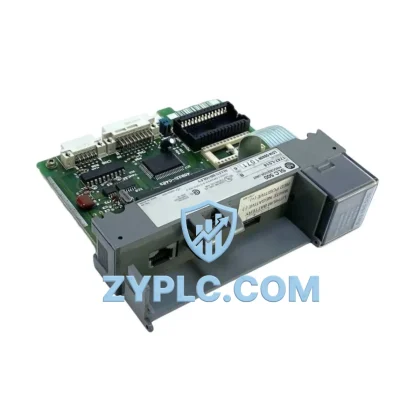
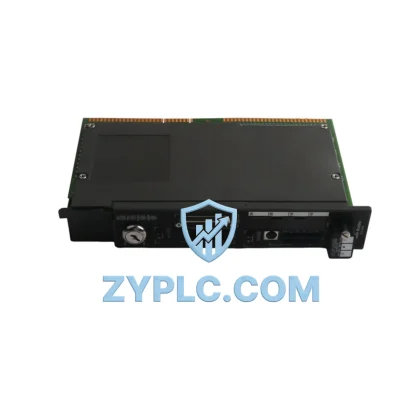
The ABB PM564-RP-ETH (order number 1SAP121100R0071) is a high-performance CPU module engineered for deployment within the ABB AC500 programmable logic controller platform. Designed to serve as the computational core of distributed and centralized control architectures, this module delivers deterministic scan-cycle execution, integrated Ethernet communication, and native support for redundant system topologies. In modern industrial automation environments — spanning power generation, water treatment, oil and gas processing, mining, metallurgy, and advanced manufacturing — the PM564-RP-ETH provides the processing backbone that ties together every layer of the control hierarchy, from field-level I/O acquisition to supervisory SCADA integration.
Unlike standalone controllers, the PM564-RP-ETH is conceived as a system component. Its value is fully realized when it operates within a coordinated architecture that includes compatible power supply modules, I/O expansion racks, communication gateways, human-machine interfaces, and terminal infrastructure. This document examines the module’s role across each layer of a layered automation system and explains how it contributes to system consistency, scalability, redundancy, and long-term maintainability.
Architecture Specification Table
| Parameter |
Specification |
| Model / Order Number |
PM564-RP-ETH / 1SAP121100R0071 |
| Brand / Series |
ABB / AC500 |
| System Role |
Central Processing Unit (CPU) — Control Layer |
| Communication Interface |
Integrated Ethernet (10/100 Mbps), CS31 bus, PROFINET (via CM579-PNIO) |
| Programming Standard |
IEC 61131-3 (LD, FBD, ST, IL, SFC) |
| Program Memory |
4 MB program; 4 MB data; 512 KB retain |
| Scan Cycle |
Deterministic; configurable multi-task scheduling |
| Redundancy Support |
Hot-standby CPU redundancy (RP variant); <1 scan cycle switchover |
| Supply Voltage |
24 V DC via AC500 backplane (PM-series power supply) |
| Operating Temperature |
-25 °C to +70 °C |
| Protection Class |
IP20 |
| Mounting |
AC500 TB5xx terminal base / backplane rack |
| Country of Origin |
Germany |
| Certifications |
CE, UL, cUL, ATEX Zone 2, IECEx |
| Warranty |
12-Month Warranty (ZYPLC) |
Coordinated Control System Design
The PM564-RP-ETH does not operate in isolation. Its architecture is defined by the ecosystem of modules and subsystems that surround it within the AC500 control cabinet and across the plant network. A complete system design begins with the PS501 Control Builder Plus engineering software, which provides the IEC 61131-3 programming environment, hardware configuration wizard, and online diagnostic tools used to commission and maintain the PM564-RP-ETH across its full operational lifecycle.
At the power layer, the CP502 and CP503 power supply modules deliver regulated 24 V DC to the CPU backplane, ensuring stable voltage under variable load conditions. For redundant power architectures — common in substations and critical process plants — dual power feeds are routed through the backplane to eliminate single points of failure at the supply level, working in concert with the PM564-RP-ETH’s own redundancy logic.
I/O expansion is handled through the AC500 SM560-S safety I/O modules and standard DA501 and DA502 analog output modules, which connect to the CPU via the internal CS31 bus or through distributed I/O stations linked over Ethernet. The PM564-RP-ETH supports up to 512 digital I/O points and 128 analog channels in a single rack configuration, with further expansion possible through remote I/O coupling units such as the CI590-CS31-HA coupler, enabling geographically distributed control without additional CPUs.
For network integration, the CM579-PNIO PROFINET I/O communication module and CM577-ETH Ethernet module extend the CPU’s connectivity to field devices, variable-speed drives, and remote I/O clusters operating on PROFINET, Modbus TCP, or EtherNet/IP protocols. This enables the PM564-RP-ETH to serve as the master controller in a multi-network architecture where different fieldbus segments are bridged through protocol gateways, maintaining signal integrity and deterministic response across all communication layers.
Human-machine interface integration is achieved through ABB’s CP600 HMI panel series, which communicates with the PM564-RP-ETH via Ethernet using the ABB proprietary protocol or OPC UA. The HMI layer provides operators with real-time process visualization, alarm management, and trend logging without requiring additional communication middleware, reducing both engineering effort and potential points of failure in the supervisory layer.
In redundant system designs — particularly in power distribution, water treatment, and oil pipeline control — the PM564-RP-ETH (RP variant) pairs with a secondary CPU module on a dedicated redundancy link. The primary and standby CPUs synchronize program data and I/O states at every scan cycle, enabling bumpless switchover in the event of a primary CPU fault. This architecture is further supported by redundant TB5600 terminal bases and dual-channel I/O modules that maintain signal continuity during switchover events, ensuring zero process disruption in safety-critical applications.
Terminal infrastructure, including TU515 and TU516 terminal units, provides the physical interface between the CPU module and field wiring, simplifying module replacement during maintenance without disturbing field connections. This plug-and-play terminal architecture significantly reduces mean time to repair (MTTR) and supports hot-swap procedures in non-redundant zones, directly lowering lifecycle maintenance costs and improving overall system availability.
Application in Layered Automation Systems
Manufacturing and Packaging Lines: In high-speed packaging and assembly lines, the PM564-RP-ETH manages motion sequencing, conveyor synchronization, and quality inspection triggers. Its deterministic scan cycle ensures that time-critical interlocks and reject mechanisms respond within defined latency windows, maintaining throughput and product integrity across multi-station production cells. Integration with servo drives and vision systems via PROFINET further extends its role as the central coordination node in complex manufacturing architectures.
Power Generation and Electrical Substations: The module’s hot-standby redundancy capability makes it a preferred choice for substation automation and generator control systems where unplanned downtime carries significant operational and financial consequences. Integrated with IEC 61850-compliant communication gateways, the PM564-RP-ETH participates in protection and control schemes that span multiple voltage levels and switchgear panels, providing the processing reliability that grid-connected systems demand.
Water and Wastewater Treatment: Municipal water treatment facilities deploy the PM564-RP-ETH to control pump stations, chemical dosing systems, and filtration processes. Its wide operating temperature range and IP20 protection class suit installation in climate-controlled control rooms, while its Ethernet connectivity supports remote monitoring by SCADA systems operated from central dispatch centers, enabling lean staffing models without sacrificing operational visibility.
Oil, Gas, and Petrochemical Processing: In ATEX Zone 2 classified areas, the PM564-RP-ETH controls compressor stations, pipeline valve manifolds, and separator control loops. Its IEC 61131-3 structured text programming capability supports complex process algorithms, including PID cascade control and advanced regulatory strategies, while its certified hazardous-area compatibility ensures compliance with international safety standards for explosive atmosphere installations.
Mining and Metallurgy: Ore processing plants and smelting facilities use the PM564-RP-ETH to coordinate crusher sequencing, conveyor load management, and furnace temperature regulation. The module’s robustness under electrical noise and vibration — characteristics of heavy industrial environments — ensures reliable operation without frequent recalibration or unplanned intervention, supporting the continuous production cycles that mining operations require.
Architecture Engineering FAQ
Q1: Is the PM564-RP-ETH (1SAP121100R0071) compatible with existing AC500 V2 and V3 hardware racks and I/O modules?
Yes. The PM564-RP-ETH is fully compatible with the AC500 V2 and V3 hardware ecosystem, including TB5xx terminal bases, SM5xx I/O modules, and CM5xx communication modules. When migrating from an earlier PM5xx CPU, the hardware configuration can be imported into PS501 Control Builder Plus and adapted with minimal re-engineering. Firmware version alignment between the CPU and I/O modules should be verified during commissioning to ensure consistent behavior across the rack.
Q2: How is the hot-standby redundancy architecture configured, and what is the switchover time?
Redundancy is configured in PS501 Control Builder Plus by defining a primary and standby CPU pair connected via a dedicated redundancy Ethernet link. The PM564-RP-ETH synchronizes program variables, I/O states, and communication channel data at every scan cycle. Switchover time is typically less than one scan cycle (configurable, commonly 10–50 ms), ensuring bumpless transfer for most process control applications. Both CPUs must run identical firmware versions and hardware configurations for redundancy to activate correctly.
Q3: What does the 12-Month Warranty cover, and how does ZYPLC support long-term spare parts availability?
ZYPLC’s 12-Month Warranty covers manufacturing defects and functional failures under normal operating conditions from the date of shipment. Warranty claims are processed through direct technical assessment, and replacement units are dispatched to minimize system downtime. For long-term maintenance planning, ZYPLC maintains stock of PM564-RP-ETH and associated AC500 components — including power supplies, I/O modules, and communication cards — to support customers requiring spare parts beyond the original equipment manufacturer’s standard lead times. Contextual Integration support is available to assist engineers in verifying cross-compatibility between replacement modules and existing system configurations.
© 2026 ZYPLC. All rights reserved.
Original Source: https://zyplc.com
Contact: +86 19859288691 | [email protected]