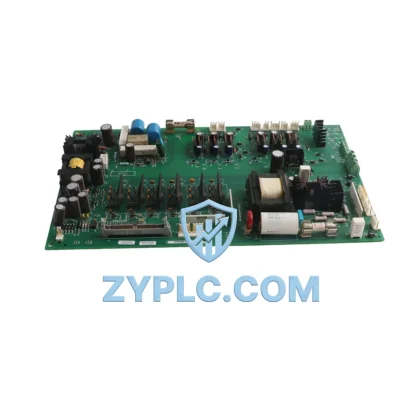
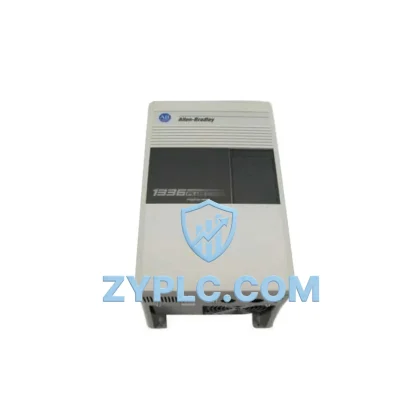
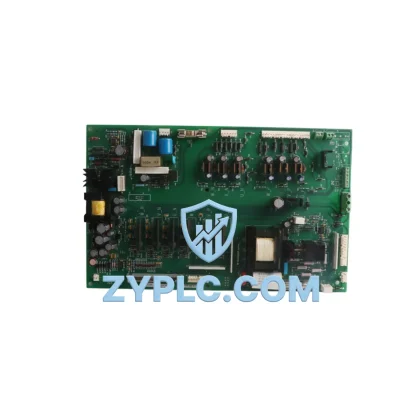
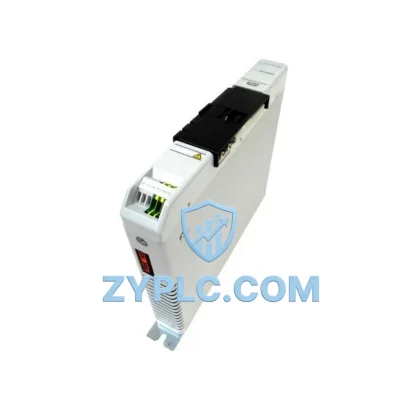
ABB PPC907BE 3BHE024577R0101 System-Ready Inverter Control for ACS800 Architecture
The ABB PPC907BE (part number 3BHE024577R0101) is a dedicated inverter control module engineered for seamless integration within the ACS800 series drive architecture. Rather than functioning as a standalone component, this module occupies a critical position in the layered automation hierarchy — bridging the control layer and the power conversion layer to deliver precise, reliable motor management across demanding industrial environments. Its design philosophy centers on system coherence: every signal path, every communication handshake, and every diagnostic routine is optimized to operate in concert with the broader ACS800 ecosystem and the wider ABB automation platform.
In modern industrial control architectures, the inverter control module serves as the intelligence layer of the drive system. The PPC907BE receives setpoint commands from the supervisory control layer — typically an ABB AC500 PLC or an ABB 800xA Distributed Control System — and translates those commands into precise PWM switching sequences that govern the IGBT power stage. This closed-loop signal flow ensures that process variables such as motor speed, torque, and current remain tightly regulated, even under dynamic load conditions encountered in applications ranging from continuous casting lines to large-scale pump and fan systems.
System architects integrating the PPC907BE into a new or retrofit installation will find that the module is designed to coexist with a broad range of complementary components. The RDCO-03 DDCS communication adapter enables high-speed fiber-optic communication between the drive and the master controller, while the RINT-5611C rectifier control board manages the front-end power conversion stage. On the I/O layer, the RAIO-01 analog I/O extension module and the RDIO-01 digital I/O extension module provide the signal conditioning and isolation necessary for reliable field-level interfacing. For applications requiring coordinated multi-drive operation, the RDCO module’s DDCS protocol allows the PPC907BE-equipped drive to participate in a master-follower configuration, synchronizing torque and speed references across multiple ACS800 units without introducing latency that could compromise process stability.
Network integration is equally well considered. The PPC907BE supports fieldbus communication through ABB’s RCAN-01 CANopen adapter and the RPBA-01 PROFIBUS-DP adapter, enabling the drive to appear as a standard node on plant-wide automation networks. This compatibility ensures that SCADA systems, historian servers, and MES platforms can access real-time drive diagnostics — including DC bus voltage, output current, fault codes, and thermal status — without requiring proprietary gateways or protocol converters. The result is a drive architecture that is fully transparent to the control layer, simplifying both commissioning and long-term condition monitoring.
Power layer considerations are equally important in a well-designed drive system. The PPC907BE operates within the ACS800’s internal DC bus architecture, and its control logic is powered through the drive’s internal APOW-01 auxiliary power supply board. This arrangement ensures that the control electronics remain energized and capable of executing safe-stop sequences even during transient supply disturbances, a critical requirement in process industries where uncontrolled motor coastdown can damage equipment or create safety hazards. For installations requiring enhanced availability, the ACS800’s modular architecture supports the use of redundant supply sections, and the PPC907BE’s diagnostic outputs can be wired to external monitoring relays to provide early warning of developing faults.
From a human-machine interface perspective, the PPC907BE integrates naturally with the ACS800’s CDP312R control panel, which provides local parameter access, fault history review, and drive status visualization. In larger installations, the ABB Panel Builder 800 software and CP600 HMI terminals can be configured to display drive-level data alongside process variables from other field devices, creating a unified operator view that reduces the cognitive load on plant personnel and accelerates fault diagnosis. This HMI integration is particularly valuable during commissioning, when engineers need to verify that drive parameters — including acceleration ramps, current limits, and flux optimization settings — are correctly configured before the system is handed over to operations.
Long-term maintenance efficiency is a defining advantage of the PPC907BE within the ACS800 architecture. Because the module is a discrete, field-replaceable unit, a fault in the control electronics does not necessitate replacement of the entire drive. Maintenance teams can carry a single PPC907BE as a critical spare, confident that it will restore drive functionality within minutes rather than the hours or days required to source and install a complete drive unit. This modularity directly reduces mean time to repair (MTTR) and supports the inventory rationalization strategies that are increasingly important in lean manufacturing and asset-intensive process industries.
Architecture Specification Table
| Parameter |
Specification |
| Part Number |
3BHE024577R0101 |
| Model |
PPC907BE |
| Brand |
ABB |
| System Role |
Inverter Control Module — ACS800 Drive Series |
| Compatible Platform |
ABB ACS800 Industrial Drive Series |
| Control Architecture |
Direct Torque Control (DTC) with closed-loop vector regulation |
| Communication Capability |
DDCS fiber-optic (via RDCO-03), PROFIBUS-DP (via RPBA-01), CANopen (via RCAN-01) |
| I/O Interface |
Compatible with RAIO-01 analog extension and RDIO-01 digital extension modules |
| Power Supply |
Internal via APOW-01 auxiliary power board |
| Mounting |
Internal drive module — frame-specific installation |
| Operating Temperature |
0°C to +50°C (ambient, drive enclosure) |
| Country of Origin |
Germany |
| Condition |
New / Tested Surplus |
| Warranty |
12-Month Warranty |
| Contextual Integration |
Full Contextual Integration with ACS800 control and power architecture |
Coordinated Control System Design
A complete ACS800-based drive system built around the PPC907BE typically incorporates the following coordinated components: the RDCO-03 DDCS communication adapter for high-speed master controller interfacing; the RINT-5611C rectifier control board managing front-end AC-to-DC conversion; the RAIO-01 and RDIO-01 I/O extension modules for field signal conditioning; the RPBA-01 PROFIBUS-DP adapter for plant network integration; the RCAN-01 CANopen adapter for alternative fieldbus topologies; the APOW-01 auxiliary power supply board ensuring control circuit continuity; and the CDP312R control panel for local commissioning and diagnostics. At the supervisory level, an ABB AC500 PLC or ABB 800xA DCS provides the setpoint and sequencing commands that the PPC907BE executes with millisecond-level precision. This coordinated architecture ensures that every layer — from the field device to the enterprise historian — operates as a coherent, integrated system rather than a collection of independent components.
Application in Layered Automation Systems
The PPC907BE finds application across a wide spectrum of process and discrete manufacturing industries. In steel and metals processing, it controls the speed and torque of rolling mill drives where precise tension regulation is essential to product quality. In water and wastewater treatment, it manages large centrifugal pump drives, enabling variable-speed operation that reduces energy consumption by up to 50% compared to fixed-speed alternatives. In the oil and gas sector, it is deployed in compressor and pipeline pump drives where continuous availability and rapid fault recovery are non-negotiable operational requirements. Chemical and petrochemical plants rely on the ACS800 architecture for reactor agitator drives and extruder lines, where the PPC907BE’s DTC algorithm delivers the smooth, low-speed torque performance that prevents process upsets. In mining and mineral processing, the module supports conveyor, crusher, and hoist drives operating in harsh environments with high ambient dust and vibration levels. Packaging and material handling lines benefit from the module’s fast dynamic response, which enables precise positioning and synchronization across multi-axis conveyor systems. In each of these applications, the PPC907BE’s role within the layered automation architecture — receiving commands from the control layer, executing them at the power conversion layer, and reporting status back to the supervisory layer — remains consistent, making it a versatile and strategically valuable component for system integrators and end users alike.
Architecture Engineering FAQ
Q1: Is the PPC907BE 3BHE024577R0101 compatible with all ACS800 drive frame sizes, and what verification steps are required before installation?
The PPC907BE is designed for specific frame sizes within the ACS800 series. Before installation, engineers should verify the target drive’s frame designation and firmware revision against ABB’s compatibility matrix. The module’s hardware revision (R0101) should also be confirmed against the drive’s control board slot specification. Where uncertainty exists, ABB’s technical documentation or our pre-sales engineering support can confirm compatibility. Our 12-Month Warranty covers the module against manufacturing defects and ensures that any compatibility-related issues identified during commissioning are addressed promptly.
Q2: How does the PPC907BE support redundancy and high-availability architectures in critical process applications?
While the PPC907BE itself is a single-module component, the ACS800 architecture supports system-level redundancy through several mechanisms: hot-standby drive configurations using external bypass contactors, master-follower multi-drive topologies via the RDCO-03 DDCS link, and integration with plant-level safety systems through hardwired STO (Safe Torque Off) circuits. Maintaining a PPC907BE as a critical spare — supported by our 12-Month Warranty and verified stock availability — is the most cost-effective redundancy strategy for most installations, reducing MTTR to under 30 minutes in the event of a control board fault.
Q3: What commissioning and parameter migration procedures apply when replacing a PPC907BE in an existing ACS800 installation?
When replacing a PPC907BE, the existing drive parameters should be backed up to the CDP312R control panel or to a PC using ABB’s DriveWindow software before the module is removed. After installing the replacement module, parameters can be restored from the panel memory or the PC backup, significantly reducing recommissioning time. Key parameters to verify post-replacement include motor nameplate data, speed and current limits, fieldbus node address, and DTC motor model identification. Our technical support team is available to assist with parameter migration procedures throughout the 12-Month Warranty period, ensuring that the replacement module achieves full Contextual Integration with the existing control system architecture.
© 2026 ZYPLC. All rights reserved.
Original Source: https://zyplc.com
Contact: +86 19859288691 | [email protected]