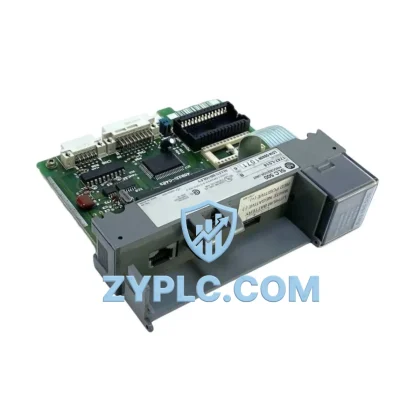
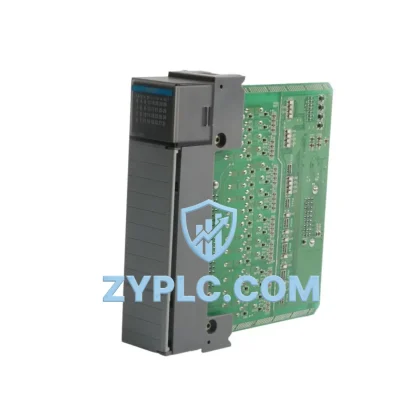
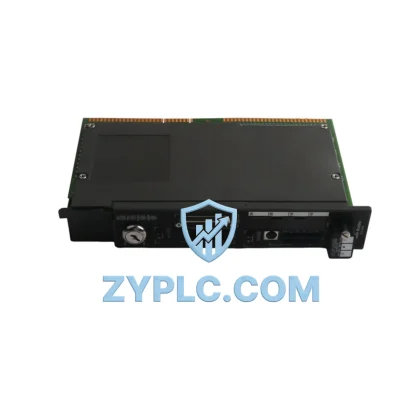
ABB PPE100A 3BHE037824R0101 System-Ready Processor for AC800PEC Architecture
The ABB PPE100A (3BHE037824R0101) is a high-performance processor board engineered for deployment within the AC800PEC control platform — ABB’s dedicated solution for power electronics and excitation control in heavy industrial environments. Rather than functioning as a standalone component, the PPE100A is designed to operate as the computational core of a layered automation architecture, coordinating signal acquisition, real-time processing, and command execution across multiple system tiers. Understanding its role within the full control hierarchy is essential for engineers responsible for system integration, commissioning, and long-term maintenance.
In a complete AC800PEC-based control system, the PPE100A sits at the control layer, interfacing upward with supervisory SCADA or DCS platforms and downward with I/O modules, communication gateways, and power conversion hardware. Its processing capability enables deterministic cycle execution, which is critical in applications such as generator excitation, drive control, and reactive power compensation where millisecond-level response times directly affect system stability. The board’s architecture supports contextual integration across the full signal chain — from analog input conditioning through to PWM output generation — ensuring that every layer of the automation stack operates with synchronized timing and consistent data integrity.
Architecture Specification Table
| Parameter |
Specification |
| System Role |
Central Processor Board — AC800PEC Control Platform |
| Full Part Number |
PPE100A / 3BHE037824R0101 |
| Brand |
ABB |
| Compatible Platform |
AC800PEC (Power Electronics Controller) |
| Processor Architecture |
Real-time embedded processor with deterministic cycle execution |
| Communication Capability |
DDCS fiber optic, internal backplane bus, optional Ethernet/PROFIBUS via expansion |
| I/O Interface |
Compatible with RDIO, RAIO, RDCO, and RTAC I/O modules via backplane |
| Operating Voltage |
24 VDC (supplied via system backplane) |
| Operating Temperature |
0°C to +55°C (standard industrial range) |
| Mounting |
Rack-mounted, AC800PEC chassis backplane slot |
| Origin |
Germany |
| Warranty |
12-Month Warranty — covers functional defects under normal operating conditions |
Coordinated Control System Design
The PPE100A processor board achieves its full potential only when integrated within a properly configured AC800PEC system architecture. At the backplane level, the board communicates with RDIO digital I/O modules and RAIO analog I/O modules to acquire field signals from sensors, transducers, and protection relays. These signals are processed in real time by the PPE100A’s onboard firmware, which executes the control algorithms defined during engineering and commissioning.
For communication with higher-level systems, the AC800PEC platform supports DDCS (Distributed Drive Control System) fiber optic links, which connect the PPE100A to ABB drives such as the ACS800 or ACS6000 series. This fiber optic backbone ensures noise-immune, high-speed data exchange between the processor and the power conversion stage — a critical requirement in high-voltage environments where electromagnetic interference would otherwise compromise copper-based communication. Where integration with plant-level DCS or SCADA is required, PROFIBUS DP or Ethernet-based gateways can be added to the system rack, extending the PPE100A’s connectivity without modifying its core architecture.
Power supply integrity is maintained through dedicated APOW or NPOW power supply modules mounted within the same chassis. These modules provide regulated 24 VDC to the backplane, ensuring that the PPE100A and all connected I/O modules receive stable power even during grid disturbances. In redundant configurations, dual power supply modules can be deployed with automatic switchover, eliminating single points of failure at the power layer.
For human-machine interface requirements, the AC800PEC platform integrates with ABB’s Panel 800 series operator terminals or third-party HMI systems via OPC or Modbus TCP. This allows operators to monitor real-time process variables, acknowledge alarms, and adjust setpoints without interrupting the control cycle running on the PPE100A. The RTAC timing and synchronization module can also be added to the rack to provide GPS-synchronized timestamps for event logging — a requirement in power utility applications where fault analysis demands microsecond-accurate records.
Terminal modules such as the NTAC or NDIO series provide the physical wiring interface between field cables and the backplane-mounted I/O modules, simplifying installation and enabling module replacement without rewiring. This modular termination approach significantly reduces maintenance downtime, as the PPE100A and associated I/O boards can be swapped without disturbing field wiring.
Application in Layered Automation Systems
The PPE100A processor board is deployed across a wide range of heavy industrial applications where precise, real-time control of power electronics is non-negotiable. In power generation facilities, it serves as the core of generator excitation control systems, regulating field current to maintain terminal voltage within tight tolerances during load changes and grid disturbances. Its deterministic processing ensures that excitation response meets the dynamic performance requirements defined in IEEE and IEC grid codes.
In the metallurgical and mining sectors, the PPE100A is integrated into variable speed drive systems controlling large motors used in rolling mills, hoists, conveyors, and crushers. The processor’s ability to execute complex vector control algorithms at high cycle rates enables smooth torque control across the full speed range, reducing mechanical stress and extending equipment life. In these environments, the system’s fiber optic communication links are particularly valuable, as they maintain signal integrity in the presence of high levels of electromagnetic interference generated by large power converters.
Petrochemical and offshore platforms deploy the AC800PEC system with the PPE100A for compressor and pump drive control, where process continuity is critical and unplanned shutdowns carry significant safety and financial consequences. The processor’s support for redundant architectures — including dual processor configurations and redundant I/O — allows these facilities to achieve the high availability levels required by functional safety standards such as IEC 61511.
In water treatment and municipal infrastructure applications, the PPE100A supports multi-drive coordination for pump stations and aeration systems, where energy efficiency and process stability must be balanced across variable load conditions. The processor’s communication capabilities allow seamless integration with plant SCADA systems, enabling centralized monitoring and remote diagnostics that reduce the need for on-site intervention.
Packaging and discrete manufacturing lines benefit from the PPE100A’s fast cycle times and precise I/O synchronization, which enable coordinated motion control across multiple axes. In these applications, the processor works in conjunction with RDIO and RAIO modules to manage servo drives, position sensors, and safety interlocks within a single, unified control architecture.
Architecture Engineering FAQ
Q1: Is the PPE100A 3BHE037824R0101 compatible with all AC800PEC chassis configurations, and can it be used in a redundant processor setup?
The PPE100A is designed for use within the standard AC800PEC rack system and is compatible with the associated backplane, power supply modules, and I/O expansion slots. Redundant processor configurations are supported in certain AC800PEC system variants, where a secondary processor board operates in hot-standby mode and assumes control automatically upon detection of a primary processor fault. Engineers should verify the specific firmware version and system configuration file compatibility before deploying the PPE100A in a redundant architecture, as slot assignment and parameter synchronization settings must be correctly defined during commissioning.
Q2: What communication protocols does the PPE100A support, and how does it integrate with existing DCS or SCADA infrastructure?
The PPE100A natively supports DDCS fiber optic communication for high-speed links to ABB drives and I/O nodes. Integration with plant-level DCS or SCADA systems is achieved through protocol gateway modules installed in the same AC800PEC rack, supporting PROFIBUS DP, Modbus RTU/TCP, and in some configurations, PROFINET or EtherNet/IP. This layered communication architecture allows the PPE100A to serve as the real-time control core while exposing process data to supervisory systems through standardized industrial protocols, without compromising control cycle determinism.
Q3: What does the 12-Month Warranty cover, and what should engineers consider for long-term spare parts management?
The 12-Month Warranty covers functional defects in the PPE100A processor board arising under normal operating conditions, including failures attributable to component quality or manufacturing. It does not cover damage resulting from incorrect installation, overvoltage events, or operation outside specified environmental limits. For long-term maintenance planning, engineers are advised to maintain at least one spare PPE100A unit per installed system, particularly in applications where the AC800PEC platform is no longer in active production. Stocking compatible I/O modules such as RDIO and RAIO boards alongside the processor ensures that the full control system can be restored rapidly following any hardware fault, minimizing process downtime and avoiding extended lead times for obsolete components.
© 2026 ZYPLC. All rights reserved.
Original Source: https://zyplc.com
Contact: +86 19859288691 | [email protected]