ABB RDCU-12C System-Ready Control Unit for ACS800 Architecture: Control Layer Coordination and Drive System Integration
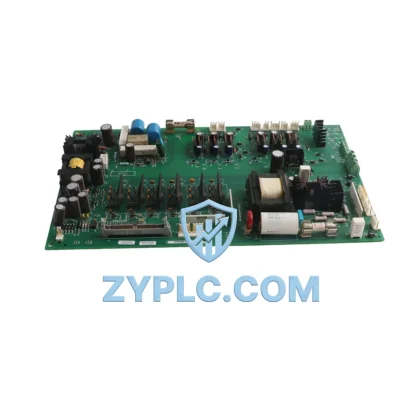
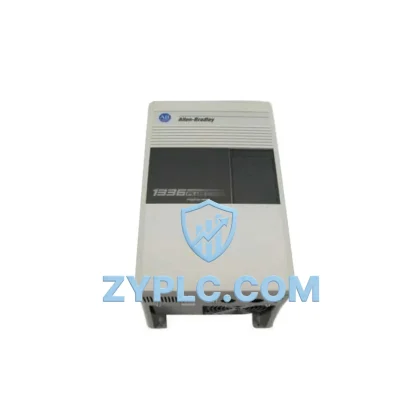
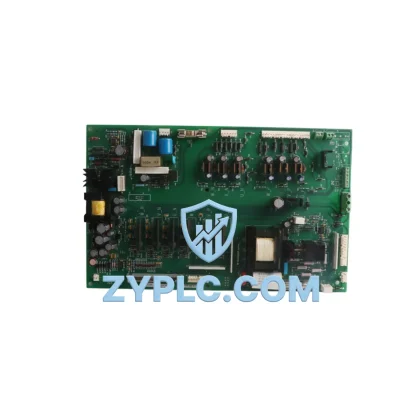
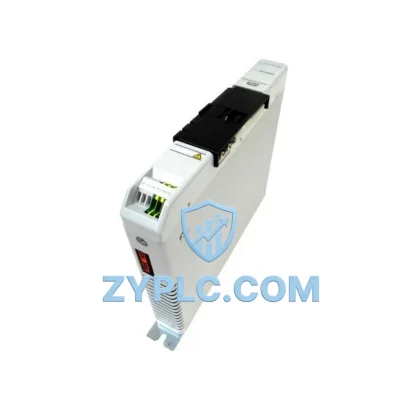
The ABB RDCU-12C (part number 3AUA0000043722) is a dedicated drive control unit engineered for seamless integration within the ACS800 industrial drive architecture. Rather than functioning as a standalone component, the RDCU-12C occupies a critical position in the control layer of multi-axis and multi-drive automation systems, serving as the intelligence hub that coordinates signal processing, feedback loops, fieldbus communication, and motor control algorithms across the entire drive platform. In distributed automation environments — spanning manufacturing, power generation, petrochemical processing, water treatment, mining, metallurgy, and packaging lines — the RDCU-12C provides the architectural consistency and long-term reliability that system engineers depend on for both commissioning efficiency and lifecycle maintenance.
Understanding the RDCU-12C requires viewing it within the full hierarchy of the ACS800 control system. At the control layer, the RDCU-12C interfaces directly with the ACS800 drive’s power electronics, executing real-time motor control algorithms including Direct Torque Control (DTC). It communicates upstream with supervisory PLCs or DCS platforms via fieldbus adapters such as the RPBA-01 PROFIBUS adapter or RCAN-01 CANopen module, and downstream with I/O extension modules, encoder feedback units, and brake control boards. This layered architecture ensures that every signal — from speed reference to fault acknowledgment — flows through a coherent, validated communication path, reducing integration risk and simplifying system-level diagnostics.
In redundant drive architectures, the RDCU-12C supports master-follower configurations where multiple ACS800 drives operate in synchronized coordination. The control unit manages torque sharing, speed synchronization, and fault propagation logic, ensuring that a single drive fault does not cascade into a full system shutdown. This capability is particularly valuable in high-availability applications such as continuous process lines, mine hoists, and large pump stations where unplanned downtime carries significant operational cost.
From a system expansion perspective, the RDCU-12C’s modular design accommodates optional I/O extension boards, encoder interface modules, and application-specific software packages. Engineers can configure the unit for crane control, winder applications, pump-fan optimization, or multi-pump coordination without replacing the core control hardware. This flexibility reduces the total cost of ownership across the system lifecycle and supports phased capacity expansion without architectural redesign.
Long-term maintenance efficiency is another defining characteristic of the RDCU-12C within the ACS800 platform. Its parameter memory retains full drive configuration data, enabling rapid board swap procedures during corrective maintenance. Technicians can replace a faulty RDCU-12C, restore parameters from backup, and return the drive to service in minimal time — a critical advantage in 24/7 production environments. Combined with our 12-Month Warranty coverage, this maintainability profile significantly reduces the risk exposure associated with aging drive infrastructure.
Architecture Specification Table
| Parameter |
Specification |
| Part Number |
3AUA0000043722 |
| Model |
RDCU-12C |
| Brand |
ABB |
| Compatible Drive Series |
ACS800 Single Drive, Multi-Drive, Cabinet Drive |
| System Role |
Drive Control Unit — Control Layer |
| Control Technology |
Direct Torque Control (DTC) |
| Fieldbus Interface |
Via optional adapter modules (PROFIBUS, CANopen, DeviceNet, Modbus) |
| I/O Extension |
Supports RAIO-01, RDIO-11, RTAC-01 and compatible I/O boards |
| Encoder Interface |
Pulse encoder feedback via RTAC-01 or RMIO board |
| Operating Voltage |
24 VDC (internal supply from drive) |
| Operating Temperature |
-15°C to +55°C (storage: -40°C to +70°C) |
| Mounting |
Internal drive mounting — ACS800 control section |
| Country of Origin |
Finland |
| Warranty |
12-Month Warranty |
| Contextual Integration |
Supported — system-level parameter backup and restore |
Coordinated Control System Design
The RDCU-12C achieves its full value when considered alongside the broader ecosystem of ACS800 system components. In a typical multi-drive cabinet installation, the RDCU-12C operates in conjunction with the RMIO-11 motor control and I/O board, which handles analog and digital I/O at the drive level. The RDCU-12C coordinates with the APBU-44C branching unit in multi-drive configurations, distributing control signals across multiple inverter modules sharing a common DC bus. Power supply integrity for the control section is maintained by the APOW-01 auxiliary power supply board, ensuring that the RDCU-12C remains operational even during main power fluctuations.
For fieldbus connectivity, the RDCU-12C interfaces with the RPBA-01 PROFIBUS-DP adapter, enabling integration with Siemens S7, ABB AC500, or other PROFIBUS master PLCs. In EtherNet/IP or Modbus TCP environments, the RECA-01 EtherNet/IP adapter provides the network layer bridge. At the human-machine interface layer, the ACS800 panel bus connects to the CDP312R control panel or remote panel mounting kits, giving operators real-time access to drive parameters, fault logs, and speed references without requiring laptop-based tools during routine operation.
In applications requiring precise speed feedback, the RTAC-01 pulse encoder interface module connects to the RDCU-12C’s option slot, enabling closed-loop vector control with encoder accuracy. For applications involving dynamic braking or regenerative energy management, the RDCU-12C coordinates with the NBRA-6x braking chopper units, managing braking torque commands and protecting the DC bus from overvoltage during deceleration. This level of coordinated system design — spanning control, I/O, communication, power, and feedback layers — is what distinguishes the ACS800 platform as a complete drive architecture rather than a collection of discrete components.
Application in Layered Automation Systems
In manufacturing and packaging lines, the RDCU-12C enables precise multi-axis coordination across conveyor drives, winder stations, and tension control zones. Its DTC algorithm delivers fast torque response without encoder feedback in many applications, reducing mechanical complexity while maintaining production throughput targets.
In power generation and utilities, the RDCU-12C supports variable-speed pump and fan drives in power plant auxiliary systems. Its fieldbus integration capability allows seamless connection to plant-wide DCS platforms, enabling centralized monitoring of drive health, energy consumption, and fault history across dozens of drive nodes.
In petrochemical and process industries, the RDCU-12C’s robust operating temperature range and support for redundant control architectures make it suitable for compressor drives, extruder controls, and agitator systems where process continuity is non-negotiable. The 12-Month Warranty and available spare unit inventory support the planned maintenance cycles typical of turnaround-based maintenance strategies.
In mining and metallurgy, the RDCU-12C is deployed in hoist drives, conveyor systems, and mill drives where high starting torque, dynamic braking, and master-follower synchronization are essential. Its parameter retention capability simplifies drive replacement during scheduled maintenance windows, minimizing production impact.
In water and wastewater treatment, the RDCU-12C supports multi-pump control strategies, enabling energy-optimized operation across variable-demand pumping stations. Integration with SCADA systems via PROFIBUS or Modbus provides operators with real-time visibility into pump performance and drive diagnostics.
Architecture Engineering FAQ
Q1: Is the RDCU-12C compatible with all ACS800 drive variants, and can it be used in both single-drive and multi-drive cabinet configurations?
The RDCU-12C is designed for the ACS800 drive family and is compatible with ACS800 single drives, multi-drives, and cabinet drive configurations. In multi-drive systems using the APBU-44C branching unit and shared DC bus architecture, the RDCU-12C functions as the control intelligence for individual inverter modules. Always verify the specific ACS800 hardware revision and firmware version compatibility before installation, as certain option board combinations may require firmware alignment. Our technical team can assist with compatibility verification as part of the pre-delivery support included with the 12-Month Warranty.
Q2: How does the RDCU-12C support system redundancy and minimize unplanned downtime in critical applications?
The RDCU-12C supports master-follower drive configurations where one ACS800 drive acts as the speed master and others follow torque or speed references. In the event of a control board fault, the RDCU-12C’s parameter memory allows a replacement unit to be configured rapidly using backed-up parameter sets, significantly reducing mean time to repair (MTTR). For applications requiring higher availability, hot-standby drive configurations can be implemented at the system level. The 12-Month Warranty covers the RDCU-12C against manufacturing defects, and our inventory availability ensures replacement units can be sourced without extended lead times.
Q3: What commissioning and long-term maintenance considerations apply to the RDCU-12C in a multi-drive architecture?
During commissioning, the RDCU-12C should be configured using ABB’s DriveWindow or DriveStudio software tools, which provide parameter upload/download, real-time monitoring, and fault analysis capabilities. In multi-drive systems, each RDCU-12C should be assigned a unique node address for fieldbus communication, and parameter sets should be documented and archived for future maintenance reference. Long-term maintenance should include periodic inspection of the control board connectors, firmware version audits, and parameter backup verification. Contextual Integration support — included with every unit — ensures that system-level configuration data is preserved and transferable across the drive’s operational lifecycle.
© 2026 ZYPLC. All rights reserved.
Original Source: https://zyplc.com
Contact: +86 19859288691 | plc.sales@zyplc.com