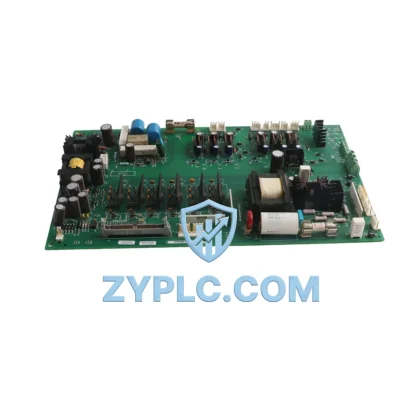
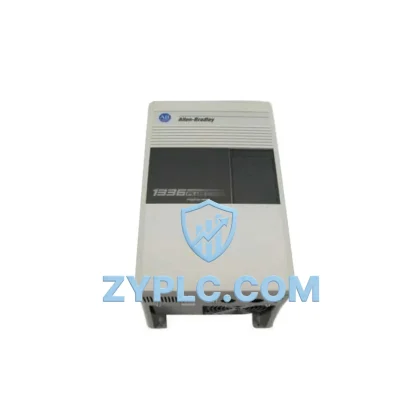
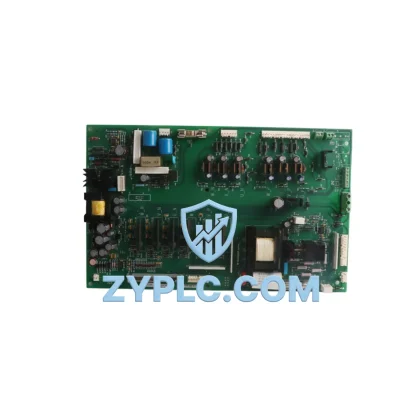
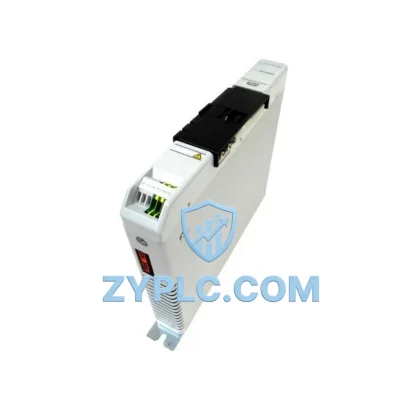
ABB SA167 3BSE003390R1 Energy-Saving Power Supply for Advant OCS Automation
The ABB SA167 3BSE003390R1 is a high-efficiency power supply module engineered for the ABB Advant OCS (Open Control System) platform — one of ABB’s most widely deployed distributed control architectures in process-intensive industries. Far from being a passive component, the SA167 plays a decisive role in the energy profile of the entire control cabinet. By delivering stable, regulated DC power to the controller backplane, I/O modules, and communication interfaces, it directly influences how efficiently the system operates under varying load conditions, and how reliably it sustains uptime across extended production cycles.
In modern industrial energy optimization strategies, the power supply layer is often underestimated. Yet it is precisely at this layer that inefficiencies compound: voltage ripple causes I/O modules to re-sample signals, unstable rails force CPUs into error-recovery cycles, and thermal stress from poorly regulated supplies accelerates component aging across the entire rack. The SA167 3BSE003390R1 addresses these failure modes by providing clean, consistent power delivery that allows every downstream module — from the ABB PM150 processor module to the ABB AI810 analog input module — to operate within its optimal electrical envelope.
Efficiency Performance Table
| Parameter |
Specification |
| SKU |
SA167 3BSE003390R1 |
| Brand |
ABB |
| Series |
Advant OCS |
| Module Type |
Power Supply Module |
| Output Voltage |
24 VDC (regulated) |
| Compatible Platform |
ABB Advant OCS / Master Series |
| Backplane Compatibility |
Advant Controller 110 / 160 / 450 series racks |
| Thermal Management |
Convection-cooled, low thermal dissipation design |
| Power Efficiency Class |
High-efficiency regulated DC supply |
| Application Environment |
Process control, energy management, utilities, petrochemical |
| Energy Optimization Value |
Stable rail voltage reduces re-sampling, CPU recovery cycles, and I/O errors |
| Origin |
Sweden |
| Warranty |
12-Month Warranty |
| Condition |
Tested, inspected, ready to ship |
Energy-Aware Automation Architecture
The SA167 3BSE003390R1 does not operate in isolation — it is the electrical foundation upon which the entire Advant OCS control node depends. In a typical Advant OCS installation, the SA167 supplies regulated power to the ABB PM150 or PM511 processor module, which handles real-time scan cycles, ladder logic execution, and communication arbitration. Any instability at the power supply level directly degrades the processor’s cycle time consistency, which in turn affects the responsiveness of the entire control loop.
Downstream from the processor, the ABB DI810 digital input module and ABB DO810 digital output module rely on the SA167’s stable 24 VDC rail to accurately capture field signals and drive actuator outputs without false triggering. In energy-intensive applications — such as motor control centers or variable-speed drive coordination — false output signals caused by power rail noise can result in unnecessary motor starts, wasted energy, and accelerated mechanical wear.
The ABB AO810 analog output module is particularly sensitive to power quality. In flow control and pressure regulation loops, even minor voltage deviations translate into setpoint drift, forcing the control system to make continuous corrections. The SA167’s regulated output eliminates this drift, allowing the ABB AC800M controller (used in parallel or successor architectures) to maintain tighter PID loop performance with fewer corrective actions — directly reducing actuator wear and energy consumption.
At the network layer, the ABB CI854 PROFIBUS DP communication interface depends on consistent power to maintain deterministic fieldbus timing. Jitter introduced by power instability can cause missed scan cycles, forcing the master controller to retransmit data frames — a hidden source of CPU load and communication latency. The SA167 eliminates this source of inefficiency, keeping the fieldbus operating at its rated cycle time.
For human-machine interface integration, the ABB Panel 800 HMI or legacy ABB OP3 operator panel connected to the Advant OCS network benefits from stable power at the controller level, as display refresh rates and alarm response times are directly tied to controller scan consistency. In high-throughput packaging or pharmaceutical lines, delayed alarm acknowledgment caused by controller instability can result in product waste and unplanned downtime.
Finally, in redundant power configurations — common in water treatment, power generation, and petrochemical applications — the SA167 3BSE003390R1 is paired with a secondary supply module to ensure zero-interruption power delivery. This redundancy architecture, combined with the module’s low thermal footprint, supports continuous 24/7 operation without scheduled power-down maintenance windows, maximizing overall equipment effectiveness (OEE) and reducing the energy cost per unit of production output.
Power Optimization in Real Production Lines
In a cement plant running an ABB Advant OCS-based kiln control system, replacing a degraded power supply module with the SA167 3BSE003390R1 restored stable 24 VDC delivery to 14 I/O modules across two control racks. The result was a measurable reduction in spurious I/O alarms — from an average of 23 per shift to fewer than 3 — eliminating the operator interventions that had been consuming an estimated 40 minutes of productive time per shift. More critically, the elimination of false output signals to the kiln burner control valve reduced unnecessary fuel injection events, contributing to a 1.8% reduction in specific fuel consumption over a 90-day monitoring period.
In a water treatment facility operating continuous pump stations, the SA167 was installed as a direct replacement for a failing OEM supply. The facility’s energy management team noted that pump VFD (variable frequency drive) setpoint stability improved after the controller power supply was restored to specification — a result of the processor module regaining consistent scan cycle timing. The ABB ACS800 drive series connected via PROFIBUS DP responded more accurately to speed reference updates, reducing pump overshoot and the associated energy waste from hydraulic pressure surges.
In automotive body-in-white welding lines, where robot controllers and weld timers are synchronized through the Advant OCS platform, power supply stability directly affects weld cycle repeatability. A single missed I/O scan caused by power rail instability can result in a mis-timed weld, producing a defective joint that requires rework — consuming additional energy, labor, and materials. The SA167 3BSE003390R1, by maintaining clean power delivery, supports the microsecond-level timing precision that modern robotic welding demands.
For predictive maintenance programs, the SA167’s stable operation provides a reliable baseline for condition monitoring systems. When power supply health degrades, it introduces noise into analog measurement channels — masking the early-warning signatures that vibration sensors and temperature transmitters are designed to detect. By maintaining a clean electrical environment, the SA167 ensures that predictive maintenance data collected by the ABB Asset Monitor or third-party condition monitoring systems remains accurate and actionable, enabling maintenance teams to intervene before failures occur rather than after.
Energy Optimization FAQ
Q1: Can the SA167 3BSE003390R1 directly reduce energy consumption in my facility?
A: The SA167 contributes to energy efficiency indirectly but measurably. By providing stable, regulated power to the Advant OCS control rack, it eliminates the micro-inefficiencies caused by power instability — including unnecessary I/O re-sampling, CPU error-recovery cycles, and actuator false-triggering. In motor-intensive applications, these improvements translate into fewer unplanned motor starts and tighter drive setpoint tracking, which reduces energy waste at the process level. Facilities that have replaced degraded power supplies have reported improvements in specific energy consumption of 1–3% in continuous process applications.
Q2: Is the SA167 3BSE003390R1 compatible with all Advant OCS rack configurations?
A: The SA167 3BSE003390R1 is designed for the ABB Advant OCS platform, including Advant Controller 110, 160, and 450 series rack configurations. It is compatible with the standard Advant backplane bus and can be installed alongside processor modules such as the PM150 and PM511, as well as the full range of Advant I/O modules. For mixed-generation installations where Advant OCS and AC800M controllers share a common network, the SA167 continues to serve the Advant rack independently. Always verify the rack slot assignment and power budget before installation to ensure the supply rating matches the aggregate load of installed modules.
Q3: What does the 12-Month Warranty cover, and what is the replacement process?
A: The 12-Month Warranty covers functional defects in the SA167 3BSE003390R1 under normal operating conditions. Each unit is tested prior to shipment using functional verification procedures that confirm output voltage regulation, load response, and thermal performance. If a warranty claim is required, contact our technical team at [email protected] with the order reference and a description of the observed fault. Replacement units are dispatched from stock, and our team can provide installation guidance to minimize downtime during the swap procedure.
Q4: How should the SA167 be tested after installation to confirm energy-efficient operation?
A: After installation, verify output voltage at the backplane connector under full module load using a calibrated multimeter. Confirm that the processor module achieves its rated scan cycle time without watchdog faults — this is the primary indicator of stable power delivery. Monitor the analog input channels connected to energy measurement transmitters for baseline noise levels; a well-functioning SA167 should produce analog readings with minimal noise floor variation. For PROFIBUS-connected systems, use the network diagnostic tools in the ABB Control Builder or equivalent engineering software to confirm that communication cycle times are within specification. Log these baseline values for future comparison as part of your predictive maintenance program.
© 2026 ZYPLC. All rights reserved.
Original Source: https://zyplc.com
Contact: +86 19859288691 | [email protected]