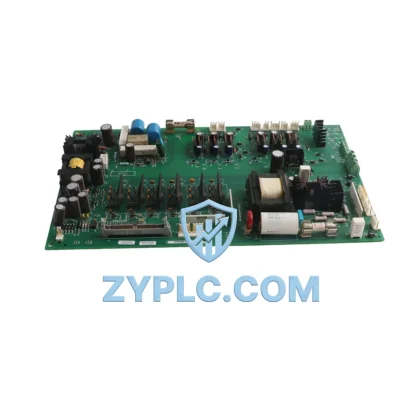
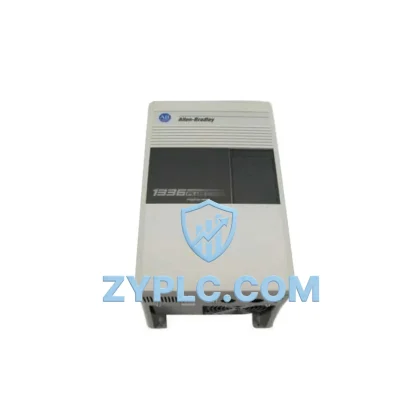
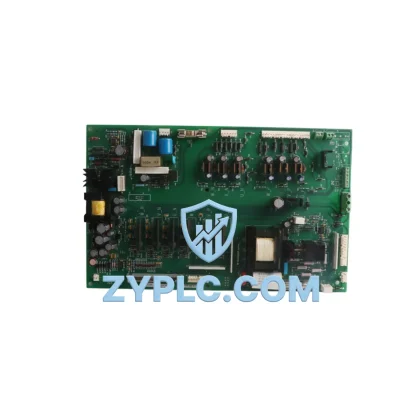
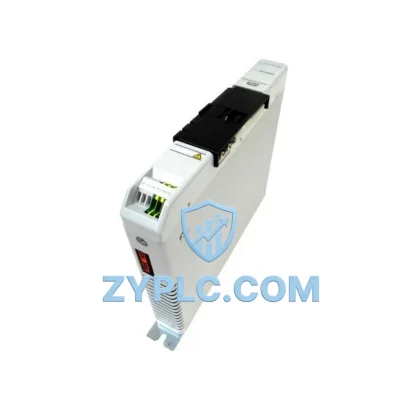
ABB SAFT 127 CHC System-Ready Chopper Control for SAFT Drive Architecture
The ABB SAFT 127 CHC is a dedicated chopper control card engineered for deployment within ABB’s SAFT-series variable speed drive platforms. Rather than functioning as a standalone component, the SAFT 127 CHC occupies a critical position within the layered control architecture of industrial drive systems — bridging the command layer and the power conversion layer to ensure precise, stable, and repeatable braking and energy dissipation performance. In applications where dynamic braking is essential to process safety and motor longevity, this card delivers the contextual integration that modern industrial automation demands.
Understanding the SAFT 127 CHC requires viewing it through the lens of the complete drive system architecture. ABB’s SAFT-series drives are modular by design, allowing engineers to configure control, power, feedback, and communication layers independently while maintaining full system coherence. The SAFT 127 CHC fits into this ecosystem as the chopper regulation element — receiving signals from the main CPU board, monitoring DC bus voltage, and triggering the braking resistor circuit at precisely calculated thresholds. This coordination prevents DC bus overvoltage during deceleration, protecting both the drive and the connected motor from transient damage.
Within a typical SAFT drive cabinet, the SAFT 127 CHC operates alongside several complementary modules. The SAFT 121 CPU board serves as the primary processing unit, issuing control commands and managing the overall drive state machine. The SAFT 122 or SAFT 123 I/O interface boards handle digital and analog signal routing between field instruments and the control layer. The SAFT 110 power supply board provides regulated DC voltage rails to all control electronics, ensuring that the SAFT 127 CHC receives stable operating power even during high-load transients. The SDCS-CON-4 or equivalent converter control board may also be present in larger configurations, coordinating multi-axis or multi-drive synchronization across the control network.
At the network and communication layer, ABB SAFT-series systems frequently integrate RDCO-02 or RDCO-04 communication adapter modules, enabling PROFIBUS DP or DeviceNet connectivity to supervisory SCADA systems and DCS platforms. The SAFT 127 CHC’s operating state and fault status can be monitored through these communication channels, allowing maintenance teams to detect chopper activation frequency, braking resistor thermal load, and DC bus voltage trends without physical access to the drive cabinet. This remote visibility is essential in large-scale installations such as steel rolling mills, cement kilns, and offshore pump stations where drive cabinets may be located in restricted or hazardous areas.
The human-machine interface layer in SAFT-series installations typically employs ABB’s CDP312R or equivalent local control panel, providing operators with real-time drive status, fault history, and parameter access. When the SAFT 127 CHC detects an overvoltage condition or braking resistor fault, the fault code is propagated through the drive’s internal communication bus to the CDP312R display, enabling rapid operator response. In fully integrated DCS environments, this fault data is simultaneously forwarded to the plant historian and alarm management system, supporting root cause analysis and predictive maintenance workflows.
From a system redundancy perspective, the SAFT 127 CHC contributes to overall drive availability by providing a dedicated, hardware-isolated chopper control function. In critical process applications — such as water treatment pump drives, mining hoist systems, or chemical reactor agitator drives — the separation of chopper control from the main CPU board means that a chopper-related fault does not cascade into a full drive shutdown. Engineers can configure the drive to continue operating in a reduced-capability mode while the chopper circuit is isolated for inspection, minimizing unplanned downtime and supporting the plant’s overall equipment effectiveness (OEE) targets.
Installation and commissioning of the SAFT 127 CHC follows ABB’s standard SAFT-series board replacement procedure. The card is mounted on the drive’s internal backplane or card rack, with edge connectors providing both power and signal interfaces. Commissioning engineers should verify DC bus voltage calibration parameters, chopper activation threshold settings, and braking resistor resistance values using ABB’s DriveWindow or equivalent parameter management tool. Correct parameterization ensures that the SAFT 127 CHC activates the braking circuit at the appropriate voltage level, preventing both premature activation — which wastes energy — and delayed activation — which risks drive overvoltage trips.
Long-term maintenance of the SAFT 127 CHC is straightforward due to ABB’s modular board architecture. Periodic inspection should include visual checks for capacitor swelling, connector corrosion, and thermal discoloration on power-handling components. In high-cycle applications where the chopper activates frequently, the braking resistor thermal interface and connection integrity should be verified annually. Replacement boards should be sourced from verified industrial automation suppliers to ensure firmware compatibility with the installed SAFT drive version. All SAFT 127 CHC units supplied by ZYPLC are covered by a 12-Month Warranty, providing engineering teams with confidence in component reliability and supply chain continuity.
Architecture Specification Table
| Parameter |
Specification |
| System Role |
Chopper Control Card — DC Bus Braking Regulation |
| Compatible Platform |
ABB SAFT-Series Variable Speed Drives |
| Primary Function |
Dynamic Braking Chopper Regulation & Overvoltage Protection |
| Control Interface |
Internal SAFT Drive Backplane / Card Rack Edge Connector |
| Operating Voltage |
Per SAFT Drive Series Specification (typically 24 VDC control rail) |
| Communication |
Internal Drive Bus; Status via RDCO-02/RDCO-04 Adapters (PROFIBUS/DeviceNet) |
| Mounting |
Internal Drive Cabinet Card Rack |
| Operating Temperature |
0°C to +55°C (standard industrial enclosure) |
| Origin |
Sweden (ABB Industrial Drive Manufacturing) |
| Warranty |
12-Month Warranty — Supplied by ZYPLC |
| Contextual Integration |
Full Contextual Integration within SAFT Drive Architecture |
Coordinated Control System Design
The SAFT 127 CHC achieves its full performance potential only when correctly integrated within the broader SAFT drive system. A well-engineered SAFT drive cabinet will typically include the SAFT 121 CPU board as the central processing unit, the SAFT 110 power supply board for regulated control voltage distribution, and SAFT 122 / SAFT 123 I/O interface boards for field signal management. The SDCS-CON-4 converter control board may be present in multi-drive or regenerative configurations, while RDCO-02 or RDCO-04 communication adapters extend the drive’s connectivity to plant-level PROFIBUS DP or DeviceNet networks. The CDP312R local control panel provides operator-level access to drive parameters and fault diagnostics. In cabinet-level power distribution, ABB S800 series I/O modules or equivalent terminal modules may interface with the drive’s analog and digital I/O channels, while ABB ACS800 or ACS600 series drive frames represent the broader platform family within which SAFT control boards are deployed. Together, these components form a coherent, maintainable, and expandable drive control architecture in which the SAFT 127 CHC plays an essential braking regulation role.
Application in Layered Automation Systems
The ABB SAFT 127 CHC is deployed across a wide range of heavy industrial and process automation environments. In steel and metals manufacturing, rolling mill drives require precise dynamic braking to control strip tension and prevent coil damage during deceleration — the SAFT 127 CHC provides the chopper regulation accuracy that these applications demand. In mining and mineral processing, hoist and conveyor drives must safely dissipate kinetic energy during emergency stops, and the SAFT 127 CHC’s reliable overvoltage protection is critical to personnel safety and equipment integrity. In water and wastewater treatment, large pump drives cycle frequently between operating speeds, and the chopper control card ensures that DC bus voltage remains within safe limits during each deceleration event. In chemical and petrochemical processing, reactor agitator and compressor drives operate continuously in hazardous area environments, where the SAFT 127 CHC’s hardware-isolated chopper function supports both process safety and SIL-rated system architectures. In cement and building materials production, kiln and mill drives benefit from the SAFT 127 CHC’s ability to handle high-inertia load deceleration without drive trips, maintaining production continuity and reducing maintenance intervention frequency.
Architecture Engineering FAQ
Q1: Is the SAFT 127 CHC compatible with all ABB SAFT-series drive frames?
The SAFT 127 CHC is designed for use within ABB’s SAFT-series drive platform. Compatibility depends on the specific drive frame, firmware version, and backplane configuration. Engineers should verify the drive’s hardware revision and parameter set against ABB’s SAFT board compatibility matrix before installation. ZYPLC’s technical team can assist with compatibility verification prior to order confirmation.
Q2: Can the SAFT 127 CHC be replaced without full drive shutdown?
In most SAFT-series installations, board replacement requires the drive to be de-energized and the DC bus fully discharged before any internal card work is performed. This is a mandatory safety requirement due to the high DC bus voltages present in variable speed drive cabinets. Planned replacement during scheduled maintenance windows minimizes production impact, and ZYPLC’s 12-Month Warranty ensures that replacement boards are available from stock with short lead times.
Q3: What commissioning steps are required after installing a replacement SAFT 127 CHC?
After physical installation, engineers should use ABB DriveWindow or the CDP312R local panel to verify and restore chopper activation threshold parameters, braking resistor resistance values, and DC bus overvoltage trip levels. A controlled test deceleration should be performed to confirm correct chopper activation and braking resistor energy dissipation. All parameter settings should be documented in the plant’s drive configuration management system to support future maintenance and audit requirements.
© 2026 ZYPLC. All rights reserved.
Original Source: https://zyplc.com
Contact: +86 19859288691 | plc.sales@zyplc.com