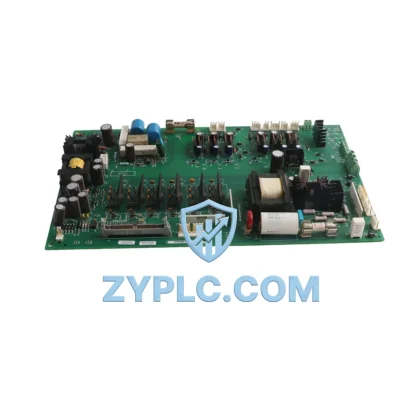
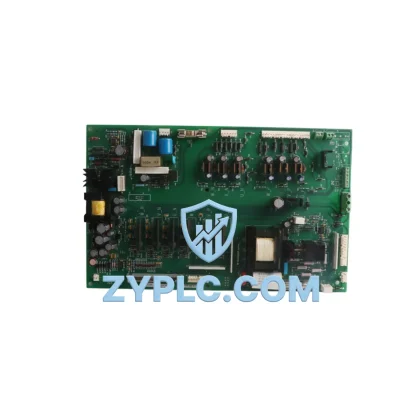
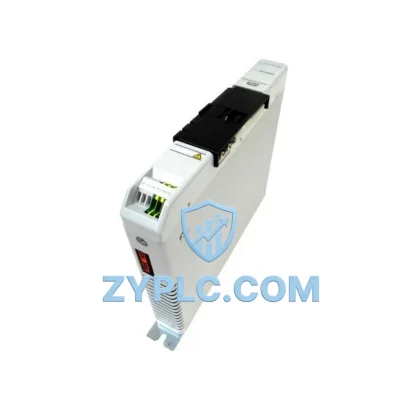
ABB SDCS-CON-2B 3ADT309600R0012 Energy-Saving DC Drive Control Board for Optimized DCS800 Automation
The ABB SDCS-CON-2B (Part No. 3ADT309600R0012) is a high-performance DC drive control board engineered for the ABB DCS800 series of DC drives. Designed to operate at the heart of industrial motor control systems, this board directly governs armature current regulation, speed feedback processing, and firing pulse generation — the three pillars of efficient DC motor operation. In production environments where energy consumption, equipment uptime, and process throughput are tightly linked, the SDCS-CON-2B delivers measurable improvements across all three dimensions.
Unlike generic replacement boards, the SDCS-CON-2B is purpose-built for the DCS800 platform, ensuring seamless compatibility with ABB’s closed-loop torque and speed control architecture. This means factories can maintain precise motor speed under variable load conditions without the energy penalties associated with open-loop or poorly tuned drive systems. When integrated with the DCS800’s onboard adaptive tuning, the control board continuously adjusts firing angles to minimize reactive power draw and reduce harmonic distortion on the supply network — a direct contribution to lower electricity bills and reduced transformer loading.
Efficiency Performance Table
| Parameter |
Specification / Value |
| SKU |
SDCS-CON-2B / 3ADT309600R0012 |
| Compatible Platform |
ABB DCS800 Series DC Drives |
| Control Function |
Armature Current Regulation, Speed Feedback, Firing Pulse Generation |
| Operating Efficiency Contribution |
Optimized firing angle control reduces reactive power and harmonic losses |
| Power Consumption (Board) |
Low-power CMOS logic design; minimal self-consumption |
| Compatible Systems |
DCS800-S01, DCS800-S02, DCS800-EP, DCS800 with SDCS-POW-4 power board |
| Application Environments |
Steel mills, paper machines, extruders, cranes, winders, conveyors |
| Energy Saving Value |
Precise torque control eliminates over-excitation; reduces motor heat losses |
| Origin |
Germany |
| Warranty |
12-Month Warranty — Tested & Verified Before Shipment |
Energy-Aware Automation Architecture
The SDCS-CON-2B does not operate in isolation — its energy optimization value is fully realized when it functions as part of a coordinated automation architecture. In a typical DCS800-based drive system, the control board interfaces directly with the SDCS-POW-4 power board, which handles the thyristor firing circuits. Together, they form the core of a regenerative DC drive capable of returning braking energy to the supply network, a feature particularly valuable in crane and hoist applications where frequent deceleration cycles would otherwise dissipate energy as heat.
On the field bus side, the DCS800 platform supports communication via the RDCO-02 DDCS fiber optic adapter or the RPBA-01 PROFIBUS adapter, enabling the SDCS-CON-2B’s real-time speed and torque data to be transmitted to a supervisory PLC — such as the ABB AC500 PM591 or a Siemens S7-300 CPU 315-2 DP — for plant-level energy management decisions. This integration allows the control system to schedule motor acceleration ramps during off-peak tariff periods and reduce setpoints during low-demand production windows.
For energy monitoring at the drive level, the DCS800 can be paired with the ABB B23 energy meter or the SDCS-AMC-DC measurement card to log real-time kWh consumption per motor axis. This data feeds into MES or SCADA platforms, enabling production managers to correlate energy draw with output tonnage, identify inefficient operating points, and schedule predictive maintenance before motor degradation increases losses. The SDCS-FEX-2 field excitation board, working in tandem with the SDCS-CON-2B, ensures the DC motor field current is held at the optimal level — neither under-excited (risking instability) nor over-excited (wasting energy in the field winding).
In multi-drive installations, the SDCS-CON-2B supports master-follower torque sharing configurations, where a lead drive sets the speed reference and follower drives match torque output proportionally. This eliminates mechanical stress from torque fighting between coupled motors on the same shaft — a common source of both energy waste and premature bearing failure. The SDCS-IOB-3 I/O extension board provides additional analog and digital I/O channels for integrating external sensors, such as load cells or encoder feedback from a SICK DFS60 incremental encoder, further tightening the speed regulation loop and reducing hunting losses.
Power Optimization in Real Production Lines
In a paper mill application, the SDCS-CON-2B governs the main drive of a wire section motor operating at variable speeds depending on paper grade and basis weight. Without precise armature current control, the motor would draw excess current during grade changes, generating heat and increasing specific energy consumption per tonne of paper produced. With the SDCS-CON-2B maintaining tight current loop bandwidth, the drive responds to speed reference changes within milliseconds, eliminating the overshoot that wastes energy and stresses the motor insulation.
In steel rolling mills, where DC drives on roughing and finishing stands must synchronize speed precisely to maintain strip tension, the SDCS-CON-2B’s high-resolution firing pulse generation ensures that each stand accelerates and decelerates in lockstep. Tension deviations that would otherwise cause cobbles — and the associated production losses and restart energy costs — are minimized. The board’s onboard diagnostics also flag current ripple anomalies that indicate thyristor degradation in the SDCS-POW-4, allowing maintenance teams to schedule replacements during planned downtime rather than responding to unplanned failures.
For conveyor and extruder applications, the SDCS-CON-2B enables soft-start and soft-stop profiles that reduce inrush current peaks. These peaks, if uncontrolled, not only stress the supply transformer but also trigger demand charges on industrial electricity tariffs — a hidden energy cost that precise drive control directly eliminates. Facilities that have replaced failed or degraded control boards with tested SDCS-CON-2B units consistently report a return to baseline energy consumption within the first production shift, confirming that board-level degradation is a significant but often overlooked source of drive inefficiency.
Every SDCS-CON-2B unit supplied by ZYPLC undergoes a full functional test on a live DCS800 test rig prior to shipment, verifying firing pulse symmetry, current regulator response, and communication interface integrity. This pre-shipment testing protocol ensures that the board performs to ABB specification from the moment it is installed, eliminating the commissioning delays and energy waste associated with installing untested or poorly refurbished components. All units are covered by a 12-month warranty, with stock available for same-week dispatch to minimize production downtime.
Energy Optimization FAQ
Q1: How does the SDCS-CON-2B improve energy efficiency compared to a degraded or faulty control board?
A degraded SDCS-CON-2B typically exhibits asymmetric firing pulses, which increase current ripple in the motor armature. This ripple raises copper losses (I²R heating) and reduces the effective torque per ampere, forcing the drive to draw more current to maintain the same output — directly increasing energy consumption. A new or tested replacement board restores symmetric firing and tight current regulation, returning the drive to its rated efficiency.
Q2: Is the SDCS-CON-2B compatible with all DCS800 variants?
The SDCS-CON-2B (3ADT309600R0012) is compatible with the DCS800-S01 and DCS800-S02 converter families, as well as DCS800-EP enclosed drive packages. It interfaces with the SDCS-POW-4 power board and supports the full range of DCS800 option boards including RDCO-02, RPBA-01, and SDCS-FEX-2. Always verify the firmware revision of the AMC board in your specific drive before installation.
Q3: What is the recommended replacement procedure to minimize production downtime?
ZYPLC recommends having a tested spare SDCS-CON-2B on-site as part of a critical spares inventory. When replacement is required, record all drive parameters using the DCS800 parameter backup function via the DriveWindow Light tool before powering down. After board swap, restore parameters and verify current regulator auto-tuning before returning the drive to production. Total replacement time for a trained technician is typically under two hours.
Q4: What does the 12-month warranty cover, and what is the testing process?
All SDCS-CON-2B units supplied by ZYPLC are tested on a live DCS800 drive platform, verifying firing pulse generation, current loop response, digital I/O functionality, and serial communication. The 12-month warranty covers component failure under normal operating conditions and includes technical support for installation and commissioning queries. Units showing infant mortality within the first 30 days are eligible for priority replacement.
© 2026 ZYPLC. All rights reserved.
Original Source: https://zyplc.com
Contact: +86 19859288691 | plc.sales@zyplc.com