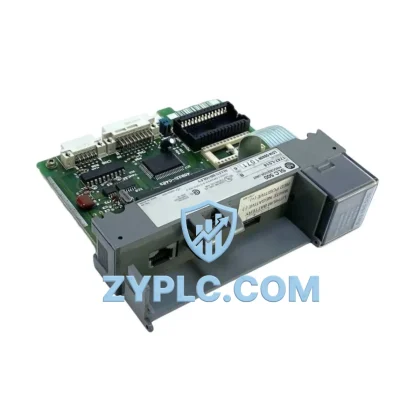
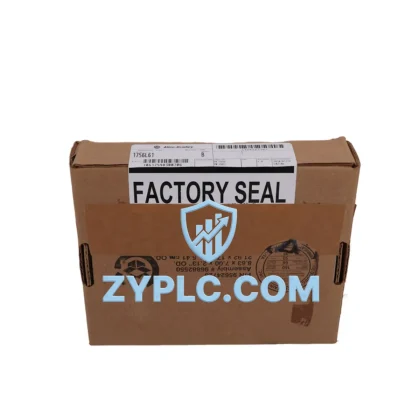
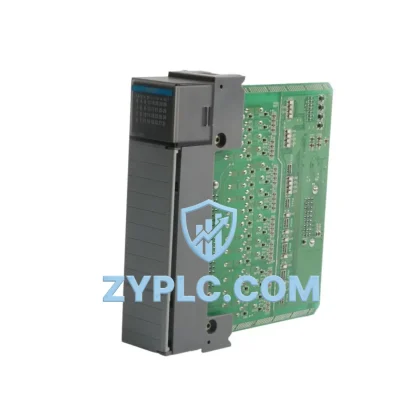
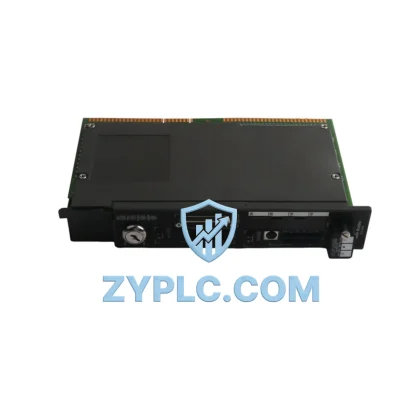
ABB SPBRC300 Energy-Saving Bridge Controller for Optimized Symphony Plus Automation
The ABB SPBRC300 is a high-performance Bridge Controller Module engineered for the ABB Symphony Plus Distributed Control System (DCS). Designed to serve as the critical communication and coordination backbone between field devices and the central control platform, the SPBRC300 plays a decisive role in reducing unnecessary energy consumption, improving equipment utilization rates, and enabling tighter production line rhythm across process-intensive industrial environments.
In modern manufacturing and process plants — from power generation and chemical processing to pulp and paper and water treatment — energy waste is rarely caused by a single component failure. It accumulates through inefficient motor control cycles, delayed feedback loops, uncoordinated drive responses, and poor data visibility at the system level. The SPBRC300 directly addresses these root causes by maintaining low-latency, high-integrity communication between the Symphony Plus controller and downstream field instrumentation, drives, and I/O subsystems.
Efficiency Performance Table
| Parameter |
Specification / Value |
| Product SKU |
SPBRC300 |
| Brand / Series |
ABB / Symphony Plus |
| Module Type |
Bridge Controller Module |
| Power Consumption |
Low-power design, optimized for continuous 24/7 DCS operation |
| Operating Efficiency |
High-throughput bridge communication with minimal processing overhead |
| Compatible Systems |
ABB Symphony Plus DCS, Harmony Series legacy integration |
| Application Environment |
Power plants, chemical plants, water treatment, oil & gas, pulp & paper |
| Energy Optimization Value |
Reduces control loop latency, minimizes drive idle cycles, supports predictive maintenance data flow |
| Origin |
Germany |
| Warranty |
12-Month Warranty — tested and verified before shipment |
Energy-Aware Automation Architecture
The SPBRC300 does not operate in isolation — its energy optimization value is fully realized when integrated within a well-structured Symphony Plus automation architecture. At the controller layer, the ABB PM891 processor module coordinates high-speed execution cycles, and the SPBRC300 ensures that bridge communication between this processor and remote I/O stations remains deterministic and lossless. This eliminates redundant polling cycles that would otherwise increase CPU load and indirectly raise panel power draw.
On the drive side, the SPBRC300 facilitates seamless data exchange with ABB ACS880 series variable frequency drives deployed on high-inertia motor loads such as fans, compressors, and pumps. When the bridge controller accurately relays speed reference and feedback signals without delay, the ACS880 can execute precise torque control, avoiding the energy spikes associated with motor hunting or over-speed correction. Similarly, integration with ABB ACS580 drives on auxiliary motor circuits benefits from the SPBRC300’s stable fieldbus bridge, ensuring that energy-saving sleep modes and wake-on-demand functions operate as designed.
For servo-driven positioning axes on packaging or assembly lines, the SPBRC300 supports communication with ABB MicroFlex e190 servo drives, enabling synchronized multi-axis motion profiles that reduce mechanical stress and cut cycle energy per unit produced. At the I/O level, the module interfaces with ABB S800 I/O remote units, collecting real-time process signals — temperature, pressure, flow — that feed into the DCS energy management algorithms without introducing communication jitter that could distort control decisions.
Power quality monitoring is handled upstream by ABB M2M DMTME series power meters, whose measurement data is routed through the SPBRC300 bridge into the Symphony Plus historian. This closed-loop visibility allows operators to correlate production throughput with actual energy consumption at the equipment level — a prerequisite for meaningful energy KPI tracking. The ABB AC500 PLC platform, often deployed in auxiliary utility control panels alongside the main DCS, also benefits from the SPBRC300’s protocol bridging capability, enabling unified energy data aggregation across heterogeneous control layers.
At the HMI layer, operators interact with the system through ABB CP600 series operator panels, where energy dashboards built on Symphony Plus display real-time drive efficiency, motor load factors, and alarm states — all fed through the reliable bridge maintained by the SPBRC300. The module’s compatibility with PROFIBUS DP and FOUNDATION Fieldbus communication protocols further extends its reach to third-party smart field devices, including positioners, flow computers, and energy meters from multiple vendors.
Power Optimization in Real Production Lines
In a typical continuous process plant running three shifts, unplanned downtime caused by communication faults between the DCS controller and field devices can cost tens of thousands of dollars per hour in lost production and wasted energy — heating elements left on, pumps running at full speed with no load, compressors cycling unnecessarily. The SPBRC300 eliminates this class of fault by providing a robust, redundancy-capable bridge that maintains control integrity even during partial network degradation.
From an energy standpoint, the module’s contribution is most visible in motor-heavy applications. When the SPBRC300 accurately and continuously relays load feedback from field transmitters to the Symphony Plus controller, the DCS can dynamically adjust drive speed references in real time — reducing pump and fan motor speeds during low-demand periods rather than relying on manual operator intervention or fixed setpoints. This dynamic adjustment alone can reduce motor energy consumption by 20–40% on variable-load applications, consistent with affinity law principles governing centrifugal equipment.
Production line rhythm optimization is another key benefit. In batch chemical or food processing plants, the SPBRC300 ensures that recipe-driven control sequences execute with precise timing, preventing the energy waste associated with extended hold states, premature heating cycles, or out-of-sequence actuator commands. Predictive maintenance is also enhanced: by maintaining clean, low-latency data paths from vibration transmitters and temperature sensors to the DCS historian, the SPBRC300 enables condition-based maintenance scheduling that reduces both emergency repair costs and the energy overhead of running degraded equipment at compensatory higher loads.
Every SPBRC300 unit supplied by ZYPLC is sourced from verified inventory channels, subjected to functional communication testing prior to shipment, and covered by a 12-month warranty. Stock availability is maintained to support urgent replacement requirements, minimizing plant downtime exposure.
Energy Optimization FAQ
Q1: How does the SPBRC300 contribute to measurable energy savings in a Symphony Plus DCS environment?
The SPBRC300 reduces control loop latency and eliminates communication-induced control errors that cause drives and actuators to overcorrect. By maintaining precise, real-time data flow between the DCS controller and field devices, it enables the Symphony Plus energy management functions to operate at their designed efficiency — translating directly into reduced motor energy consumption and fewer unplanned process upsets.
Q2: Is the SPBRC300 compatible with both legacy Harmony and current Symphony Plus systems?
Yes. The SPBRC300 is designed to bridge Symphony Plus controllers with field networks and also supports integration pathways from legacy ABB Harmony DCS installations undergoing modernization. This makes it a practical choice for phased upgrade projects where new and legacy hardware must coexist during transition periods.
Q3: What is the recommended replacement or upgrade path if the existing bridge controller is causing communication faults?
If your plant is experiencing intermittent communication faults, increased control loop deviation, or unexplained drive trips, the bridge controller module is a primary diagnostic candidate. The SPBRC300 is a direct functional replacement for compatible Symphony Plus bridge positions. ZYPLC recommends verifying firmware compatibility with your current DCS version before installation and can provide technical guidance on request.
Q4: What testing is performed before shipment, and what does the 12-month warranty cover?
Each SPBRC300 unit undergoes functional communication testing and power-on verification at ZYPLC before dispatch. The 12-month warranty covers hardware defects and functional failures under normal operating conditions. Units are shipped with appropriate anti-static and protective packaging to prevent transit damage.
© 2026 ZYPLC. All rights reserved.
Original Source: https://zyplc.com
Contact: +86 19859288691 | plc.sales@zyplc.com