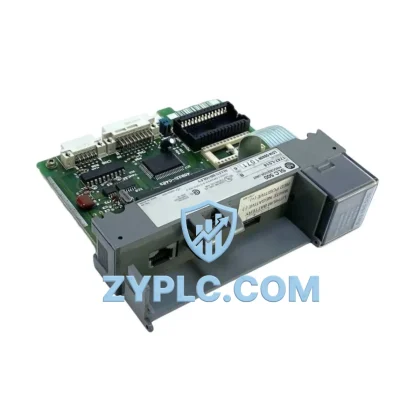
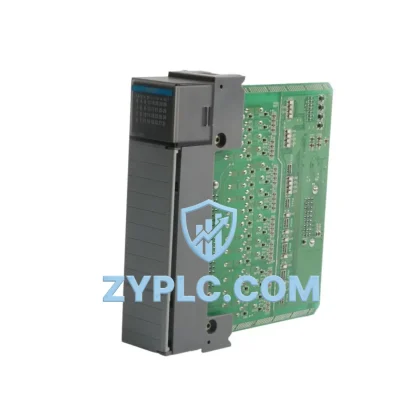
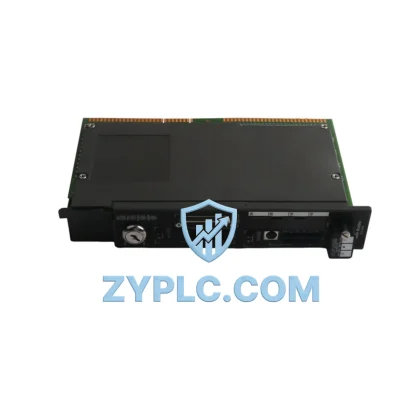
ABB SPBRC410 BRC410 System-Ready DCS Processor for Symphony Plus Architecture
The ABB SPBRC410 BRC410 is a high-performance DCS Control Processor engineered for deployment within the ABB Symphony Plus distributed control system architecture. Rather than functioning as a standalone module, the SPBRC410 BRC410 is designed to operate as the central processing node within a layered automation hierarchy — coordinating signal acquisition, logic execution, and inter-subsystem communication across the full control stack. In complex industrial environments where system consistency, deterministic response, and long-term maintainability are non-negotiable, the SPBRC410 BRC410 delivers the architectural backbone that keeps operations running without interruption.
Understanding the SPBRC410 BRC410 requires viewing it through the lens of the complete Symphony Plus control platform. This processor does not work in isolation — it is the orchestration layer that binds together I/O modules, communication gateways, power supply units, human-machine interfaces, and field-level actuators into a coherent, responsive, and fault-tolerant system. Its role in the control architecture spans from real-time process data handling at the field level to structured data exchange with supervisory SCADA and DCS operator stations at the management level.
Architecture Specification Table
| Parameter |
Specification |
| Model |
SPBRC410 / BRC410 |
| Full Part Number |
SPBRC41000000 |
| Brand |
ABB |
| Series |
Symphony Plus |
| System Role |
DCS Control Processor / Batch & Regulatory Controller |
| Architecture Layer |
Control Layer (Level 1 / Level 2) |
| Communication Protocols |
INFI-NET, Ethernet (TCP/IP), Modbus (inferred by platform) |
| Redundancy Support |
Hot-standby redundant controller configuration supported |
| I/O Compatibility |
Compatible with Symphony Plus I/O modules via system backplane |
| Power Supply Compatibility |
Symphony Plus rack-mounted power supply modules |
| Mounting |
DIN rail / rack-mount within Symphony Plus controller enclosure |
| Operating Temperature |
0°C to 60°C (typical industrial DCS range) |
| Country of Origin |
Germany |
| Warranty |
12-Month Warranty |
| Availability |
In Stock — Ready to Ship |
Coordinated Control System Design
The SPBRC410 BRC410 achieves its full potential when integrated within a complete Symphony Plus control cabinet. At the control layer, it works in tandem with redundant processor modules — where a secondary SPBRC410 unit can be configured in hot-standby mode, ensuring zero-downtime failover in the event of a primary processor fault. This redundancy architecture is critical in continuous process industries such as power generation, petrochemicals, and water treatment, where even a momentary control interruption can result in significant production loss or safety incidents.
At the I/O layer, the SPBRC410 BRC410 interfaces directly with Symphony Plus analog input modules (such as the SPAI110 or SPAI120 series), digital input/output modules (SPDO110, SPDI110), and specialty signal conditioning modules. These I/O modules connect to field instruments — transmitters, flow meters, pressure sensors, and temperature elements — and relay real-time process values to the SPBRC410 for logic execution and PID control loop management.
At the network layer, the processor communicates upstream via the INFI-NET control network or Ethernet backbone to Symphony Plus operator workstations and engineering stations. Communication gateways such as the SPNIS01 or equivalent network interface modules bridge the controller network to plant-wide SCADA systems, historian servers, and MES platforms, enabling Contextual Integration of process data across the enterprise. This seamless data flow supports real-time monitoring, alarm management, and production reporting without requiring manual data extraction.
The power layer is equally critical to system reliability. Symphony Plus power supply modules — typically dual-redundant configurations — provide stable, conditioned DC power to the SPBRC410 and all associated I/O modules within the rack. Power supply redundancy ensures that a single PSU failure does not interrupt controller operation, a requirement in SIL-rated and high-availability process control applications.
At the human-machine interface layer, ABB Symphony Plus operator stations and engineering workstations running the Symphony Plus Operations (SPO) software suite connect to the SPBRC410 via the control network. Operators can monitor live process variables, acknowledge alarms, and execute manual overrides directly from the HMI, while engineers use the Symphony Plus Engineering (SPE) environment to configure control strategies, tune PID loops, and manage module firmware. Terminal blocks and marshalling panels complete the field wiring interface, ensuring clean signal segregation between the controller rack and field junction boxes.
Application in Layered Automation Systems
The SPBRC410 BRC410 is deployed across a wide range of industrial sectors where process reliability and system scalability are paramount. In power generation facilities — including coal-fired, gas turbine, and combined-cycle plants — the processor manages boiler combustion control, turbine speed regulation, and auxiliary system interlocks. Its deterministic scan cycle and redundant architecture make it suitable for both regulatory control and sequence-of-events (SOE) applications.
In petrochemical and refinery environments, the SPBRC410 handles continuous process control for distillation columns, heat exchangers, and reactor systems. Its ability to manage large numbers of PID loops simultaneously, combined with its integration into the Symphony Plus alarm management framework, reduces operator workload and improves process stability during feedstock transitions and load changes.
In water and wastewater treatment plants, the processor coordinates pump sequencing, chemical dosing control, and filtration system management. Its modular I/O architecture allows plant engineers to expand the control system incrementally as treatment capacity grows, without replacing the core controller infrastructure. This scalability significantly reduces capital expenditure for plant expansions.
In mining and metallurgical operations, the SPBRC410 BRC410 manages conveyor systems, crusher controls, flotation cell regulation, and smelter process loops. The harsh operating environment of mining facilities — characterized by high vibration, dust ingress, and wide temperature swings — demands the robust construction and proven reliability that the Symphony Plus platform delivers.
In packaging and discrete manufacturing production lines, the processor integrates with servo drives, variable frequency drives (VFDs), and vision inspection systems via the Symphony Plus communication infrastructure, enabling coordinated motion control and quality assurance within a unified DCS framework. This eliminates the need for separate PLC islands and reduces the complexity of inter-system communication.
Architecture Engineering FAQ
Q1: Is the SPBRC410 BRC410 compatible with existing Symphony Plus I/O modules and backplanes already installed in my facility?
Yes. The SPBRC410 BRC410 is designed for direct compatibility with the Symphony Plus modular rack and backplane system. It supports the full range of Symphony Plus I/O modules, including analog input/output, digital input/output, and specialty signal modules, without requiring hardware modifications to existing rack assemblies. Before installation, verify firmware revision compatibility between the SPBRC410 and your existing I/O modules using the ABB Symphony Plus compatibility matrix. Our engineering team can assist with pre-installation compatibility verification as part of the 12-Month Warranty support package.
Q2: Can the SPBRC410 BRC410 be configured in a redundant controller architecture, and what is required for hot-standby failover?
Yes. The SPBRC410 BRC410 supports hot-standby redundancy when paired with a second SPBRC410 unit and the appropriate redundancy communication cable or backplane interconnect. In a redundant configuration, the standby processor continuously mirrors the primary controller’s memory and I/O states, enabling bumpless transfer in the event of a primary processor fault. Failover time is typically sub-second, meeting the requirements of most continuous process control applications. Redundant power supply modules and dual-path network connections are recommended to complete a fully fault-tolerant architecture. All redundancy configuration and commissioning support is covered under the 12-Month Warranty.
Q3: What long-term maintenance and spare parts strategy is recommended for facilities running the SPBRC410 BRC410 in critical process control applications?
For facilities operating the SPBRC410 BRC410 in critical applications, we recommend maintaining at least one spare processor module in inventory at all times, given the extended lead times that can affect legacy DCS components during supply chain disruptions. The SPBRC410 BRC410 supplied through ZYPLC comes with a 12-Month Warranty covering manufacturing defects and functional failures under normal operating conditions. Our team provides pre-shipment functional testing, configuration backup support, and post-installation technical assistance to minimize commissioning risk. For multi-site operations, consolidated spare parts agreements can be arranged to optimize inventory costs while ensuring rapid response capability across all facilities.
© 2026 ZYPLC. All rights reserved.
Original Source: https://zyplc.com
Contact: +86 19859288691 | plc.sales@zyplc.com