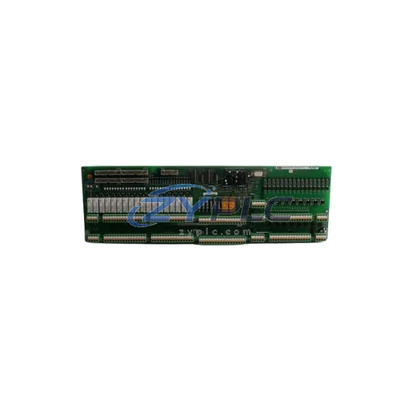
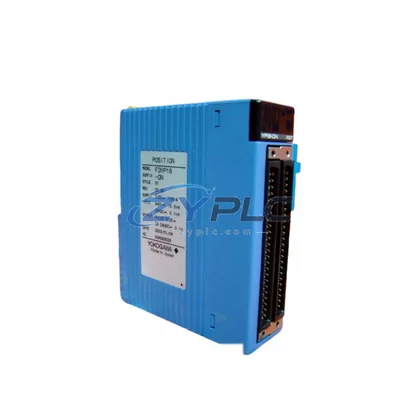
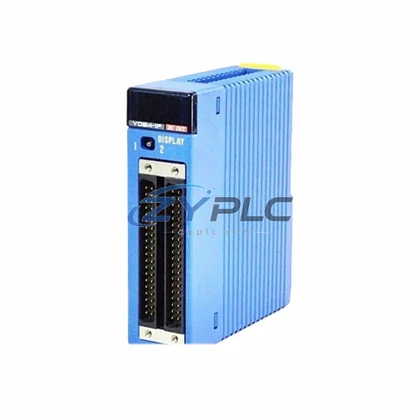
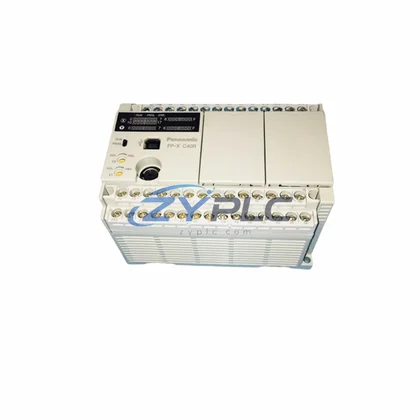
The ABB SPSDI14 is a digital input module purpose-built for integration within the ABB SPS Series programmable logic controller platform. Rather than functioning as a standalone component, the SPSDI14 is designed to operate as a coherent element within a multi-layer industrial control architecture — connecting field-level signals from sensors, limit switches, and proximity detectors directly into the SPS CPU’s data acquisition layer. Its role spans the I/O layer and signal conditioning tier, ensuring that upstream control decisions made by the CPU module are grounded in accurate, low-latency digital input data.
In a complete SPS Series control system, the SPSDI14 is typically mounted on the SPS backplane rack alongside companion modules such as the SPSDO16 digital output module, SPSAI08 analog input module, and SPSAO04 analog output module. The CPU module — for example the SPSCPU31 or SPSCPU32 — coordinates all I/O scanning cycles, and the SPSDI14 participates in this cycle with deterministic response times suited to high-speed discrete manufacturing processes. The backplane bus ensures that all modules share a unified power and communication backbone, reducing wiring complexity and improving signal integrity across the entire rack assembly.
From a system architecture perspective, the SPSDI14 contributes to both horizontal scalability and vertical integration. Horizontally, additional SPSDI14 modules can be added to the same rack or expansion racks to increase the total digital input channel count without requiring changes to the CPU configuration — a critical advantage in phased plant expansions. Vertically, the module’s data feeds directly into the SCADA layer via the SPS communication gateway modules, such as the SPSGW01 Modbus TCP gateway or the SPSGW02 PROFINET interface module, enabling real-time monitoring and historian logging at the supervisory level.
Power architecture compatibility is another key consideration. The SPSDI14 draws its operating voltage from the SPS Series power supply module — typically the SPSPS24 24VDC regulated power supply — which provides stable, filtered DC power to all rack-mounted modules. This centralized power distribution eliminates the need for individual module power wiring and supports the overall panel design philosophy of minimizing field wiring terminations inside the control cabinet.
For human-machine interface integration, the SPSDI14’s input states are mapped directly to the HMI tag database through the SPS CPU’s communication stack. Operators monitoring the system via an ABB CP600 series HMI panel or a third-party SCADA workstation can view real-time input status, alarm conditions, and diagnostic flags associated with each SPSDI14 channel. This transparency supports rapid fault diagnosis and reduces mean time to repair during unplanned downtime events.
Redundancy design is supported at the system level. In high-availability applications — such as power generation, water treatment, or continuous chemical processing — the SPSDI14 can be deployed in redundant I/O configurations where dual modules monitor the same field signals, with the CPU arbitrating between inputs to detect discrepancies and trigger failover logic. This architecture ensures that a single module failure does not result in loss of process visibility or control.
Long-term maintenance efficiency is a defining characteristic of the SPSDI14’s design. Its plug-in terminal block connectors allow field wiring to remain in place during module replacement, reducing maintenance time and eliminating the risk of wiring errors during hot-swap procedures. Combined with the module’s onboard LED diagnostics — which indicate channel-by-channel input status and fault conditions — maintenance engineers can isolate faults at the module level without requiring specialized diagnostic tools.
All SPSDI14 modules supplied by ZYPLC are covered by a warranty terms confirmed during quotation, ensuring that your control system investment is protected against manufacturing defects and premature failure. Our inventory is sourced from verified supply channels, and each unit undergoes functional verification prior to dispatch. Global shipping is available with lead times optimized for urgent MRO and project procurement requirements.
Product Specification Table
| Parameter |
Specification |
| System Role |
Digital Input Module — I/O Layer, SPS Series PLC Architecture |
| Compatible Platform |
ABB SPS Series PLC (SPSCPU31, SPSCPU32) |
| Input Channel Count |
14 Digital Input Channels |
| Input Signal Type |
24VDC Discrete Digital Inputs (IEC 61131-2 Type 1/3) |
| Input Voltage Range |
20.4 – 28.8 VDC |
| Response Time |
≤ 1 ms (configurable filter settings) |
| Communication Interface |
SPS Backplane Bus (internal rack communication) |
| Isolation |
Optical isolation between field and logic circuits |
| Operating Temperature |
0°C to +55°C |
| Mounting |
SPS Series Backplane Rack (DIN rail compatible) |
| Protection Rating |
IP20 |
| Power Consumption |
Supplied via SPS backplane (no external power required) |
| system integration |
Full system integration with SPS CPU and SCADA gateway modules |
| Warranty |
warranty terms confirmed during quotation (ZYPLC verified supply) |
| Country of Origin |
Germany |
System Compatibility Notes
The SPSDI14 achieves its full potential when deployed as part of a coordinated SPS Series control system. A typical architecture integrating this module includes the following components working in concert:
At the CPU layer, the SPSCPU31 or SPSCPU32 processor module manages the I/O scan cycle, executing ladder logic or function block programs that reference SPSDI14 input tags directly. The CPU communicates with all rack modules via the high-speed SPS backplane bus, ensuring deterministic scan times even as the I/O count scales upward.
At the power layer, the SPSPS24 24VDC power supply module provides regulated, filtered power to the entire rack assembly, including the SPSDI14. Redundant power supply configurations using dual SPSPS24 units with automatic switchover are supported for critical applications.
At the I/O layer, the SPSDI14 works alongside the SPSDO16 digital output module — which drives actuators, solenoids, and relay coils — and the SPSAI08 analog input module, which handles 4–20mA and 0–10V process signals from transmitters and transducers. The SPSAO04 analog output module completes the analog I/O complement for PID control loops and variable-speed drive setpoint commands.
At the network layer, the SPSGW01 Modbus TCP gateway and SPSGW02 PROFINET interface module bridge the SPS rack to plant-wide Ethernet networks, enabling the SPSDI14’s input data to be consumed by SCADA systems, MES platforms, and remote monitoring dashboards without additional protocol conversion hardware.
At the HMI layer, ABB CP600 series operator panels provide local visualization of SPSDI14 input states, alarm annunciation, and system diagnostics, giving operators immediate situational awareness at the machine or panel level.
At the terminal and wiring layer, Phoenix Contact or Weidmüller DIN rail terminal blocks are commonly used alongside the SPSDI14 to organize field wiring, provide surge protection, and facilitate clean, maintainable panel layouts that comply with IEC 60204-1 machine safety wiring standards.
Industrial Application Notes
The ABB SPSDI14 is deployed across a wide range of industrial sectors where reliable digital signal acquisition is fundamental to process safety and operational continuity.
In discrete manufacturing environments — including automotive assembly, electronics production, and packaging lines — the SPSDI14 captures signals from photoelectric sensors, inductive proximity switches, and mechanical limit switches that define machine state transitions. Its fast response time ensures that high-speed conveyor and pick-and-place systems operate with the timing precision required for quality-consistent production.
In power generation and electrical distribution applications, the SPSDI14 monitors breaker status, relay contact positions, and interlock signals within switchgear panels and substation automation systems. Its optical isolation protects the SPS CPU from high-voltage transients common in electrical environments, maintaining control system integrity during switching events.
In water and wastewater treatment plants, the SPSDI14 acquires run/stop status signals from pump motors, valve position feedback from actuated butterfly and gate valves, and level switch inputs from float and ultrasonic level detectors. These inputs feed the SPS CPU’s process control logic, enabling automated sequencing of treatment stages and alarm generation for out-of-range conditions.
In oil, gas, and petrochemical facilities, the SPSDI14 is integrated into safety instrumented systems (SIS) and basic process control systems (BPCS) where it monitors emergency shutdown (ESD) pushbutton inputs, fire and gas detector contact outputs, and pressure switch signals. Its deterministic response time supports the SIL-rated logic solver requirements of IEC 61511 functional safety standards.
In mining and metallurgical operations, the SPSDI14 handles the high channel density requirements of conveyor belt monitoring systems, crusher interlock circuits, and hoisting equipment safety chains, where dozens of discrete input signals must be processed simultaneously with high reliability in dusty, vibration-prone environments.
Product Compatibility FAQ
Q1: Is the SPSDI14 compatible with both the SPSCPU31 and SPSCPU32 processor modules, and can it be used in expansion racks?
A: Yes. The SPSDI14 is fully compatible with all current SPS Series CPU modules, including the SPSCPU31 and SPSCPU32. It can be installed in the local CPU rack or in remote expansion racks connected via the SPS expansion bus interface. When used in expansion racks, the module’s I/O data is transparently mapped into the CPU’s I/O address space, requiring no special configuration beyond standard rack addressing. This makes the SPSDI14 an ideal choice for distributed control architectures where I/O must be located close to field devices rather than centralized in a main control panel.
Q2: How does the SPSDI14 support system redundancy, and what happens if the module fails during operation?
A: In redundant I/O configurations, two SPSDI14 modules can be configured to monitor the same field input signals simultaneously. The SPS CPU continuously compares the input states from both modules and flags any discrepancy as a diagnostic alarm, allowing maintenance personnel to identify a failing module before it causes a process upset. In the event of a confirmed module failure, the SPSDI14’s plug-in terminal block design allows the defective unit to be replaced without disturbing field wiring, minimizing downtime. ZYPLC’s warranty terms confirmed during quotation covers module replacement costs during the warranty period, and our inventory availability ensures rapid dispatch of replacement units to minimize production impact.
Q3: What commissioning steps are required when adding a new SPSDI14 to an existing SPS system, and how is long-term maintenance managed?
A: Adding a new SPSDI14 to an existing SPS rack requires updating the hardware configuration in the SPS engineering software to include the new module at its rack slot address, followed by a configuration download to the CPU. The engineering software automatically validates the module type against the physical hardware during the download process, flagging any slot address conflicts. For long-term maintenance, ZYPLC recommends maintaining a spare SPSDI14 module in the plant’s MRO inventory to support rapid replacement. Periodic inspection of terminal block connections, LED diagnostic status, and input channel calibration verification — typically performed during scheduled plant shutdowns — ensures sustained module performance over the system’s operational lifecycle. All modules supplied by ZYPLC include a warranty terms confirmed during quotation and are supported by our global technical supply network.