ABB SPTU 240 R1 System-Ready Power Supply for SPTU Architecture: Control System Architecture and Upstream-Downstream Coordination
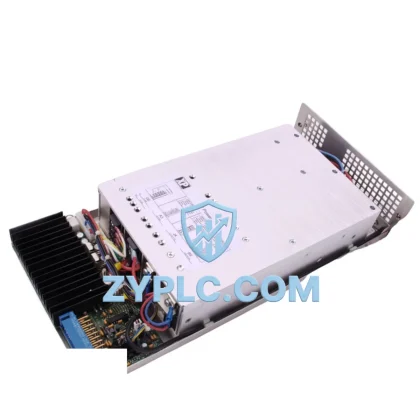
The ABB SPTU 240 R1 is a dedicated power supply module engineered for deployment within ABB’s SPTU series distributed control architecture. Rather than functioning as a standalone component, the SPTU 240 R1 occupies a foundational role in the power layer of a multi-tier automation system — delivering stable, conditioned DC power to CPU modules, I/O expansion racks, communication gateways, and field interface terminals simultaneously. In complex industrial environments where system uptime is non-negotiable, the integrity of the power layer directly determines the reliability of every layer above it: from the control layer executing logic, to the network layer transmitting process data, to the HMI layer presenting operator information, and ultimately to the actuator layer driving field devices.
Within the SPTU series rack architecture, the SPTU 240 R1 is designed to integrate seamlessly with the system backplane, distributing regulated voltage across all installed modules without requiring external power conditioning. This design philosophy reduces wiring complexity, minimizes potential failure points, and ensures that all modules within the rack share a common, stable power reference — a critical requirement for high-speed digital communication between CPU and I/O modules. Engineers specifying systems for continuous process industries such as petrochemical refining, power generation, water treatment, and metallurgical processing will recognize the SPTU 240 R1 as a cornerstone component that enables the entire control cabinet to operate as a unified, coherent system rather than a collection of independently powered devices.
The module’s architecture supports both primary and redundant power configurations. In redundancy-critical applications — such as substation automation, offshore platform control, or pharmaceutical batch processing — the SPTU 240 R1 can be paired with a secondary power supply module to form an active-standby or load-sharing redundant pair. This configuration ensures that a single power supply failure does not interrupt system operation, satisfying the availability requirements of SIL-rated safety systems and high-availability process control loops. The transition between primary and redundant supply is managed at the backplane level, eliminating the need for external switchover relays and reducing the risk of transient voltage disturbances during failover events.
Architecture Specification Table
| Parameter |
Specification |
| Model / SKU |
SPTU 240 R1 (SPTU240R1) |
| Manufacturer |
ABB |
| Product Series |
SPTU Series |
| System Role |
Rack Power Supply Module — Power Layer |
| Module Type |
Power Supply Module |
| Nominal Output |
24 VDC (regulated, backplane-distributed) |
| Input Voltage Range |
85–264 VAC / 100–370 VDC (wide-range AC/DC input) |
| Output Power Rating |
240 W continuous |
| Redundancy Support |
Active-standby and load-sharing redundant pair configurations |
| Communication Capability |
Backplane power bus integration; status signaling to CPU module |
| Mounting / Installation |
SPTU series rack backplane slot; DIN rail compatible enclosure |
| Operating Temperature |
0°C to +55°C (storage: -40°C to +70°C) |
| Protection Class |
IP20 (panel-mount installation) |
| Country of Origin |
Sweden |
| Warranty |
12-Month Warranty (ZYPLC standard) |
Coordinated Control System Design
The SPTU 240 R1 does not operate in isolation — its value is realized through its integration with the broader SPTU series control platform. In a typical system architecture, the power supply module shares the rack backplane with the SPTU CPU module, which executes the control program and manages all I/O communication. The CPU module depends on the SPTU 240 R1 for stable, noise-free DC power; any voltage ripple or transient on the power bus can cause CPU resets, communication errors, or corrupted process data — outcomes that are unacceptable in continuous process environments.
Downstream of the CPU, SPTU series digital input modules and analog input modules receive field signals from sensors, transmitters, and limit switches. These I/O modules are powered through the same backplane bus supplied by the SPTU 240 R1, meaning that the power supply’s output stability directly affects the accuracy of analog signal conditioning and the response time of digital input scanning. Similarly, SPTU digital output modules and analog output modules — which drive solenoid valves, variable frequency drives, and control dampers — require a stable power reference to ensure that output signals accurately reflect the CPU’s commanded values.
At the network layer, SPTU series communication gateway modules — supporting protocols such as PROFIBUS DP, Modbus RTU, and FOUNDATION Fieldbus — are also rack-mounted and backplane-powered. These gateways bridge the SPTU control platform to field device networks, SCADA systems, and plant-level DCS architectures. The SPTU 240 R1 ensures that communication gateways maintain continuous operation even during transient load changes caused by simultaneous I/O scanning and CPU program execution cycles.
For human-machine interface integration, the SPTU control platform typically connects to panel-mounted HMI terminals or SCADA workstations via Ethernet or serial communication links. While the HMI itself is powered independently, the data integrity of the HMI display depends on the stability of the CPU and communication modules — both of which rely on the SPTU 240 R1. In redundant power configurations, a second SPTU 240 R1 unit is installed in an adjacent rack slot, with both units monitored by the CPU module’s power management diagnostics. Engineers can configure alarm thresholds for supply voltage deviation, enabling predictive maintenance before a power supply failure affects system availability.
Terminal modules and marshalling panels connected to the SPTU rack via field wiring termination assemblies also benefit from the power supply’s stable output. Relay output modules within the rack — used for motor starter control, alarm annunciation, and interlock circuits — require consistent coil drive voltage to ensure reliable switching. The SPTU 240 R1’s regulated output eliminates the voltage sag that can occur with unregulated supplies during simultaneous relay energization, preventing nuisance trips and ensuring deterministic relay response times.
Application in Layered Automation Systems
Manufacturing and Discrete Production Lines: In automotive assembly, electronics manufacturing, and packaging machinery, the SPTU 240 R1 powers the control rack that coordinates robot controllers, servo drives, and conveyor systems. The module’s wide-range AC input allows it to operate from both 110 VAC and 220 VAC plant power supplies without hardware modification, simplifying global deployment of standardized machine designs.
Power Generation and Substation Automation: In thermal power plants and hydroelectric facilities, the SPTU 240 R1 is deployed in control cabinets managing turbine governor systems, excitation controllers, and protection relay panels. Its support for redundant power configurations meets the availability requirements of IEC 61850-compliant substation automation systems, where control system downtime can result in grid instability and regulatory penalties.
Petrochemical and Refinery Process Control: In continuous process plants operating under ATEX or IECEx hazardous area classifications, the SPTU 240 R1 powers control racks installed in safe-area marshalling rooms, with field signals routed through intrinsically safe barriers or galvanic isolators. The module’s stable output voltage ensures that barrier circuits maintain their intrinsic safety parameters throughout the operating temperature range.
Water and Wastewater Treatment: Municipal water treatment facilities rely on the SPTU 240 R1 to power control systems managing pump stations, chemical dosing systems, and filtration processes. The module’s diagnostic output — reporting supply status to the CPU — enables remote monitoring of power supply health via SCADA, allowing maintenance teams to schedule preventive replacement before failure occurs.
Mining and Metallurgical Processing: In ore processing plants and smelting facilities, where electrical noise from large motor drives and arc furnaces can corrupt control signals, the SPTU 240 R1’s regulated and filtered output provides a clean power reference that isolates the control rack from plant-level electrical disturbances. This noise immunity is essential for maintaining accurate analog signal processing in weighing systems, flow measurement, and temperature control loops.
Architecture Engineering FAQ
Q1: Is the SPTU 240 R1 compatible with all SPTU series rack configurations, and can it be retrofitted into existing installations?
The SPTU 240 R1 is designed for the standard SPTU series rack backplane and is compatible with all SPTU rack sizes. Retrofitting into an existing installation requires only that the rack has an available power supply slot and that the total module load does not exceed the 240 W output rating. Before retrofitting, engineers should calculate the aggregate current draw of all installed modules — including CPU, I/O, and communication modules — to confirm that the SPTU 240 R1’s output capacity is sufficient. If the existing installation uses an earlier-generation power supply, the SPTU 240 R1 is a direct form-fit-function replacement, requiring no changes to backplane wiring or module configuration.
Q2: How does the redundant power supply configuration work, and what happens during a failover event?
In a redundant configuration, two SPTU 240 R1 units are installed in adjacent power supply slots on the same rack backplane. Both units operate simultaneously in load-sharing mode, each supplying approximately half of the total rack load. If one unit fails, the surviving unit automatically assumes the full load without interruption to the control system. The CPU module’s power management diagnostics detect the failure within one scan cycle and generate a system alarm, alerting operators to schedule replacement of the failed unit. Because the failover is managed at the backplane level, there is no external switchover relay or manual intervention required. The 12-Month Warranty covers both units in a redundant pair, ensuring that replacement costs are predictable during the warranty period.
Q3: What long-term maintenance considerations apply to the SPTU 240 R1, and how does the 12-Month Warranty support lifecycle management?
Power supply modules are subject to component aging — particularly electrolytic capacitors, which degrade over time due to thermal cycling and ripple current stress. ABB recommends periodic inspection of the SPTU 240 R1’s output voltage and ripple levels as part of a preventive maintenance program, typically at 12-month intervals aligned with planned plant shutdowns. The ZYPLC 12-Month Warranty covers manufacturing defects and premature component failures identified during this period, providing a cost-effective safety net for the first year of operation. For long-term lifecycle management, maintaining a spare SPTU 240 R1 unit in the plant’s critical spares inventory is strongly recommended, particularly for installations where the control system operates continuously without scheduled downtime windows. ZYPLC maintains stock of the SPTU 240 R1 to support both immediate replacement needs and planned spare parts procurement programs.
© 2026 ZYPLC. All rights reserved.
Original Source: https://zyplc.com
Contact: +86 19859288691 | [email protected]