ABB TB100 System-Ready Terminal Board for AC500 Architecture: Control System Coordination and I/O Layer Integration
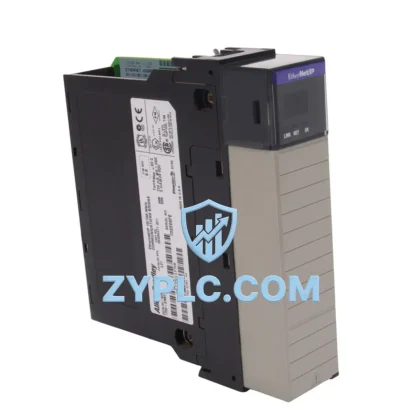
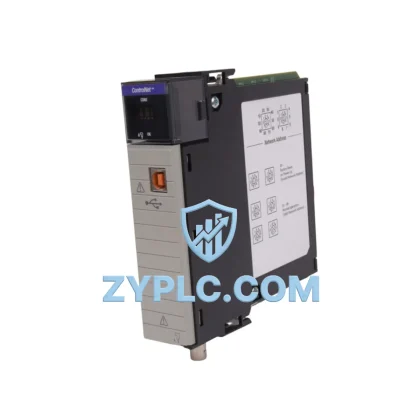
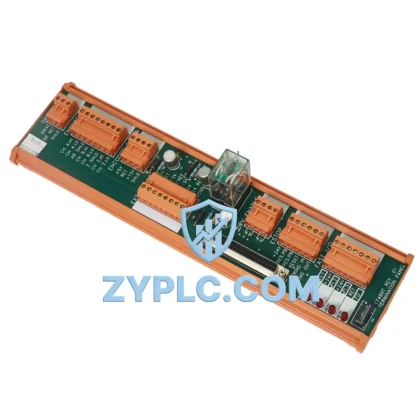
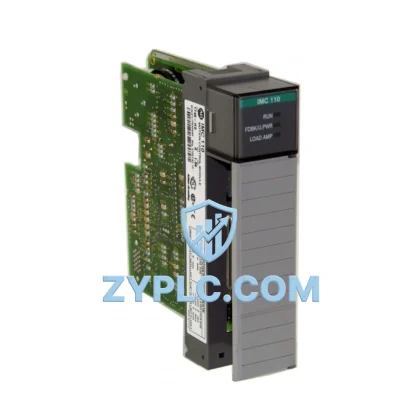
The ABB TB100 Terminal Board Module is a precision-engineered wiring interface component designed for deployment within the ABB AC500 programmable logic controller platform. Rather than functioning as a standalone device, the TB100 occupies a critical position within the layered architecture of modern industrial control systems — serving as the physical and electrical bridge between field-level signals and the AC500’s modular I/O subsystem. Understanding its role requires examining the full control hierarchy in which it operates, from the CPU layer down through I/O expansion, communication gateways, power distribution, and field device connectivity.
In a typical AC500-based control architecture, the system begins with a central processing unit such as the PM554, PM564, or PM595 CPU module, which handles program execution, data processing, and communication management. These CPUs are mounted on a dedicated backplane or terminal unit, and the entire I/O architecture expands outward through a series of terminal units and I/O modules. The TB100 is specifically designed to interface with this expansion structure, providing the screw-terminal wiring points that connect field cables — carrying analog signals, digital inputs, or output commands — to the corresponding I/O modules such as the AI523 analog input module, AO523 analog output module, DI524 digital input module, or DO526 digital output module.
This architecture-first approach to wiring is what distinguishes the AC500 platform from legacy systems. Rather than hardwiring directly to module pins, engineers route all field connections through terminal board modules like the TB100, which are mounted on terminal units such as the TU515 or TU516. This separation of the wiring layer from the electronics layer means that I/O modules can be replaced, upgraded, or swapped during maintenance without disturbing a single field cable. The TB100 absorbs all mechanical stress from cable connections, protecting the sensitive electronics of the I/O module above it. This design philosophy directly supports long-term maintenance efficiency and reduces unplanned downtime in demanding industrial environments.
From a system architecture perspective, the TB100 contributes to Contextual Integration — the ability of each component to function predictably within the broader control context. When a process signal enters the system through the TB100’s terminals, it passes through a defined, validated signal path into the I/O module, through the backplane bus, and ultimately to the CPU for processing. This signal integrity is essential in applications such as power generation, water treatment, chemical processing, and discrete manufacturing, where signal noise or wiring errors can trigger false alarms, process shutdowns, or equipment damage.
The TB100 also plays a role in system redundancy planning. In high-availability AC500 configurations — particularly those using the AC500-S Safety PLC or redundant CPU architectures — the terminal board layer must be carefully specified to ensure that redundant I/O paths remain electrically isolated and independently maintainable. Engineers designing redundant control loops for critical processes such as turbine control, compressor management, or reactor monitoring rely on the consistent terminal layout of the TB100 to maintain wiring discipline across both primary and backup I/O channels.
Communication stability across the AC500 platform is managed at the CPU and gateway level, with modules such as the CM579 PROFIBUS DP master module or the CD522 CANopen communication module handling fieldbus connectivity. The TB100 supports this communication architecture indirectly by ensuring that the I/O signals feeding into these communication layers are clean, correctly terminated, and mechanically secure. A loose or incorrectly wired terminal at the TB100 level can introduce signal errors that propagate upward through the communication stack, causing intermittent faults that are difficult to diagnose without systematic signal tracing.
Power distribution within the AC500 cabinet is typically managed by the PS501 or PS502 power supply modules, which provide regulated 24 VDC to the CPU, I/O modules, and communication interfaces. The TB100 itself does not require a separate power connection — it is a passive wiring interface — but its correct installation is essential for maintaining the overall power integrity of the I/O layer. Improper grounding or shielding at the terminal board level can introduce ground loops or EMI that affect the performance of nearby analog I/O modules, particularly in environments with variable-frequency drives, large motors, or high-voltage switching equipment.
For human-machine interface integration, the AC500 platform communicates with HMI panels via Ethernet or serial protocols managed at the CPU level. The DA501 data adapter or CP600 series HMI panels are commonly deployed alongside AC500 CPUs in process visualization applications. The accuracy of the data displayed on these HMI screens depends entirely on the integrity of the signal chain that begins at the TB100 terminal connections. Operators monitoring process variables such as temperature, pressure, flow rate, or valve position are ultimately relying on the correct wiring and mechanical integrity of terminal board modules throughout the system.
Architecture Specification Table
| Parameter |
Specification |
| System Role |
I/O Layer Wiring Interface — AC500 Terminal Unit System |
| Compatible Platform |
ABB AC500 PLC Series (V2 and V3) |
| Compatible Terminal Units |
TU515, TU516, TU531, TU532 |
| Terminal Type |
Screw-type field wiring terminals |
| Signal Types Supported |
Digital Input, Digital Output, Analog Input, Analog Output |
| Electrical Rating |
Per AC500 I/O module specification (typically 24 VDC field signals) |
| Installation Method |
DIN rail mounted via terminal unit |
| Operating Temperature |
-25°C to +70°C |
| Protection Class |
IP20 (cabinet installation) |
| Country of Origin |
Germany |
| Warranty |
12-Month Warranty — covers manufacturing defects and functional failure under normal operating conditions |
Coordinated Control System Design
The TB100 is most effectively specified as part of a coordinated bill of materials for an AC500 control panel build. A complete I/O station typically includes the TB100 terminal board, a compatible terminal unit (TU515 for standard applications or TU516 for high-density configurations), and the appropriate I/O module — such as the DI524 for 24-channel digital input or the AI523 for 8-channel analog input with configurable signal ranges. These three components form a self-contained I/O node that can be replicated across the backplane to build scalable I/O capacity.
At the CPU level, the PM564 or PM595 provides the processing backbone, with onboard Ethernet ports supporting MODBUS TCP and EtherNet/IP communication to supervisory systems. The CM579 PROFIBUS DP master module extends the communication reach to legacy field devices, while the CD522 CANopen module supports motion control and drive integration. The DO526 digital output module, paired with a TB100 terminal board, drives relay outputs, solenoid valves, and motor starters in the field. For analog control loops, the AO523 output module — again interfaced through a TB100 — provides 4–20 mA or 0–10 V signals to control valves, variable-frequency drives, and positioners.
This modular, terminal-board-based architecture allows engineering teams to pre-wire and test I/O panels in the workshop before site installation, significantly reducing commissioning time and the risk of wiring errors in the field.
Application in Layered Automation Systems
The ABB TB100 is deployed across a wide range of industrial sectors where the AC500 platform is the control standard. In power generation and utilities, AC500-based control systems manage turbine auxiliaries, cooling water systems, and electrical switchgear, with TB100 terminal boards providing the wiring interface for hundreds of discrete and analog I/O points. In water and wastewater treatment, the TB100 supports the I/O layer of pump station controllers, dosing systems, and SCADA-connected RTUs operating in remote, unmanned environments where long-term wiring reliability is critical.
In the petrochemical and oil and gas sectors, AC500 systems with TB100 terminal boards are used in compressor control panels, pipeline monitoring stations, and tank farm automation, where the ability to replace I/O modules without rewiring is a significant operational advantage. In discrete manufacturing — including automotive assembly, packaging lines, and metal fabrication — the TB100 supports high-speed digital I/O applications where signal integrity and terminal reliability directly affect production throughput. Mining and minerals processing applications leverage the AC500’s robustness and the TB100’s mechanical durability in environments with high vibration, dust, and temperature variation.
Architecture Engineering FAQ
Q1: Is the ABB TB100 compatible with both AC500 V2 and V3 I/O modules?
The TB100 is designed for use within the AC500 terminal unit system and is compatible with the standard AC500 I/O module range. Compatibility with specific V2 or V3 modules should be verified against the ABB AC500 system configuration guide, as terminal unit and module combinations are defined by the backplane bus standard. For mixed V2/V3 architectures, consult the ABB AC500 migration documentation to confirm terminal board compatibility across generations.
Q2: Can the TB100 be replaced in the field without removing field wiring?
Yes — this is one of the primary design advantages of the AC500 terminal unit system. The TB100 mounts to the terminal unit independently of the I/O module. Field cables connect to the TB100’s screw terminals and remain in place when the I/O module is removed for replacement or maintenance. This separation of the wiring layer from the electronics layer is fundamental to the AC500’s serviceability architecture and is a key reason the platform is specified for applications requiring high availability and minimal maintenance downtime.
Q3: What does the 12-Month Warranty cover for the ABB TB100?
The 12-Month Warranty covers manufacturing defects and functional failures under normal operating conditions as defined by ABB’s product specifications. This includes terminal contact integrity, mechanical fit with compatible terminal units, and electrical isolation performance. The warranty does not cover damage resulting from incorrect installation, overvoltage events, or use outside the specified environmental ratings. All TB100 units supplied by ZYPLC are tested prior to shipment and are supported by full after-sales technical assistance throughout the warranty period.
© 2026 ZYPLC. All rights reserved.
Original Source: https://zyplc.com
Contact: +86 19859288691 | [email protected]