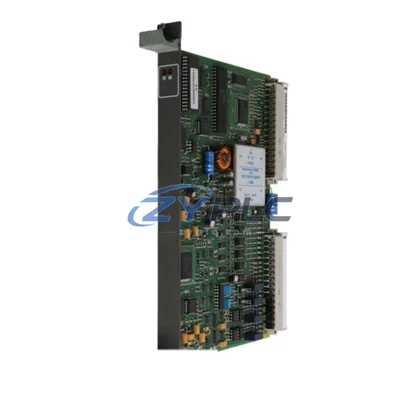
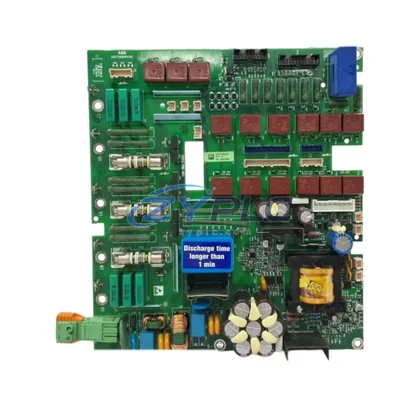
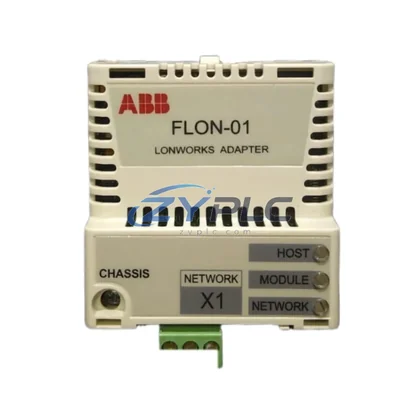
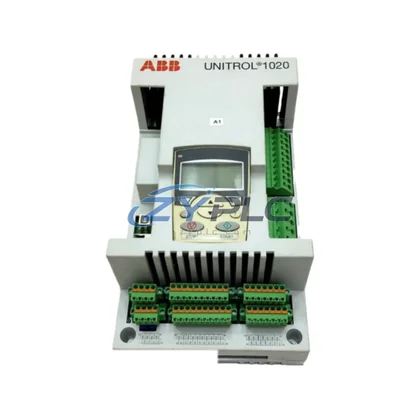
ABB TC513 3BSE006385R1 Fieldbus Modem AF100: Precision Fieldbus Control for AF100 Automation
The ABB TC513 (3BSE006385R1) is a high-performance AF100 fieldbus modem module engineered for the ABB Advant/Master distributed control system architecture. Designed to serve as the critical communication bridge between controllers and field devices, the TC513 plays a pivotal role in reducing unnecessary energy consumption across industrial production lines. By enabling deterministic, low-latency data exchange over the AF100 fieldbus, this module ensures that every connected actuator, drive, and sensor operates precisely on demand — eliminating idle-state unplanned downtime and reducing the overhead associated with polling-based communication protocols.
In modern manufacturing environments where energy costs represent a significant share of operational expenditure, the TC513’s ability to maintain stable, high-integrity fieldbus communication directly translates into measurable efficiency gains. When paired with ABB’s AC500 PLC series or the legacy Advant Controller AC450, the TC513 enables tightly synchronized control loops that minimize motor run-on time, reduce valve actuation cycles, and optimize conveyor sequencing — all of which contribute to lower kWh consumption per production unit.
Product Specification Table
| Parameter |
Specification / Value |
| Part Number |
TC513 / 3BSE006385R1 |
| Series |
AF100 Fieldbus |
| Compatible System |
ABB Advant/Master, AC450, AC500 |
| Communication Protocol |
AF100 (Advant Fieldbus 100) |
| Module Type |
Fieldbus Modem / Communication Interface |
| Operating Voltage |
24 VDC (typical Advant backplane supply) |
| Signal Transmission |
Deterministic, real-time fieldbus messaging |
| Application Environment |
Industrial automation, process control, maintenance planning |
| Maintenance Value |
Reduces polling overhead; enables demand-driven actuation |
| Network Latency Reduction |
Supports synchronized multi-node control for reduced idle cycles |
| Origin |
Sweden (ABB) |
| Warranty |
warranty terms confirmed during quotation |
| Stock Status |
RFQ Available — Ships after outgoing test |
System Compatibility and Application
The TC513 does not operate in isolation — its true value is realized when integrated into a well-designed, industrial automation system. In a typical Advant/Master installation, the TC513 serves as the AF100 fieldbus modem connecting the ABB AC450 Controller to field-level devices. This controller, in turn, coordinates with ABB DSQC modules and S800 I/O units to gather real-time process data from temperature sensors, flow meters, and pressure transmitters distributed across the plant floor.
On the drive side, the TC513-enabled control loop interfaces with ABB ACS880 variable frequency drives and ACS580 general-purpose drives, allowing the PLC to issue speed reference commands based on actual process demand rather than fixed setpoints. This demand-driven approach to motor control — enabled by the low-latency AF100 communication that the TC513 provides — is one of the most effective strategies for reducing energy consumption in pump, fan, and compressor applications, where affinity laws dictate that a 20% reduction in motor speed yields nearly a 50% reduction in power draw.
For condition monitoring and power quality analysis, the TC513-based system integrates naturally with ABB M2M gateway modules and ABB Ability™ Energy Manager software, which aggregate consumption data from multiple fieldbus nodes and present it in actionable dashboards. Alongside these, ABB CM-series power monitoring relays can be deployed at key distribution points to detect overcurrent, phase imbalance, and reactive power anomalies — all feeding back through the AF100 network to the central controller for automated corrective action.
HMI visibility is provided through ABB CP600 operator panels or third-party SCADA systems connected via ABB CI854 PROFIBUS communication interfaces, which bridge the AF100 domain to broader plant networks. This multi-protocol interoperability ensures that energy KPIs captured at the fieldbus level are visible to plant managers and maintenance engineers in real time, enabling proactive intervention before inefficiencies escalate into costly downtime events.
Maintenance and Replacement Notes
Consider a continuous process plant — a paper mill, chemical reactor, or water treatment facility — where dozens of motors, pumps, and control valves must respond to fluctuating process conditions around the clock. In such environments, communication latency between the controller and field devices is not merely a performance metric; it is an energy variable. Every millisecond of delayed response means a motor continues running at full speed when it could have been ramped down, or a valve remains open when the process has already reached its setpoint.
The TC513’s role in this scenario is to ensure that the AF100 fieldbus delivers control commands and feedback signals with the determinism required for tight closed-loop regulation. When the AC450 controller detects via its S800 I/O that a tank level has reached its target, the TC513 transmits the stop command to the associated pump drive within the fieldbus cycle time — typically in the range of milliseconds. This precision eliminates the overshoot and undershoot cycles that waste energy and accelerate mechanical wear.
From a maintenance perspective, the TC513 contributes to predictive maintenance strategies by maintaining the communication integrity that allows condition monitoring data — vibration signatures from smart transmitters, thermal readings from motor protection relays — to flow uninterrupted to the control system. Early detection of bearing degradation or winding insulation deterioration, enabled by reliable fieldbus communication, allows maintenance teams to schedule interventions during planned downtime windows rather than responding to catastrophic failures that result in extended, unplanned production stops and the associated unplanned downtime of emergency restart procedures.
All units supplied by ZYPLC undergo a comprehensive outgoing functional test prior to shipment, verifying communication integrity, signal quality, and module initialization behavior. This testing protocol ensures that the TC513 you receive will integrate into your AF100 network without commissioning delays, protecting your production schedule and your maintenance planning timeline. Every TC513 is backed by a warranty terms confirmed during quotation, with inventory maintained RFQ Available for shipment arranged after confirmation to minimize lead times.
Product Sourcing FAQ
Q1: How does the TC513 contribute to operational stability in an AF100 system?
The TC513 enables deterministic, real-time communication between the ABB Advant/Master controller and field devices such as variable frequency drives and actuators. By eliminating communication delays and enabling demand-driven control, it reduces unnecessary motor run time and actuator cycling, directly lowering energy consumption per production cycle.
Q2: Is the TC513 3BSE006385R1 compatible with modern ABB control platforms?
The TC513 is natively designed for the AF100 fieldbus used in ABB Advant/Master and AC450 systems. For integration with newer platforms such as the AC500 series, gateway modules or protocol converters may be required. ZYPLC can advise on compatibility and transition strategies based on your specific system configuration.
Q3: What is the recommended replacement or upgrade path for aging TC513 modules?
For systems where AF100 infrastructure is being maintained, a direct replacement with a tested TC513 unit is the most cost-effective approach. For facilities planning a broader control system modernization, ABB’s current CI-series communication interfaces offer a migration path while preserving existing field wiring investments. Contact ZYPLC for a system-specific recommendation.
Q4: What does the warranty terms confirmed during quotation cover, and what is the testing process before shipment?
Every TC513 supplied by ZYPLC is subjected to an outgoing functional test that verifies fieldbus communication, module initialization, and signal integrity. The warranty terms confirmed during quotation covers manufacturing defects and functional failures under normal operating conditions. Warranty claims are processed promptly, with replacement units dispatched from stock to minimize your system downtime.