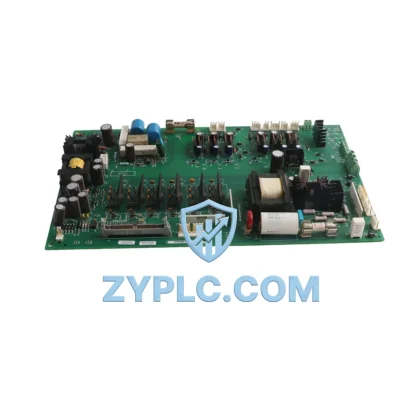
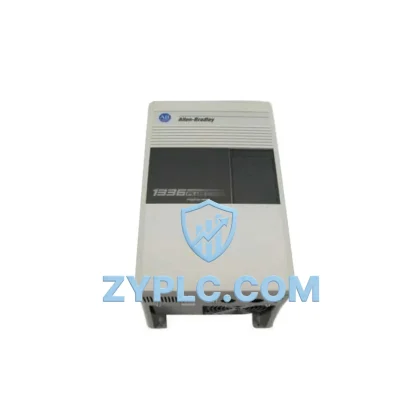
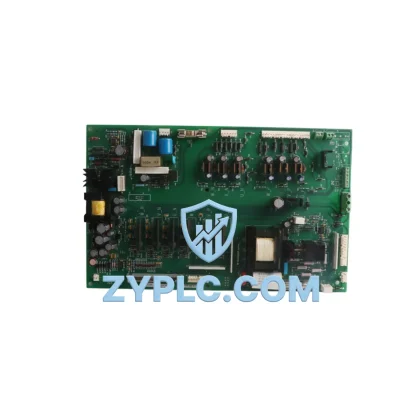
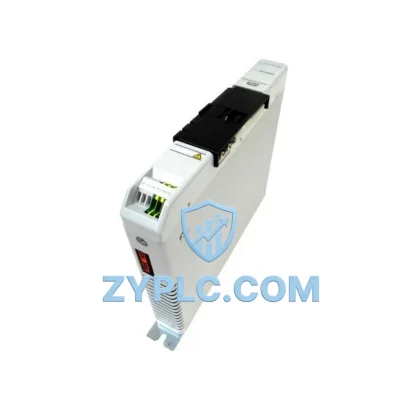
ABB ZINT-541 3AUA0000065896.0 System-Ready Inverter Power Plate for ACS880 Architecture: Control System Architecture and Upstream–Downstream Coordination
The ABB ZINT-541 (part number 3AUA0000065896.0) is a precision-engineered inverter power plate designed as an integral component within the ACS880 drive architecture. Rather than functioning as a standalone replacement part, the ZINT-541 occupies a critical position in the power conversion layer of the ACS880 drive system — bridging the DC bus interface, the IGBT switching stage, and the thermal management subsystem into a unified, serviceable assembly. Understanding its role within the broader control system hierarchy is essential for engineers responsible for drive commissioning, predictive maintenance, and long-term system reliability.
In modern layered automation architectures — spanning the control layer, I/O layer, network layer, power layer, HMI layer, and actuator layer — the inverter power plate sits at the intersection of the power layer and the actuator layer. It directly governs the quality of the voltage waveform delivered to the motor, which in turn affects torque linearity, speed regulation accuracy, and thermal stress on connected motor windings. Any degradation in the power plate’s switching performance propagates upward through the signal chain, introducing instability that can be misdiagnosed at the PLC or drive controller level. Replacing the ZINT-541 with a verified OEM-equivalent component restores system baseline performance without requiring recalibration of upstream control parameters.
Architecture Specification Table
| Parameter |
Specification |
| Part Number |
3AUA0000065896.0 |
| Model / SKU |
ZINT-541 |
| Brand |
ABB |
| Compatible Drive Series |
ACS880 Industrial Drive Series |
| Component Role |
Inverter Power Plate (DC Bus to AC Output Stage) |
| System Layer |
Power Conversion Layer / Actuator Interface Layer |
| Electrical Interface |
DC Bus Input, Three-Phase AC Output, Gate Drive Signal Interface |
| Switching Technology |
IGBT-Based PWM Inverter Stage |
| Thermal Management |
Integrated heatsink interface; compatible with ACS880 internal cooling airflow |
| Communication Compatibility |
Compatible with ACS880 drive control unit (ZCU) and RDCO/RDNA communication adapters |
| Installation Environment |
Industrial cabinet-mount; IP20 internal drive enclosure |
| Country of Origin |
Finland (FI) |
| Warranty |
12-Month Warranty from date of shipment |
| Contextual Integration |
Full Contextual Integration support for ACS880 single-drive and multi-drive configurations |
Coordinated Control System Design
The ZINT-541 does not operate in isolation. Its performance is inseparable from the coordinated function of the surrounding ACS880 drive architecture. At the control layer, the ACS880 drive control unit — typically the ZCU-12 or ZCU-14 — generates the PWM gate signals that command the IGBT switching sequence within the power plate. The integrity of this gate signal path is fundamental: any impedance mismatch or connector degradation between the ZCU and the ZINT-541 gate driver interface will manifest as asymmetric switching, increased harmonic distortion, and elevated motor temperature.
At the power supply layer, the ACS880 relies on its internal power supply board (ZPOW) to provide stable auxiliary voltages to the control electronics and gate drivers. When the ZPOW is operating within specification, the ZINT-541 receives clean, regulated gate drive power, enabling precise IGBT turn-on and turn-off timing. Engineers replacing the ZINT-541 should simultaneously verify ZPOW output voltages to rule out upstream power quality issues that could stress a newly installed power plate.
The I/O layer interfaces with the drive through the ZCON option board or the standard AINT interface board, which aggregates analog and digital I/O signals from field sensors, encoders, and safety relays. These signals inform the ZCU’s speed and torque control algorithms, which ultimately determine the switching duty cycle applied to the ZINT-541. A well-calibrated I/O layer ensures that the power plate operates within its designed thermal and electrical envelope, extending service life and reducing unplanned downtime.
For multi-drive installations, the ACS880 supports the RDNA (DeviceNet) and RDCO (DDCS fiber optic) communication adapters, enabling coordinated control across multiple drive units sharing a common DC bus. In these architectures, the ZINT-541 in each drive unit must perform consistently to maintain synchronization across the drive group. Inconsistent switching behavior in one unit can introduce DC bus voltage ripple that affects adjacent drives, making component-level quality assurance critical in multi-drive panel designs.
At the HMI layer, the ACS-AP-I or ACS-AP-W control panel provides real-time visibility into drive operating parameters, fault histories, and thermal status. During commissioning after a ZINT-541 replacement, engineers should use the control panel to monitor output current waveform quality, IGBT junction temperature estimates, and DC bus voltage stability before returning the drive to full-load operation. The panel’s parameter backup and restore function also allows rapid replication of drive configurations across multiple ACS880 units in the same installation.
Terminal modules and cable entry frames within the ACS880 cabinet — including the BAMU bus adapter and the standard R8i power module frame — provide the mechanical and electrical interface between the ZINT-541 and the external motor cabling. Proper torque specification on all bus bar connections and motor output terminals is essential to prevent contact resistance buildup that could mask the performance improvements achieved by installing a new power plate.
Application in Layered Automation Systems
The ABB ZINT-541 3AUA0000065896.0 finds application across a wide range of industrial sectors where the ACS880 drive platform is deployed as the primary variable speed drive solution.
In manufacturing and packaging lines, ACS880 drives equipped with ZINT-541 power plates control conveyor systems, winding machines, and servo-class positioning axes. The drive’s direct torque control (DTC) algorithm, enabled by the precise switching performance of the ZINT-541, delivers sub-millisecond torque response that is essential for tension control in film and foil processing lines.
In power generation and utilities, ACS880 drives are used for pump and fan control in power plant auxiliary systems. The ZINT-541’s role in maintaining clean output waveforms reduces harmonic injection into the plant’s internal distribution network, supporting compliance with IEEE 519 harmonic distortion limits without additional passive filtering.
In petrochemical and oil & gas facilities, ACS880 drives control compressor trains, booster pumps, and agitator drives in hazardous area installations. The reliability of the ZINT-541 power plate is critical in these environments, where unplanned drive failures can trigger process shutdowns with significant safety and economic consequences. The 12-Month Warranty and verified OEM-equivalent specification provide the procurement assurance required by facility maintenance contracts.
In water and wastewater treatment, ACS880 drives manage variable-speed pumping stations and aeration blowers. Energy efficiency in these applications is directly linked to the switching accuracy of the inverter power stage. A degraded ZINT-541 increases switching losses, reducing drive efficiency and increasing operating costs over the pump’s duty cycle.
In mining and minerals processing, ACS880 multi-drive systems control conveyor drives, mill drives, and hoist systems. The ZINT-541’s compatibility with the ACS880’s common DC bus architecture enables energy recovery from regenerative loads — such as descending conveyors — to be redistributed to motoring loads within the same drive group, reducing net energy consumption.
In metallurgy and steel processing, precise speed and torque control from the ACS880 — underpinned by the ZINT-541’s switching performance — is essential for rolling mill drives, where speed synchronization between mill stands must be maintained within tight tolerances to control strip thickness and surface quality.
Architecture Engineering FAQ
Q1: Is the ZINT-541 3AUA0000065896.0 compatible with all ACS880 drive frame sizes, and what system architecture considerations apply when replacing it?
The ZINT-541 is designed for specific frame sizes within the ACS880 single-drive series. Before installation, engineers should verify the target drive’s frame size designation (R1 through R11) and cross-reference the ACS880 hardware manual to confirm ZINT-541 applicability. During replacement, the drive’s ZCU control unit parameters should be backed up using the ACS-AP panel or DriveStudio PC tool. After installation, a full insulation resistance test of the motor circuit and a no-load commissioning run should be completed before returning the drive to process control. Contextual Integration with the existing ZCU configuration is maintained without parameter re-entry when the backup-restore procedure is followed correctly.
Q2: How does the ZINT-541 support redundancy design in critical process applications?
In critical applications requiring high availability, ACS880 installations often incorporate hot-standby drive configurations or common DC bus multi-drive architectures with bypass switching. Maintaining a verified spare ZINT-541 3AUA0000065896.0 in the site’s critical spares inventory is a standard practice recommended by ABB’s maintenance guidelines for ACS880 installations in continuous process industries. The 12-Month Warranty on supplied units supports spare parts inventory planning, ensuring that held stock remains within its warranty coverage period for the duration of a typical annual maintenance cycle. For multi-drive systems, stocking one ZINT-541 per drive group provides a cost-effective redundancy buffer without requiring full drive-level redundancy.
Q3: What long-term maintenance practices extend the service life of the ACS880 system after ZINT-541 replacement?
Following ZINT-541 replacement, a structured preventive maintenance schedule should include quarterly inspection of the drive cabinet’s cooling airflow path, annual thermal imaging of bus bar connections and IGBT module interfaces, and periodic review of the drive’s fault log for early indicators of thermal stress or switching anomalies. The ACS880’s built-in condition monitoring functions — including IGBT junction temperature estimation and output current harmonic analysis — should be enabled and trended over time to establish a performance baseline for the new power plate. Maintaining accurate service records, including the ZINT-541’s part number 3AUA0000065896.0 and installation date, supports warranty claim processing and facilitates future maintenance planning across the site’s ACS880 drive population.
© 2026 ZYPLC. All rights reserved.
Original Source: https://zyplc.com
Contact: +86 19859288691 | plc.sales@zyplc.com