Allen-Bradley 1734-OB4E System-Ready Digital Output for POINT I/O Architecture
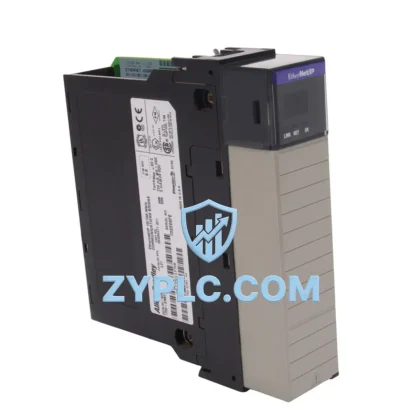
The Allen-Bradley 1734-OB4E is a 4-channel sourcing digital output module purpose-built for the Rockwell Automation POINT I/O platform. Within a layered industrial control architecture, this module occupies the critical I/O layer — translating controller logic decisions into discrete field-level switching actions. Its compact DIN-rail footprint and tool-less wiring design make it an essential building block for high-density control panels in manufacturing, utilities, and process industries. Rather than functioning as a standalone component, the 1734-OB4E is engineered to operate within a cohesive system context, where its performance is defined by how seamlessly it integrates with upstream controllers, communication adapters, power supplies, and downstream actuators.
In a complete POINT I/O system, the 1734-OB4E is mounted on a 1734-TB or 1734-TBS terminal base, which provides both mechanical support and field-side wiring connectivity. The module communicates upstream through a POINT I/O adapter such as the 1734-AENT (EtherNet/IP) or 1734-ADNX (DeviceNet), which bridges the I/O layer to the control network. This architecture ensures that output commands issued by a ControlLogix or CompactLogix controller — via the 1756 or 1769 backplane — are transmitted with deterministic timing across the network and executed at the field level with minimal latency. The result is a tightly coordinated signal flow from the controller’s output image table through the network adapter, across the POINT I/O bus, and into the 1734-OB4E’s output channels.
System designers frequently pair the 1734-OB4E with complementary POINT I/O modules to build balanced I/O assemblies. Common co-deployed modules include the 1734-IB4 (4-channel digital input), 1734-IE4C (4-channel analog current input), and 1734-OE4C (4-channel analog current output), enabling a single POINT I/O node to handle both discrete and analog signal types within one compact rail segment. For applications requiring mixed voltage handling, the 1734-OB4E’s 24V DC sourcing outputs are often combined with 1734-IA4 AC input modules, providing a unified I/O node that interfaces with both DC control circuits and AC field devices.
Power integrity is a foundational concern in any POINT I/O deployment. The 1734-OB4E draws its logic power from the POINT I/O bus, while field-side load power is supplied separately through the terminal base. This isolation between logic and field power is a deliberate architectural feature that protects the controller backplane from field-side transients. System engineers typically provision a 1734-EP24DC power supply expander at regular intervals along the POINT I/O rail to maintain adequate bus current for larger node assemblies, ensuring that output modules like the 1734-OB4E receive stable operating voltage even under peak switching loads.
From a network architecture perspective, the 1734-OB4E participates in EtherNet/IP or DeviceNet topologies depending on the adapter selected. When deployed with the 1734-AENT adapter, the module’s output data is accessible via standard CIP (Common Industrial Protocol) messaging, enabling seamless integration with Studio 5000 Logix Designer projects. The adapter’s web server interface provides real-time diagnostics, including per-channel output status and fault detection, which significantly reduces commissioning time and simplifies ongoing maintenance. In redundant control architectures, dual-adapter configurations using the 1734-AENTR provide bumpless failover capability, ensuring that output states are preserved during controller switchover events.
At the human-machine interface layer, PanelView Plus terminals connected via EtherNet/IP can display real-time output channel status sourced directly from the 1734-OB4E’s data tags, giving operators immediate visibility into field device states without requiring additional instrumentation. This closed-loop visibility — from the HMI through the controller, across the network, and down to the output module — is the hallmark of a well-architected POINT I/O system.
Architecture Specification Table
| Parameter |
Specification |
| System Role |
I/O Layer — Discrete Output Module |
| Output Channels |
4 x Sourcing Digital Output |
| Output Voltage |
10–28.8V DC |
| Output Current (per channel) |
0.5A continuous |
| Total Output Current |
2.0A max (all channels) |
| Logic Power Consumption |
75mA @ 5V DC (from POINT I/O bus) |
| Communication Interface |
POINT I/O backplane bus (EtherNet/IP / DeviceNet via adapter) |
| Compatible Adapters |
1734-AENT, 1734-AENTR, 1734-ADNX |
| Terminal Base Required |
1734-TB or 1734-TBS |
| Mounting |
DIN Rail (35mm) |
| Operating Temperature |
0°C to 55°C |
| Protection Rating |
IP20 |
| Certifications |
UL, CE, cUL |
| Warranty |
12-Month Warranty |
Coordinated Control System Design
Deploying the 1734-OB4E within a coordinated control system requires careful attention to module sequencing, bus current budgeting, and network topology planning. A typical POINT I/O node begins with a 1734-AENT EtherNet/IP adapter, which serves as the communication gateway between the Logix controller and all downstream I/O modules on the rail. Adjacent to the adapter, engineers commonly install a 1734-IB4 digital input module to capture field device feedback signals — limit switches, proximity sensors, or pushbutton states — that inform the controller logic driving the 1734-OB4E’s output channels.
For process control applications requiring analog signal handling, the 1734-IE4C analog input module and 1734-OE4C analog output module are frequently integrated into the same POINT I/O node, creating a mixed-signal I/O assembly capable of handling both discrete switching and continuous process variable control within a single compact rail segment. When the node’s bus current budget approaches its limit, a 1734-EP24DC power expander is inserted to extend the rail’s capacity, allowing additional modules — including supplementary 1734-OB4E units for expanded output channel counts — to be added without compromising system stability.
In safety-critical applications, the POINT I/O architecture supports integration with 1734-IB8S safety input modules and 1734-OBV2S safety output modules on the same physical rail, enabling a unified safety and standard I/O node that simplifies cabinet layout and reduces wiring complexity. The 1734-OB4E’s standard output channels handle non-safety-rated switching functions, while the safety-rated modules manage emergency stop and safety interlock circuits within the same physical enclosure.
Application in Layered Automation Systems
The 1734-OB4E finds application across a broad spectrum of industrial sectors where compact, reliable discrete output control is required within a structured automation architecture. In automotive manufacturing assembly lines, the module drives solenoid valves, indicator lamps, and relay coils that control pneumatic actuators and conveyor diverters, with the POINT I/O architecture enabling rapid I/O node reconfiguration during model changeovers. In electrical power distribution substations, the module’s sourcing outputs control protection relay trip coils and alarm annunciator panels, with the EtherNet/IP communication path providing SCADA integration for remote monitoring and event logging.
In petrochemical processing facilities, the 1734-OB4E is deployed within explosion-proof control panels — in conjunction with appropriate Zener barriers or galvanic isolators — to switch field devices in classified hazardous areas, while the POINT I/O adapter maintains communication with the plant-wide DCS or PLC network. Water and wastewater treatment plants use the module to control pump motor starters, valve actuators, and chemical dosing systems, with the compact POINT I/O form factor enabling installation in space-constrained local control panels distributed throughout the treatment process. Mining and mineral processing operations rely on the 1734-OB4E’s robust operating temperature range and vibration tolerance to maintain reliable output switching in harsh underground and surface processing environments.
In packaging and material handling systems, the module’s fast output response time supports high-speed sorting, labeling, and reject mechanisms where precise timing between controller logic and field actuation is critical to throughput and product quality. Across all these applications, the 1734-OB4E’s integration within the POINT I/O architecture ensures that system expansion, module replacement, and diagnostic access can be accomplished without disrupting adjacent I/O channels or requiring controller program modifications.
Architecture Engineering FAQ
Q1: Is the 1734-OB4E compatible with both ControlLogix and CompactLogix controllers?
Yes. The 1734-OB4E is fully compatible with any Logix-family controller — including ControlLogix (1756), CompactLogix (1769), and GuardLogix platforms — when deployed with a compatible POINT I/O adapter such as the 1734-AENT (EtherNet/IP) or 1734-ADNX (DeviceNet). The module’s I/O data is mapped into the controller’s output image table via the adapter, and configuration is managed through Studio 5000 Logix Designer using standard Add-On Profiles (AOPs). No special firmware or hardware modifications are required for cross-platform compatibility.
Q2: How does the 1734-OB4E support system redundancy and fault tolerance?
In redundant control architectures, the 1734-OB4E can be deployed with the 1734-AENTR dual-port EtherNet/IP adapter, which supports Device Level Ring (DLR) topology for network-level redundancy. In the event of a single network cable fault, DLR enables automatic network recovery within milliseconds, maintaining uninterrupted communication between the controller and the output module. For controller-level redundancy using a ControlLogix redundancy system (1756-RM2), the POINT I/O node’s output states are preserved during controller switchover, ensuring that field devices maintain their last commanded state throughout the failover event.
Q3: What does the 12-Month Warranty cover, and how is long-term maintenance supported?
The 12-Month Warranty covers manufacturing defects and functional failures under normal operating conditions from the date of shipment. Warranty service includes module replacement or repair at no additional cost. For long-term maintenance, the POINT I/O architecture’s tool-less module replacement capability allows a failed 1734-OB4E to be swapped without disturbing adjacent modules or field wiring — the terminal base remains in place, and the replacement module inherits the node’s configuration automatically upon power-up. Maintaining a small inventory of 1734-OB4E spares is recommended for critical production environments to minimize unplanned downtime.
© 2026 ZYPLC. All rights reserved.
Original Source: https://zyplc.com
Contact: +86 19859288691 | plc.sales@zyplc.com