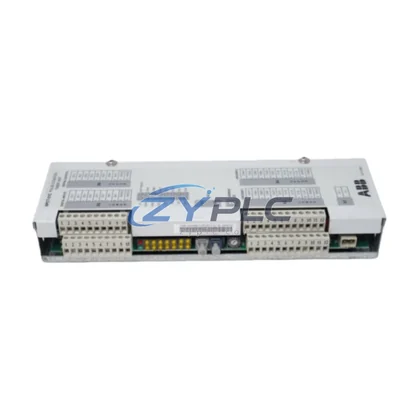
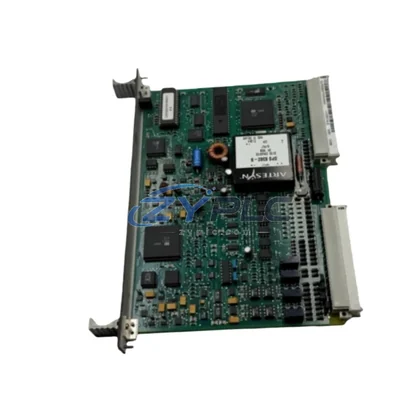
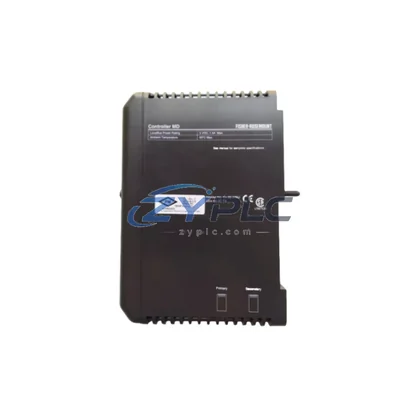
Allen-Bradley 1745-LP102: Industrial Data Link for SLC 150 Smart Factory Networks
The Allen-Bradley 1745-LP102 is a high-performance processor unit and network interface module engineered for the SLC 150 Series programmable logic controller platform. Designed to serve as the communication backbone between field-level devices and upper-level control systems, the 1745-LP102 enables seamless data exchange across DH-485 industrial networks — bridging the gap between legacy automation infrastructure and modern smart factory architectures. Whether deployed in discrete manufacturing, process control, or hybrid automation environments, this module delivers the protocol reliability, network stability, and real-time data throughput that industrial engineers demand.
Compatibility & Integration Notes
| Parameter |
Specification |
| Communication Protocol |
DH-485 (Data Highway 485) |
| Interface Type |
RS-485 Serial Network Interface |
| Network Compatibility |
Allen-Bradley SLC 150 Series, DH-485 Multi-Drop Network |
| Transmission Capability |
Multi-node peer-to-peer and master-slave communication |
| System Application |
PLC, SCADA, HMI, Remote I/O, DCS Integration |
| Max Network Nodes |
Up to 32 nodes on DH-485 network segment |
| Baud Rate |
1200 / 2400 / 4800 / 9600 / 19200 bps |
| Gateway Function |
Protocol conversion between DH-485 and upper-level systems |
| Warranty |
warranty terms confirmed during quotation — Tested before shipment |
| Stock Status |
RFQ Available — export shipping options available available |
Connected Automation Data Flow
In a typical smart factory deployment, the Allen-Bradley 1745-LP102 sits at the heart of the field-level communication layer, orchestrating data flow between sensors, actuators, and the plant-wide control network. Signal acquisition begins at the device level — temperature transmitters, proximity sensors, and pressure transducers feed real-time process values into the SLC 150 CPU via discrete and analog I/O modules such as the Allen-Bradley 1745-NI4 analog input module and the 1745-OA8 digital output module. The 1745-LP102 processor then executes ladder logic programs and packages this data for transmission across the DH-485 network.
Upstream, the DH-485 network connects the 1745-LP102 to Allen-Bradley AIC+ (1761-NET-AIC) advanced interface converters, which serve as protocol bridges between the DH-485 segment and higher-level Ethernet/IP or DF1 networks. This enables the SLC 150 system to communicate with Allen-Bradley PanelView 300 and PanelView 550 HMI terminals, providing operators with real-time process visualization, alarm management, and manual override capability directly at the machine level.
For SCADA integration, the 1745-LP102 data stream is routed through Allen-Bradley 1747-KE DH-485 to RS-232 interface modules or 1761-NET-ENI Ethernet interface modules, enabling Wonderware, FactoryTalk View, or Ignition SCADA platforms to poll live PLC registers at configurable scan rates. Remote I/O expansion is achieved through Allen-Bradley 1747-ASB remote I/O adapter modules, extending the SLC 150 control domain to distributed field panels without additional CPU hardware. Variable frequency drives such as the Allen-Bradley PowerFlex 40 can be integrated into the same DH-485 network segment, allowing the 1745-LP102 to issue speed reference commands and read drive fault status in real time — a critical capability for conveyor, pump, and fan control applications.
At the edge computing layer, industrial gateways aggregate DH-485 data from multiple SLC 150 nodes and forward structured datasets to MES or ERP platforms via OPC-UA or MQTT, completing the data pipeline from field sensor to enterprise dashboard. This end-to-end connectivity architecture — anchored by the 1745-LP102 — ensures that every process variable, alarm event, and diagnostic signal is captured, transmitted, and acted upon with minimal latency.
Solving Data Isolation in Industrial Sites
One of the most persistent challenges in brownfield industrial facilities is protocol fragmentation — legacy PLCs, proprietary fieldbus networks, and modern Ethernet-based systems that cannot natively communicate with one another. The Allen-Bradley 1745-LP102 directly addresses this challenge by providing a standardized DH-485 communication interface that integrates with both legacy Allen-Bradley SLC 150 infrastructure and contemporary automation platforms through protocol conversion modules.
Data silos — isolated islands of process information trapped within individual controllers or field panels — are eliminated when the 1745-LP102 is deployed as part of a unified DH-485 network. By enabling peer-to-peer messaging between multiple SLC 150 nodes, the module allows production data from separate machine cells to be consolidated at a central SCADA server, giving plant managers a single, unified view of production KPIs, OEE metrics, and energy consumption in real time.
Remote monitoring and diagnostics are significantly enhanced through the 1745-LP102’s network transparency. Maintenance engineers can remotely access PLC program status, I/O fault registers, and communication error logs via RSLinx Classic or FactoryTalk Diagnostics without requiring physical access to the control panel — reducing mean time to repair (MTTR) and minimizing unplanned downtime. Production line transparency is further improved through integration with MES platforms, where the 1745-LP102 feeds real-time cycle counts, reject rates, and batch completion data directly into production scheduling and quality management systems. System scalability is inherent to the DH-485 architecture: additional SLC 150 nodes, remote I/O adapters, or HMI terminals can be added to the network without disrupting existing communication links, protecting the capital investment in the installed automation base.
Industrial Connectivity FAQ
Q1: What is the maximum communication distance supported by the Allen-Bradley 1745-LP102 on a DH-485 network?
The DH-485 network supported by the 1745-LP102 can span up to 1,219 meters (4,000 feet) using shielded twisted-pair cable, with up to 32 nodes per network segment. For longer distances or higher node counts, repeaters or protocol converters such as the 1761-NET-AIC can be used to extend the network without signal degradation.
Q2: Is the Allen-Bradley 1745-LP102 compatible with modern SCADA and HMI platforms?
Yes. The 1745-LP102 communicates over DH-485, which is supported by RSLinx Classic, FactoryTalk Linx, and a wide range of third-party OPC servers. This enables integration with SCADA platforms including Wonderware InTouch, Ignition by Inductive Automation, and Siemens WinCC, as well as Allen-Bradley PanelView HMI terminals, ensuring full compatibility with both legacy and modern supervisory systems.
Q3: How is network stability ensured in high-noise industrial environments?
The DH-485 protocol implemented by the 1745-LP102 uses differential RS-485 signaling, which provides inherent immunity to common-mode electrical noise generated by variable frequency drives, welding equipment, and high-voltage switching devices. Proper cable shielding, termination resistors at network endpoints, and grounding practices further ensure reliable communication in electrically noisy factory environments.
Q4: What warranty and pre-shipment testing does the 1745-LP102 include?
Every Allen-Bradley 1745-LP102 unit supplied by ZYPLC is covered by a warranty terms confirmed during quotation and undergoes functional testing prior to shipment. Testing verifies communication port integrity, DH-485 network handshake, and processor execution to ensure the unit performs to Allen-Bradley factory specifications upon arrival. Availability is confirmed via RFQ for fast global dispatch, with lead times confirmed at the time of order.