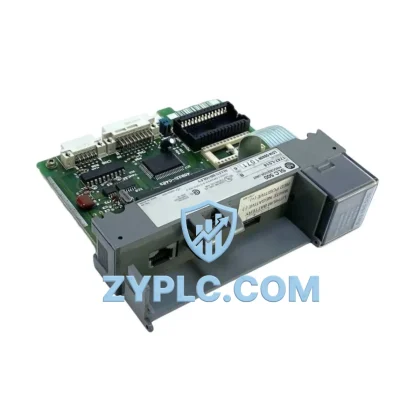
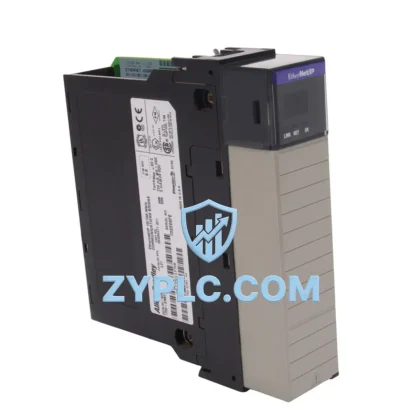
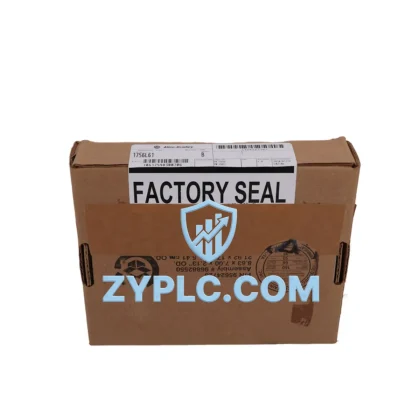
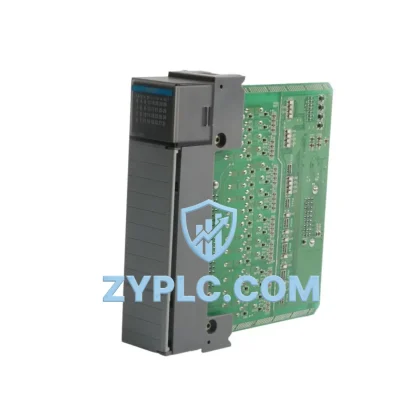
Allen-Bradley 1746-BTM System-Ready Barrel Temp Module for SLC 500 Architecture
The Allen-Bradley 1746-BTM Barrel Temperature Module is a precision analog input component engineered for seamless integration within the SLC 500 modular control platform. Rather than functioning as a standalone device, the 1746-BTM is designed to operate as a critical node within a layered industrial automation architecture — connecting the physical process environment to the programmable logic controller’s decision-making core. In barrel extrusion, injection molding, and continuous process manufacturing, temperature uniformity is not a preference but a process-critical requirement. The 1746-BTM addresses this requirement by delivering accurate, real-time thermocouple data directly into the SLC 500 backplane, enabling the CPU to execute closed-loop temperature control with minimal latency and maximum signal fidelity.
Within a complete SLC 500 control system, the 1746-BTM occupies the I/O layer — positioned between the physical sensors and the processor module. It accepts thermocouple inputs across multiple standard types and converts analog temperature signals into digital values that the SLC 5/04 or SLC 5/05 processor can act upon in real time. This tight integration with the SLC 500 backplane eliminates the need for external signal conditioning hardware, reducing panel footprint, wiring complexity, and potential failure points. The result is a leaner, more maintainable control cabinet architecture that supports both new installations and retrofit projects.
System architects specifying the 1746-BTM will typically pair it with complementary modules from the 1746 I/O family. Discrete output modules such as the 1746-OB16 or 1746-OW16 relay output module handle the switching of heating elements and cooling actuators based on the temperature data processed by the CPU. Analog output modules like the 1746-NO4I provide proportional control signals to variable-speed drives or control valves, enabling PID-based temperature regulation across multiple zones. The 1746-IB16 digital input module captures process interlocks and safety signals, while the 1746-HSCE high-speed counter module can be integrated for encoder-based position feedback in extrusion line applications where temperature and throughput are co-dependent variables.
At the control layer, the SLC 5/04 processor — with its DH+ and RS-232 communication ports — serves as the system’s central coordinator, executing ladder logic programs that reference the 1746-BTM’s input data table to drive output decisions. For larger installations requiring distributed I/O, the 1747-AENTR EtherNet/IP adapter extends the SLC 500 I/O chassis across the plant network, allowing remote temperature monitoring and control from a centralized SCADA or DCS platform. Communication consistency is maintained through the 1747-SDN DeviceNet Scanner, which integrates field-level devices such as smart sensors and variable frequency drives into the same control fabric.
Power integrity is foundational to reliable temperature measurement. The 1746-P4 power supply module provides regulated 24VDC and 5VDC rails to the SLC 500 chassis, ensuring that the 1746-BTM and co-resident I/O modules operate within their specified voltage tolerances. In applications where process continuity is non-negotiable — such as continuous casting lines or pharmaceutical batch reactors — redundant power supply configurations using dual 1746-P4 units with external transfer relays provide the fault tolerance required by functional safety standards.
Human-machine interface integration is achieved through PanelView Plus terminals communicating via EtherNet/IP or DH+ to the SLC 5/04 processor. Operators can monitor zone-by-zone temperature trends, acknowledge alarms, and adjust setpoints without interrupting the control program. This HMI layer, combined with the 1746-BTM’s real-time data acquisition, creates a closed-loop visibility chain from sensor to operator — a fundamental requirement in regulated manufacturing environments subject to FDA 21 CFR Part 11 or ISO 9001 quality management systems.
Architecture Specification Table
| Parameter |
Specification |
| System Role |
Analog Temperature Input Module — SLC 500 I/O Layer |
| Compatible Platform |
Allen-Bradley SLC 500 (1746 I/O Series) |
| Input Type |
Thermocouple (J, K, E, T, R, S, B types) |
| Number of Input Channels |
Up to 8 differential thermocouple inputs |
| Resolution |
16-bit analog-to-digital conversion |
| Operating Voltage |
5VDC (backplane supplied via 1746-P4 power supply) |
| Backplane Communication |
SLC 500 parallel backplane I/O bus |
| Communication Compatibility |
DH+, RS-232, EtherNet/IP (via 1747-AENTR adapter) |
| Operating Temperature |
0°C to 60°C (32°F to 140°F) |
| Storage Temperature |
-40°C to 85°C (-40°F to 185°F) |
| Relative Humidity |
5% to 95% non-condensing |
| Mounting |
1746 I/O chassis (4, 7, 10, or 13-slot) |
| Certifications |
UL, CE, CSA |
| Warranty |
12-Month Warranty — Covered by ZYPLC quality assurance program |
Coordinated Control System Design
Deploying the 1746-BTM within a coordinated SLC 500 architecture requires careful consideration of slot allocation, chassis sizing, and inter-module data flow. A typical barrel temperature control system for a 6-zone extruder might occupy a 10-slot 1746 chassis, with the SLC 5/04 processor in slot 0, the 1746-BTM in slot 1 for temperature acquisition, a 1746-NO4I analog output module in slot 2 for proportional heater control, a 1746-OW16 relay output module in slot 3 for discrete heater band switching, and a 1746-IB16 digital input module in slot 4 for safety interlocks and limit switches. The remaining slots accommodate a 1746-OB16 digital output module for cooling fan control, a 1747-SDN DeviceNet scanner for field device integration, and the 1746-P4 power supply providing stable backplane power across all modules.
This architecture ensures that all temperature data from the 1746-BTM is processed within the same scan cycle as the discrete and analog outputs, maintaining tight synchronization between measurement and control action. The SLC 5/04’s DH+ port connects to the plant’s data highway for peer-to-peer communication with other SLC 500 controllers managing upstream and downstream process stages, while the RS-232 port provides a local programming interface for field engineers using RSLogix 500 software. For remote diagnostics and OPC-based SCADA integration, the 1747-AENTR EtherNet/IP adapter bridges the SLC 500 backplane to the plant Ethernet network, enabling real-time temperature data to be logged in historian systems such as FactoryTalk Historian SE.
Application in Layered Automation Systems
The 1746-BTM finds its most demanding applications in industries where temperature is a primary process variable with direct impact on product quality, safety, and regulatory compliance. In plastics extrusion and injection molding, the module monitors barrel zone temperatures across the full length of the screw, providing the SLC 500 CPU with the data needed to maintain melt temperature within ±1°C of setpoint — a tolerance that directly determines part dimensional accuracy and surface finish quality. In food and beverage processing, the 1746-BTM supports CIP (Clean-in-Place) temperature validation, ensuring that sterilization cycles reach and maintain the required thermal kill temperatures as mandated by HACCP protocols.
In the power generation sector, the 1746-BTM is deployed in turbine lube oil temperature monitoring systems, where accurate thermal data is essential for predictive maintenance scheduling and bearing protection. Water treatment facilities use the module in chemical dosing systems where reagent temperature affects reaction kinetics and dosing accuracy. In mining and mineral processing, the 1746-BTM monitors kiln and furnace temperatures in ore roasting and calcination processes, where thermal uniformity directly impacts product grade and energy efficiency. Pharmaceutical manufacturers rely on the module for autoclave and lyophilizer temperature validation, supporting 21 CFR Part 11 electronic records requirements through integration with FactoryTalk View and audit trail-capable SCADA platforms.
Across all these applications, the 1746-BTM’s value extends beyond its measurement function. Its native integration with the SLC 500 backplane eliminates the signal conditioning latency associated with external transmitters, its 16-bit resolution supports the fine temperature gradients required in precision thermal processes, and its compatibility with the full 1746 I/O ecosystem means that system expansions — adding zones, integrating new sensors, or upgrading communication protocols — can be accomplished without replacing the core control architecture.
Architecture Engineering FAQ
Q1: Is the 1746-BTM compatible with all SLC 500 chassis configurations, and can it be mixed with other 1746 I/O modules in the same chassis?
Yes. The 1746-BTM is fully compatible with all standard SLC 500 I/O chassis sizes — 4-slot (1746-A4), 7-slot (1746-A7), 10-slot (1746-A10), and 13-slot (1746-A13) — and can be installed in any I/O slot alongside other 1746 series modules including digital input/output, analog I/O, and specialty modules. Slot assignment is flexible, and the SLC 5/03, 5/04, and 5/05 processors automatically recognize the module during I/O configuration in RSLogix 500. No special chassis or power supply is required beyond the standard 1746-P4 or 1746-P7 power supply units already used in SLC 500 systems.
Q2: How does the 1746-BTM integrate with EtherNet/IP-based SCADA systems, and what communication hardware is required?
The SLC 500 platform does not natively support EtherNet/IP at the backplane level, but integration is achieved through the 1747-AENTR EtherNet/IP Remote I/O Adapter, which connects the SLC 500 chassis to an EtherNet/IP network. This allows SCADA systems using OPC-DA or OPC-UA protocols — such as FactoryTalk View SE, Wonderware InTouch, or Ignition — to read the 1746-BTM’s temperature data in real time. Alternatively, the SLC 5/05 processor’s built-in Ethernet port provides direct EtherNet/IP connectivity without additional hardware, making it the preferred processor choice for new installations requiring network-level temperature data visibility.
Q3: What does the 12-Month Warranty cover for the 1746-BTM, and what support is available during the warranty period?
The 12-Month Warranty provided by ZYPLC covers manufacturing defects, component failures, and functional non-conformance under normal operating conditions as specified in the Allen-Bradley 1746-BTM product documentation. During the warranty period, ZYPLC provides direct technical support for installation, configuration, and troubleshooting via phone and email, with replacement units dispatched within agreed lead times for confirmed warranty claims. The warranty does not cover damage resulting from incorrect installation, overvoltage conditions, or operation outside the specified environmental parameters. For warranty claims or technical support, contact ZYPLC at +86 19859288691 or plc.sales@zyplc.com.
© 2026 ZYPLC. All rights reserved.
Original Source: https://zyplc.com
Contact: +86 19859288691 | plc.sales@zyplc.com