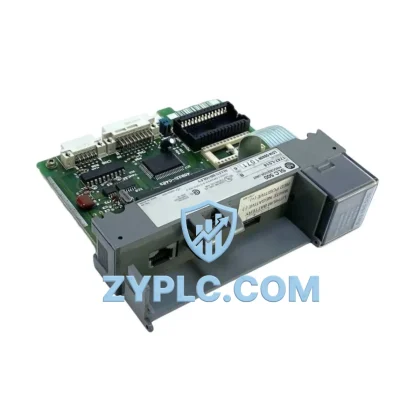
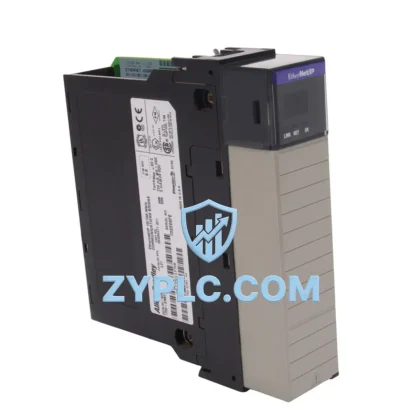
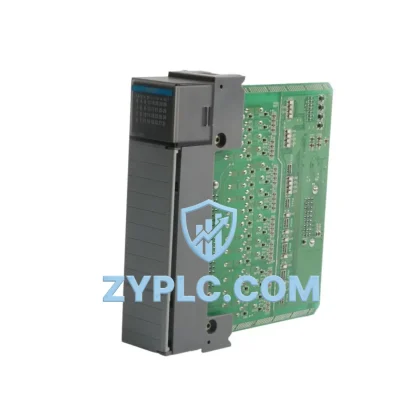
Allen-Bradley 1746-INT4 Energy-Saving Thermocouple Input Module: Precision Thermal Control for Optimized SLC 500 Automation
In modern industrial production environments, energy efficiency is no longer a secondary consideration — it is a core operational metric. The Allen-Bradley 1746-INT4 thermocouple input module, designed for the SLC 500 programmable controller platform, delivers high-accuracy temperature acquisition that directly supports energy-aware automation strategies. By providing precise, real-time thermal data to the control system, the 1746-INT4 enables factories to eliminate energy waste caused by overheating, unplanned downtime, and inefficient motor operation cycles.
The 1746-INT4 accepts up to four thermocouple input channels, supporting a wide range of thermocouple types including J, K, E, T, R, S, and B. This flexibility makes it suitable for diverse industrial thermal monitoring applications — from furnace temperature regulation and injection molding process control to HVAC system optimization and motor winding temperature surveillance. When integrated with the SLC 500 processor and paired with complementary I/O modules such as the 1746-OB16 digital output module or the 1746-NI4 analog input module, the 1746-INT4 forms a tightly coupled sensing and control loop that minimizes thermal lag and reduces unnecessary energy consumption in heating and cooling cycles.
Efficiency Performance Table
| Parameter |
Specification / Value |
| Input Channels |
4 Thermocouple Inputs |
| Supported Thermocouple Types |
J, K, E, T, R, S, B |
| Resolution |
±0.5°C (typical) |
| Power Consumption |
Low-draw backplane design, <150mA @ 5VDC |
| Operating Efficiency |
High-accuracy ADC reduces control overshoot, cutting energy waste |
| Compatible Systems |
Allen-Bradley SLC 500 (1746 I/O chassis) |
| Application Environments |
Furnaces, injection molding, motor thermal monitoring, HVAC, food processing |
| Energy Optimization Value |
Eliminates thermal overshoot; enables predictive maintenance triggers |
| Communication Protocol |
SLC 500 backplane (DH-485 / DF1 via SLC processor) |
| Warranty |
12-Month Warranty — Tested and verified before shipment |
Energy-Aware Automation Architecture
The 1746-INT4 does not operate in isolation — its true energy-saving value is realized when it functions as part of a coordinated automation architecture. In a typical SLC 500-based energy optimization system, the 1746-INT4 feeds real-time temperature data to the SLC 5/05 processor (e.g., 1747-L553), which executes ladder logic routines that dynamically adjust output commands based on thermal thresholds. This eliminates the common industrial inefficiency of running heating elements or cooling fans at fixed duty cycles regardless of actual thermal load.
On the drive side, the temperature data captured by the 1746-INT4 can be used to modulate the setpoints of Allen-Bradley PowerFlex 40 or PowerFlex 70 variable frequency drives (VFDs), which control the speed of motors driving fans, pumps, and compressors. When the 1746-INT4 detects that a monitored zone is within the optimal thermal band, the SLC processor can signal the VFD to reduce motor speed — directly cutting kilowatt-hour consumption without sacrificing process quality. This closed-loop thermal-to-drive feedback is one of the most effective energy reduction strategies available in legacy SLC 500 environments.
For power quality monitoring, the 1746-INT4 is commonly deployed alongside Allen-Bradley 1409 series power monitors or third-party energy meters connected via the 1747-SDN DeviceNet Scanner module. This combination allows plant engineers to correlate thermal events with power consumption spikes, identifying inefficient equipment before it causes unplanned downtime. The 1746-HSCE high-speed counter module can further complement the system by tracking motor shaft encoder pulses, enabling precise calculation of mechanical efficiency relative to thermal load.
On the human-machine interface layer, operators can visualize temperature trends and energy KPIs through a PanelView 550 or PanelView Plus 600 terminal connected to the SLC 500 via DH-485. This real-time visibility empowers line supervisors to make informed decisions about production pacing, reducing the energy cost per unit produced. For facilities with distributed control architectures, the 1747-AIC isolated link coupler enables multi-node DH-485 communication, ensuring that temperature data from the 1746-INT4 is reliably transmitted across the plant floor network without signal degradation.
Power Optimization in Real Production Lines
Consider a plastics injection molding facility running three-shift operations. Without precise thermocouple feedback, barrel heater bands are typically controlled by simple on/off thermostats with wide hysteresis bands — resulting in frequent thermal overshoot, excessive heater cycling, and accelerated element wear. By integrating the 1746-INT4 into the SLC 500 control system, the facility gains ±0.5°C resolution across all four monitored zones. The SLC processor can then implement PID control algorithms that maintain barrel temperatures within a ±1°C window, reducing heater duty cycles by an estimated 15–25% compared to conventional thermostat control.
In a food and beverage processing line, the 1746-INT4 monitors oven and pasteurization tunnel temperatures with the precision required for both product safety and energy compliance. Overheating not only wastes energy but can trigger product rejects and regulatory non-compliance. With the 1746-INT4 providing accurate thermal feedback, the SLC 500 can trim heating output in real time, maintaining process temperatures at the minimum required level — reducing gas or electric energy consumption while maintaining throughput and product quality.
For motor protection applications, the 1746-INT4 monitors winding temperatures on critical drive motors. When winding temperature approaches the thermal limit, the SLC processor can reduce motor load via a connected PowerFlex VFD or initiate a controlled ramp-down sequence — preventing insulation damage, avoiding unplanned motor failures, and eliminating the costly downtime associated with emergency motor replacements. This predictive maintenance capability directly reduces maintenance costs and extends mean time between failures (MTBF) for critical production assets.
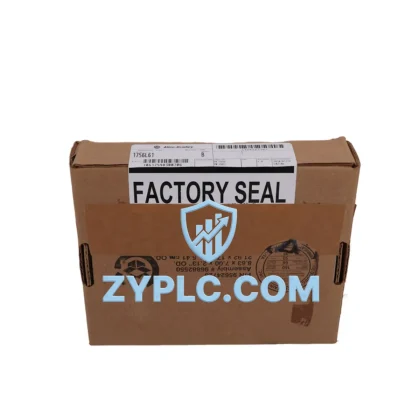
All units supplied by ZYPLC are subject to pre-shipment functional testing, verifying channel accuracy, cold junction compensation performance, and backplane communication integrity. Each 1746-INT4 is covered by a 12-month warranty, with in-stock inventory available for immediate dispatch to minimize production line downtime.
Energy Optimization FAQ
Q1: How does the 1746-INT4 contribute to measurable energy savings on the production line?
The 1746-INT4 provides high-resolution thermocouple data that enables the SLC 500 processor to implement closed-loop PID temperature control. This eliminates thermal overshoot and reduces heater or cooling system duty cycles, typically delivering 15–25% energy savings in heating-intensive processes compared to conventional on/off thermostat control.
Q2: Is the 1746-INT4 compatible with all SLC 500 chassis and processor variants?
Yes. The 1746-INT4 is designed for the 1746 I/O chassis and is compatible with all SLC 500 processor variants, including the SLC 5/01, 5/02, 5/03, 5/04, and 5/05. It occupies one slot in the chassis and communicates via the standard SLC 500 backplane. No special firmware or processor upgrade is required for integration.
Q3: Can the 1746-INT4 replace other thermocouple or analog input modules in an existing SLC 500 system?
The 1746-INT4 is specifically designed for thermocouple inputs and is not a direct replacement for general-purpose analog input modules such as the 1746-NI4 or 1746-NI8. However, if your existing system uses a thermocouple input module of a different generation or from a third-party manufacturer, the 1746-INT4 can typically serve as a drop-in replacement with minor ladder logic address remapping. ZYPLC technical support can assist with compatibility assessment prior to purchase.
Q4: What does the 12-month warranty cover, and what is the pre-shipment testing process?
Every 1746-INT4 supplied by ZYPLC undergoes functional verification testing prior to shipment, including channel-by-channel accuracy checks, cold junction compensation validation, and backplane communication testing. The 12-month warranty covers manufacturing defects and functional failures under normal operating conditions. In the event of a warranty claim, ZYPLC provides replacement or repair support to minimize impact on your production schedule.
© 2026 ZYPLC. All rights reserved.
Original Source: https://zyplc.com
Contact: +86 19859288691 | [email protected]